What This Document Is
This document serves as an introductory lecture to the core materials used in microfabrication technology, specifically focusing on semiconductors. It’s the first section of a larger course covering the fundamental building blocks of modern devices. This material lays the groundwork for understanding how materials properties dictate device performance and fabrication processes. It’s designed to provide a foundational understanding of the characteristics that make certain materials suitable for creating micro and nanoscale structures.
Why This Document Matters
This introductory material is essential for students beginning their study of microfabrication. It’s particularly beneficial for those with a background in electrical engineering or materials science seeking to understand the material science principles underpinning the field. It’s best utilized at the very start of the course, before diving into specific fabrication techniques, to establish a solid conceptual base. Understanding these concepts will greatly enhance your ability to grasp more complex topics later in the curriculum.
Topics Covered
* The evolution of transistor technology and its impact on materials selection.
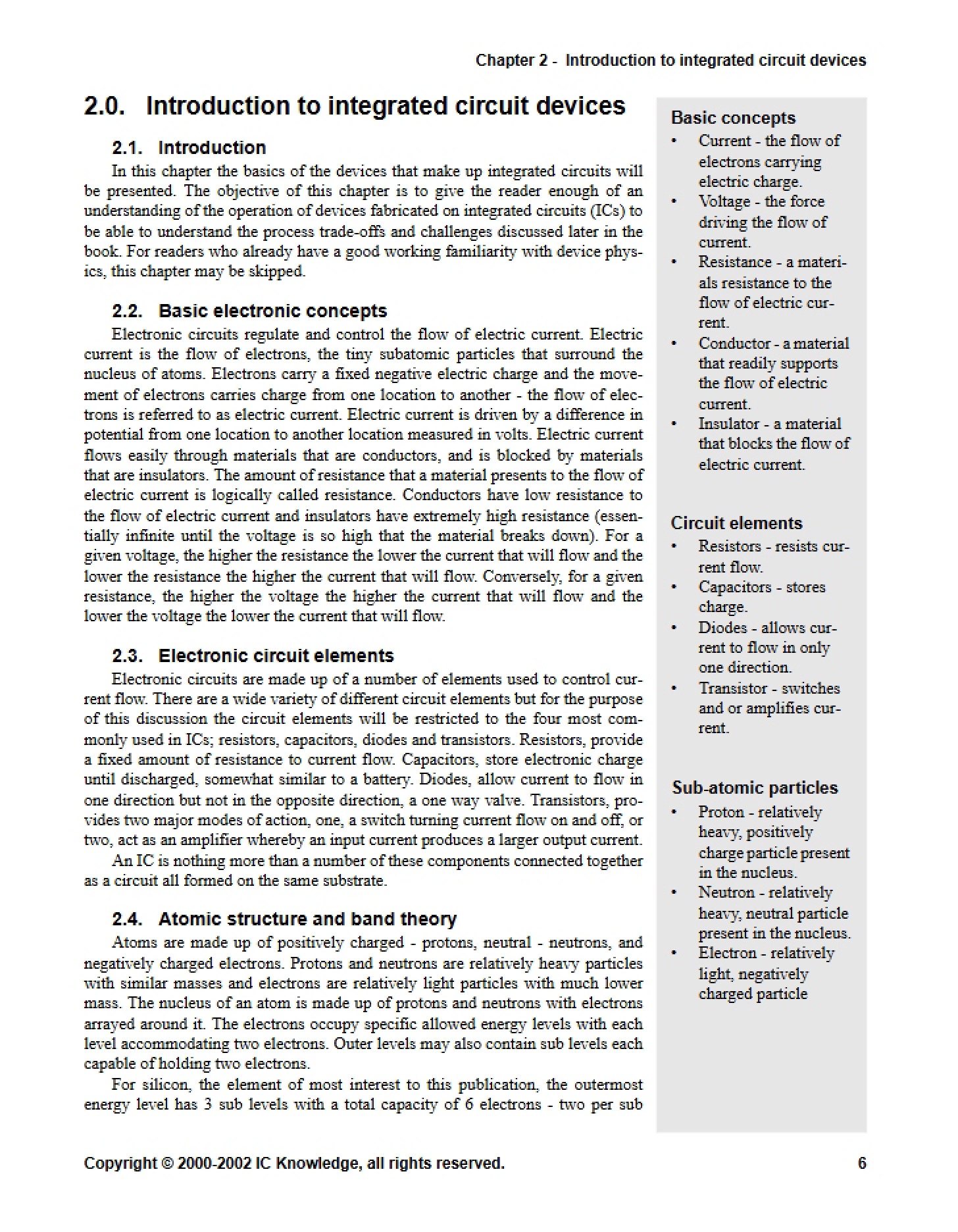
* The fundamental differences between conductors, insulators, and semiconductors.
* The periodic table and identification of key semiconductor elements.
* The crystal structure of silicon and common wafer orientations.
* The concepts of electrons and holes as charge carriers in semiconductors.
* The role of dopants in modifying semiconductor properties (N-type and P-type).
* Energy band diagrams and their relationship to material properties.
* The measurement of band gap energy and its significance.
* A comparison of semiconductors, insulators, and conductors based on band structure.
What This Document Provides
* An overview of the historical context driving advancements in semiconductor technology.
* Visual representations of crystal structures and energy band diagrams.
* A classification of semiconductor materials (elemental, binary, ternary).
* An explanation of the concepts of valence and dopants.
* A foundational understanding of the relationship between material properties and electrical behavior.
* A comparative analysis of different material types based on their electronic characteristics.