What This Document Is
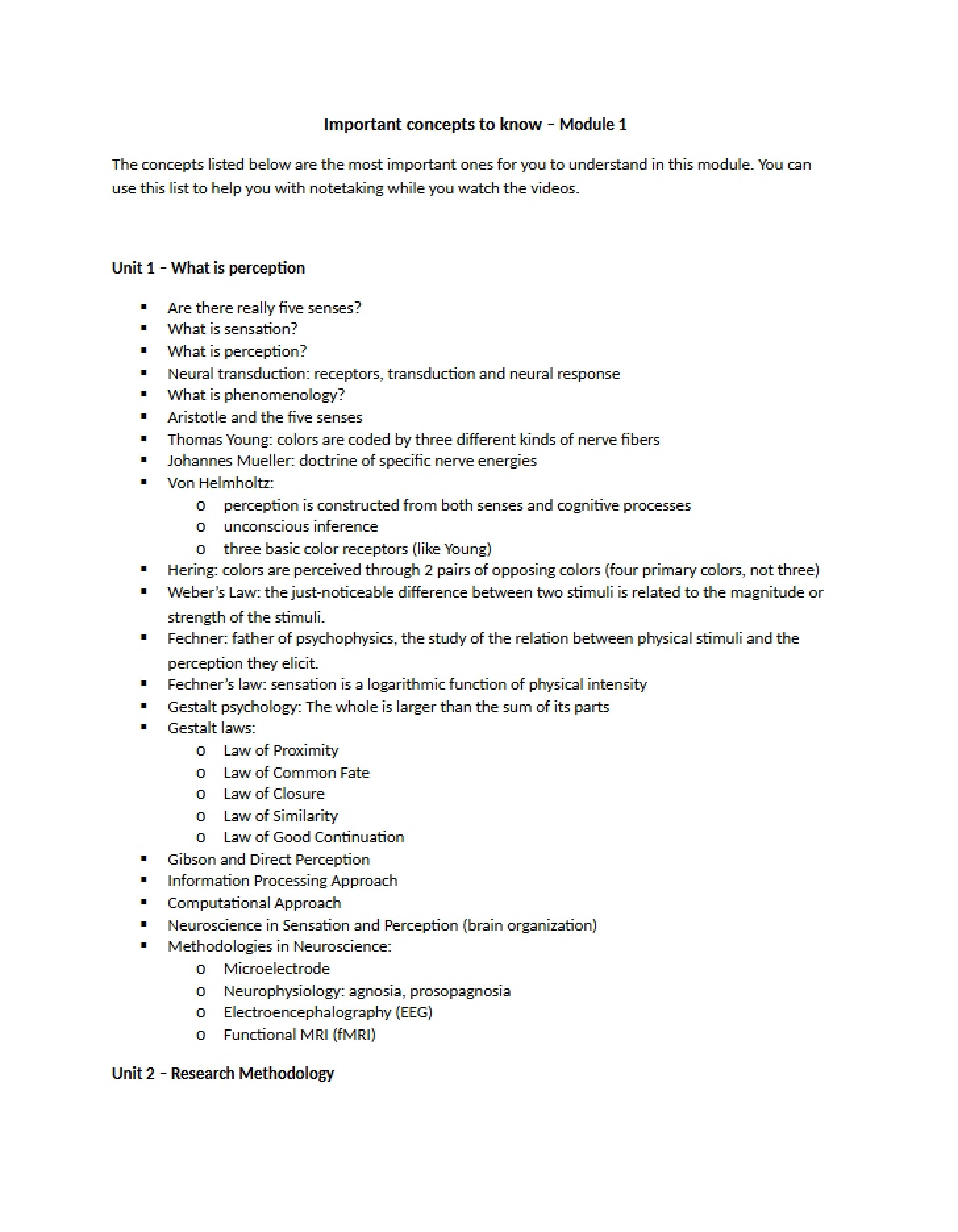
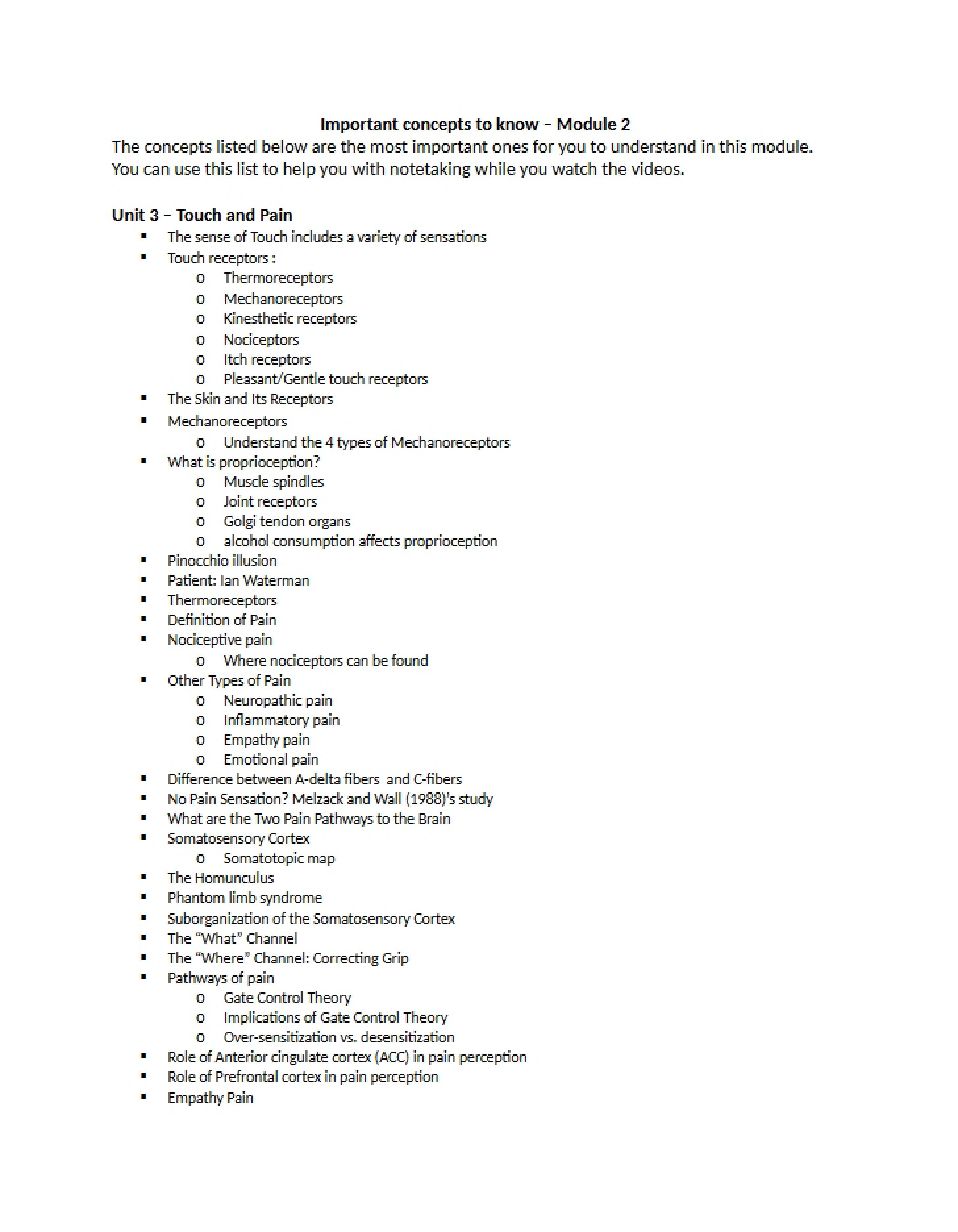
This is a focused review resource designed to help students studying the complexities of the human visual system within the broader context of Community Psychology (PSYC 239) at the University of Illinois at Urbana-Champaign. Specifically, it covers core concepts from Module 5, encompassing both the physiological mechanisms of sight and the brain’s processing of visual information. It’s structured around key units exploring the eye itself and the subsequent neural pathways involved in vision.
Why This Document Matters
This review is invaluable for students preparing for assessments, reinforcing lecture material, or seeking a consolidated understanding of the visual system. It’s particularly useful when you’re actively engaging with course videos and need a framework for effective note-taking. Students who find themselves needing to connect biological processes to psychological understanding will benefit greatly. Use this as a checkpoint to identify areas where your comprehension needs strengthening *before* tackling practice questions or larger assignments.
Common Limitations or Challenges
This resource is a *review* – it assumes you’ve already engaged with the core course materials (lectures, readings). It will not provide foundational explanations of general psychological principles or introduce entirely new concepts. It doesn’t offer practice problems, detailed case studies, or direct answers to potential exam questions. Think of it as a map of the key terrain, not a complete guided tour. It is designed to *complement* your learning, not replace it.
What This Document Provides
* A structured overview of essential concepts related to the anatomy and function of the eye.
* Key terminology related to light and its properties.
* A breakdown of the visual pathway, from the optic nerve to the visual cortex.
* Identification of important structures within the brain responsible for visual processing.
* An outline of critical research and experiments that have shaped our understanding of vision.
* Discussion points regarding visual development and potential disorders affecting sight.
* Categorization of different types of cells involved in visual transduction.
* Exploration of functional pathways within the visual system ("what" vs. "where").