What This Document Is
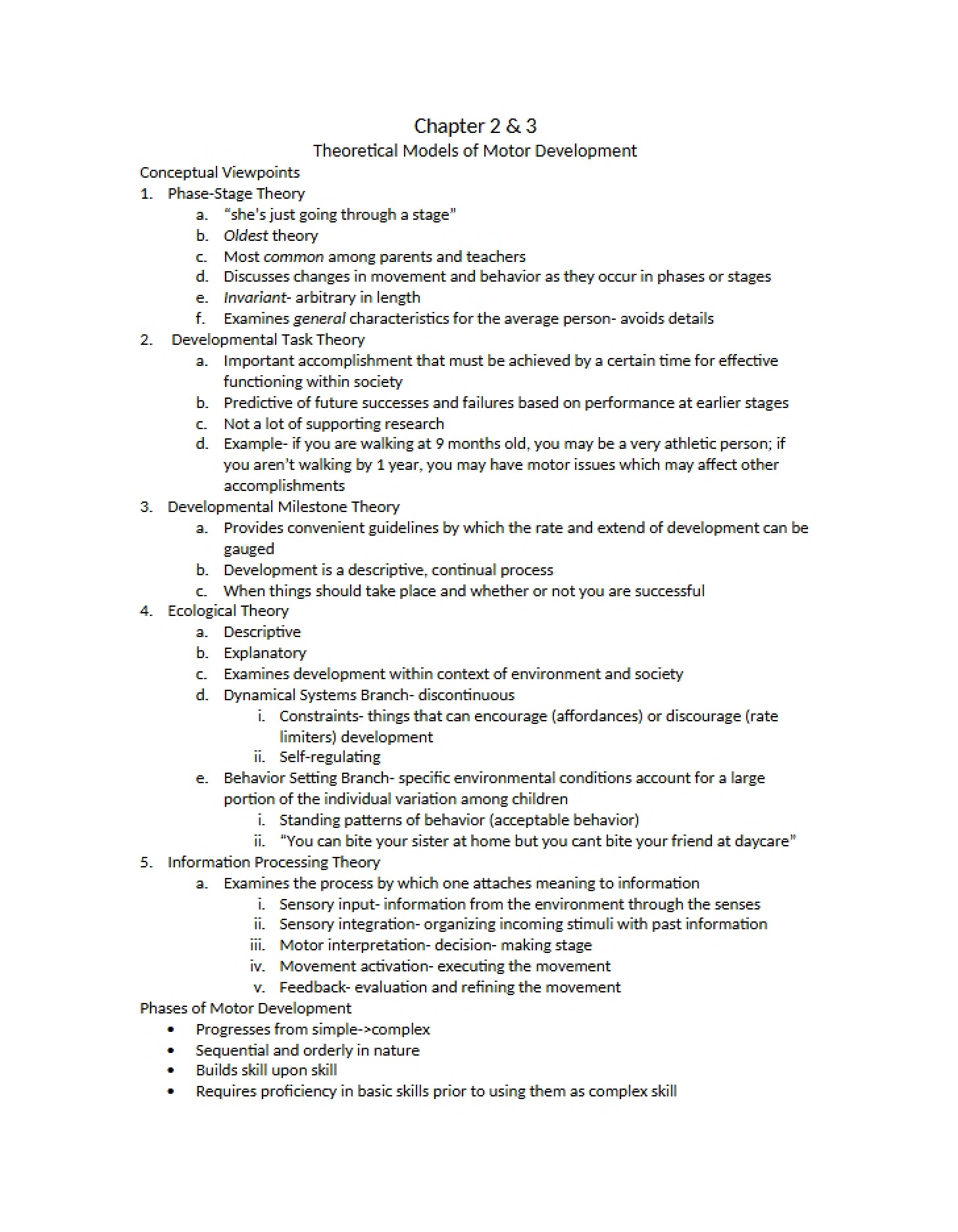
This study guide delves into the fascinating world of motor development, specifically focusing on the emergence and progression of *movements of choice* in infants and young children. It explores the foundational movement patterns that lay the groundwork for more complex skills, examining how these abilities unfold over time. The material is geared towards students in KIN 262 at the University of Illinois at Urbana-Champaign, providing a detailed look at the building blocks of human movement. It categorizes and analyzes the typical sequences observed in developing motor skills.
Why This Document Matters
This resource is ideal for students studying kinesiology, physical therapy, occupational therapy, or early childhood development. It’s particularly helpful when preparing for coursework related to motor learning, developmental milestones, and the biomechanics of movement. Understanding these fundamental patterns is crucial for anyone working with children, assessing developmental progress, or designing interventions to support motor skill acquisition. It’s best utilized *alongside* course lectures and textbook readings to solidify your understanding of these core concepts.
Common Limitations or Challenges
This guide provides a comprehensive overview of typical motor development, but it’s important to remember that individual progress can vary significantly. It does *not* offer diagnostic criteria for identifying developmental delays, nor does it provide specific therapeutic exercises or intervention strategies. It focuses on the general progression of skills and does not delve into the neurological underpinnings of these movements in extensive detail. It also doesn’t cover variations related to specific populations or clinical conditions.
What This Document Provides
* A categorization of fundamental movement patterns.
* An exploration of the typical timeline for the emergence of key motor skills.
* Discussion of the progression from early, less refined movements to more coordinated and efficient forms.
* Analysis of the interplay between different types of movements (stability, locomotion, and manipulation).
* Insight into how early movement experiences influence later skill development.
* Consideration of factors that can influence the rate of motor skill acquisition.