What This Document Is
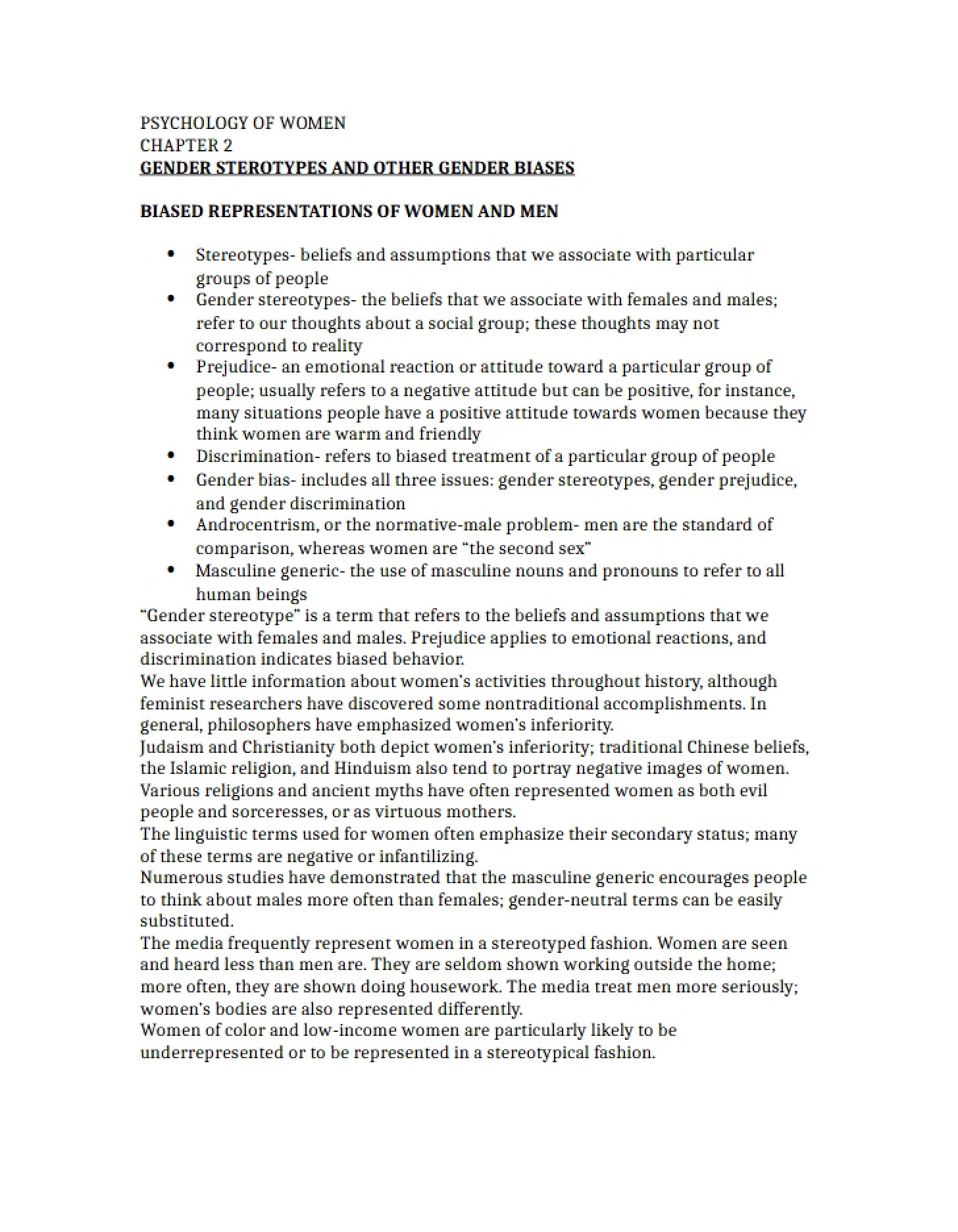
This material represents a focused section – Part Six – from a Psychology of Women course (PSYC 310) at the University of South Carolina. It delves into the complex interplay between media representation, societal expectations, and the development of gender bias, specifically focusing on how these factors impact women. The core of this section examines how images of women are constructed and disseminated, and the psychological consequences of those representations. It builds upon previous discussions regarding gender bias and introduces key theoretical frameworks for understanding these dynamics.
Why This Document Matters
This section is crucial for students in Psychology of Women, Gender Studies, or related fields seeking a deeper understanding of the socio-cultural forces shaping gender roles and self-perception. It’s particularly valuable when analyzing the impact of media on identity formation, body image, and societal perceptions of different racial and ethnic groups. Students preparing for class discussions, research projects, or essays on these topics will find this material a strong foundation for critical analysis. It’s also relevant for anyone interested in the psychology behind advertising and media effects.
Common Limitations or Challenges
This material presents theoretical frameworks and research findings, but it does not offer a comprehensive overview of all gender biases. It focuses specifically on the role of media and doesn’t cover all potential sources of gender stereotyping. Furthermore, while it references specific studies, it does not provide the full research methodologies or statistical analyses. It’s designed to be part of a larger course and assumes prior knowledge of basic psychological concepts. It does not provide solutions to complex social issues, but rather tools for understanding them.
What This Document Provides
* Exploration of key theoretical perspectives on gender bias and media influence.
* Discussion of how media images contribute to the construction of femininity.
* Analysis of the impact of representation (and lack thereof) on perceptions of different groups.
* Examination of the relationship between media consumption and self-image.
* Focus on specific research examining representations of women across different racial/ethnic backgrounds.
* Discussion questions designed to promote critical thinking and application of concepts.