What This Document Is
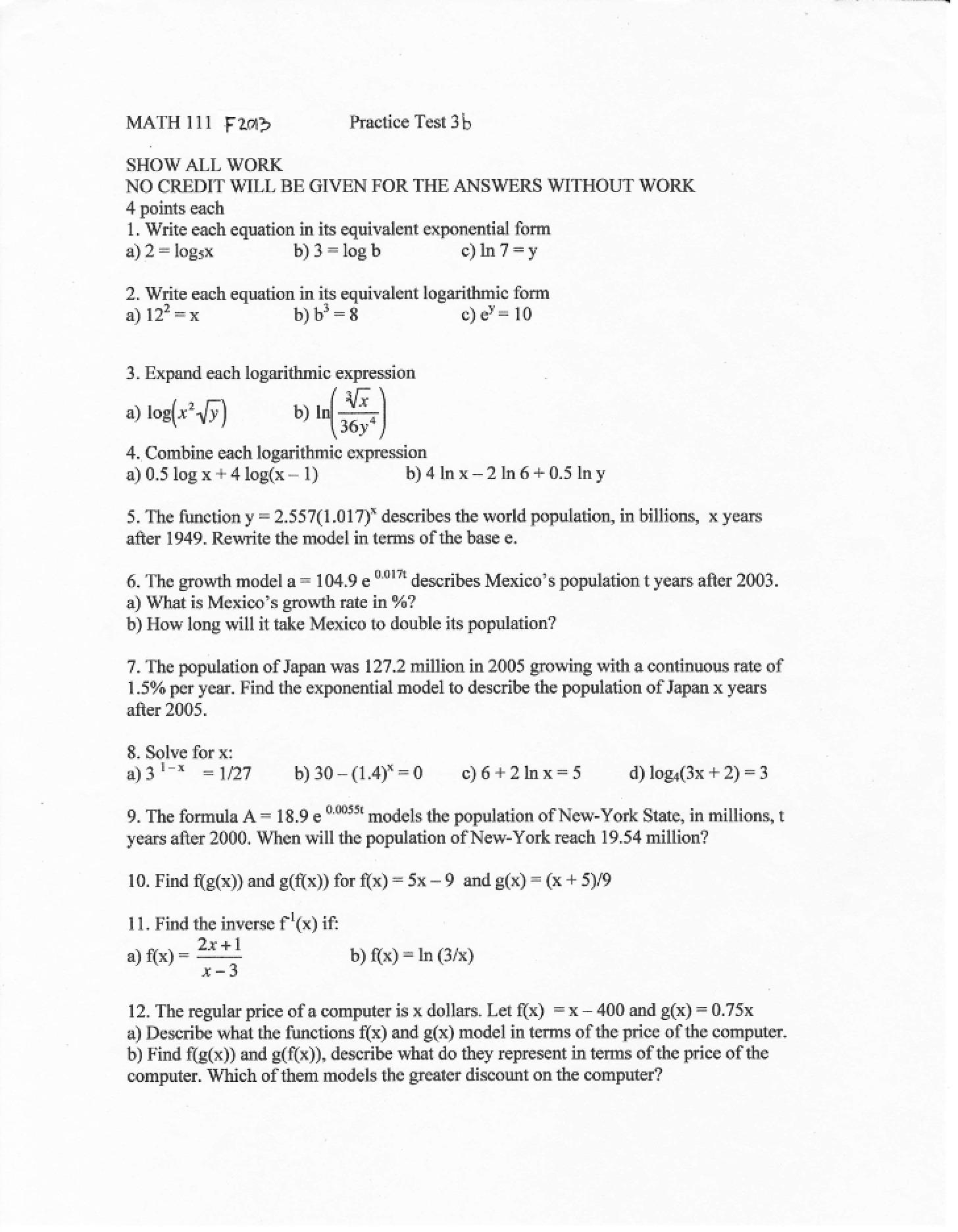
This is a comprehensive practice exam review designed to help students prepare for Exam 2 in MATH 111, Basic College Mathematics at the University of South Carolina. It’s structured as a detailed review, referencing specific sections and problems from your course textbook. The material focuses on foundational algebraic concepts and their applications, building upon the skills developed in the first half of the semester.
Why This Document Matters
This resource is invaluable for students aiming to solidify their understanding of key mathematical principles before a high-stakes exam. It’s particularly useful for identifying areas where further study is needed. Students who utilize this review can proactively address knowledge gaps and build confidence in their problem-solving abilities. It’s best used in the days leading up to Exam 2, alongside your regular study routine, and ideally in conjunction with attending a scheduled test review session.
Common Limitations or Challenges
This practice exam review is *not* a substitute for attending lectures, completing assigned homework, or thoroughly reading the textbook. It’s designed to be a focused preparation tool, not a comprehensive re-teaching of the entire course material. While it references specific textbook problems, it does not provide detailed solutions or step-by-step explanations. Successfully using this review requires a foundational understanding of the concepts already covered in class.
What This Document Provides
* A curated list of textbook sections and associated problem sets to prioritize for review.
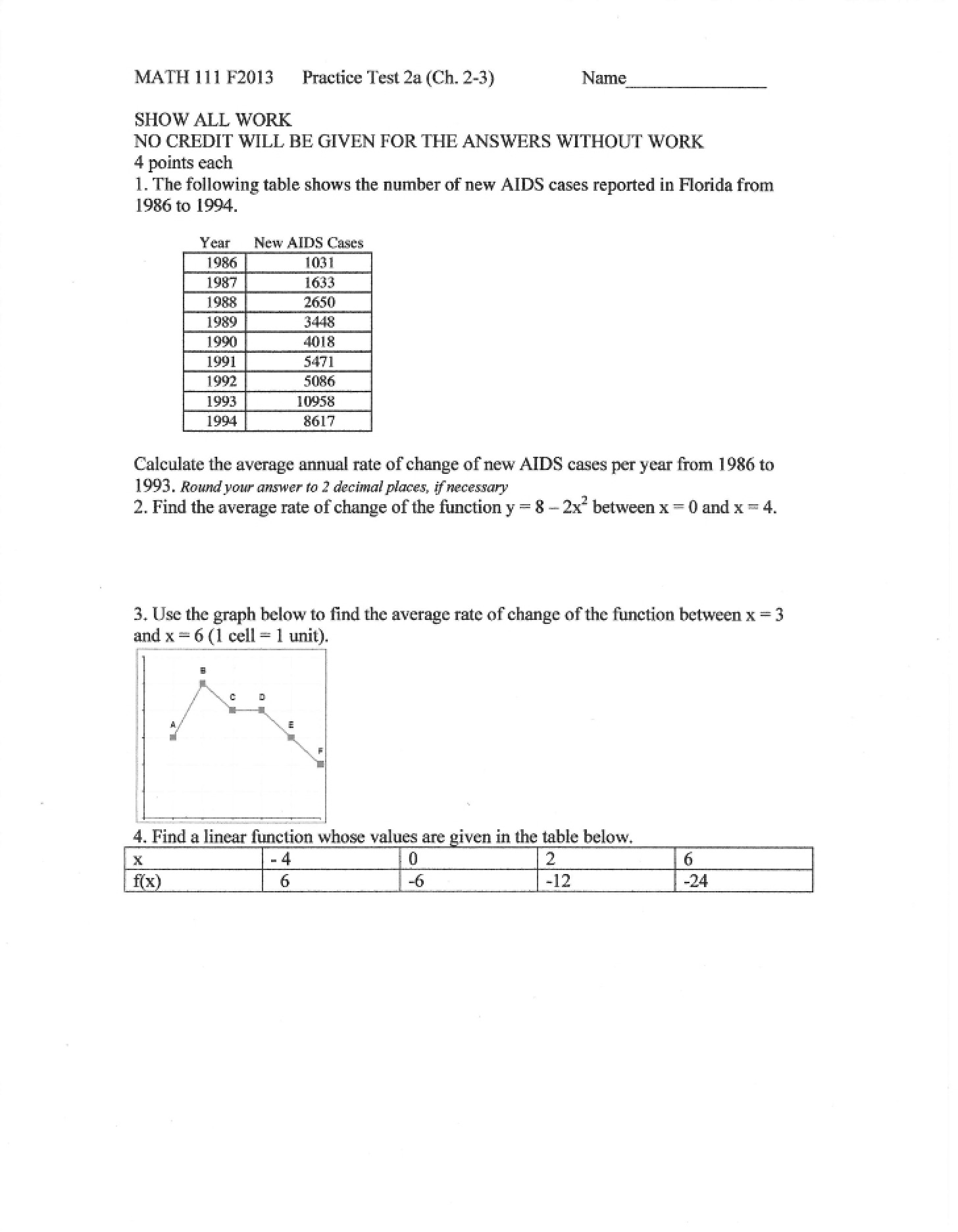
* Practice problems relating to linear functions, including calculating average rates of change and finding equations of lines.
* Application-based problems involving real-world scenarios, such as cost analysis for purchasing items or driving a vehicle.
* Problems focused on setting up and solving equations related to mixture concentrations.
* Practice finding intersection points of linear equations and comparing the costs of different options based on variable factors.
* Review of foundational concepts related to linear models and their applications.