What This Document Is
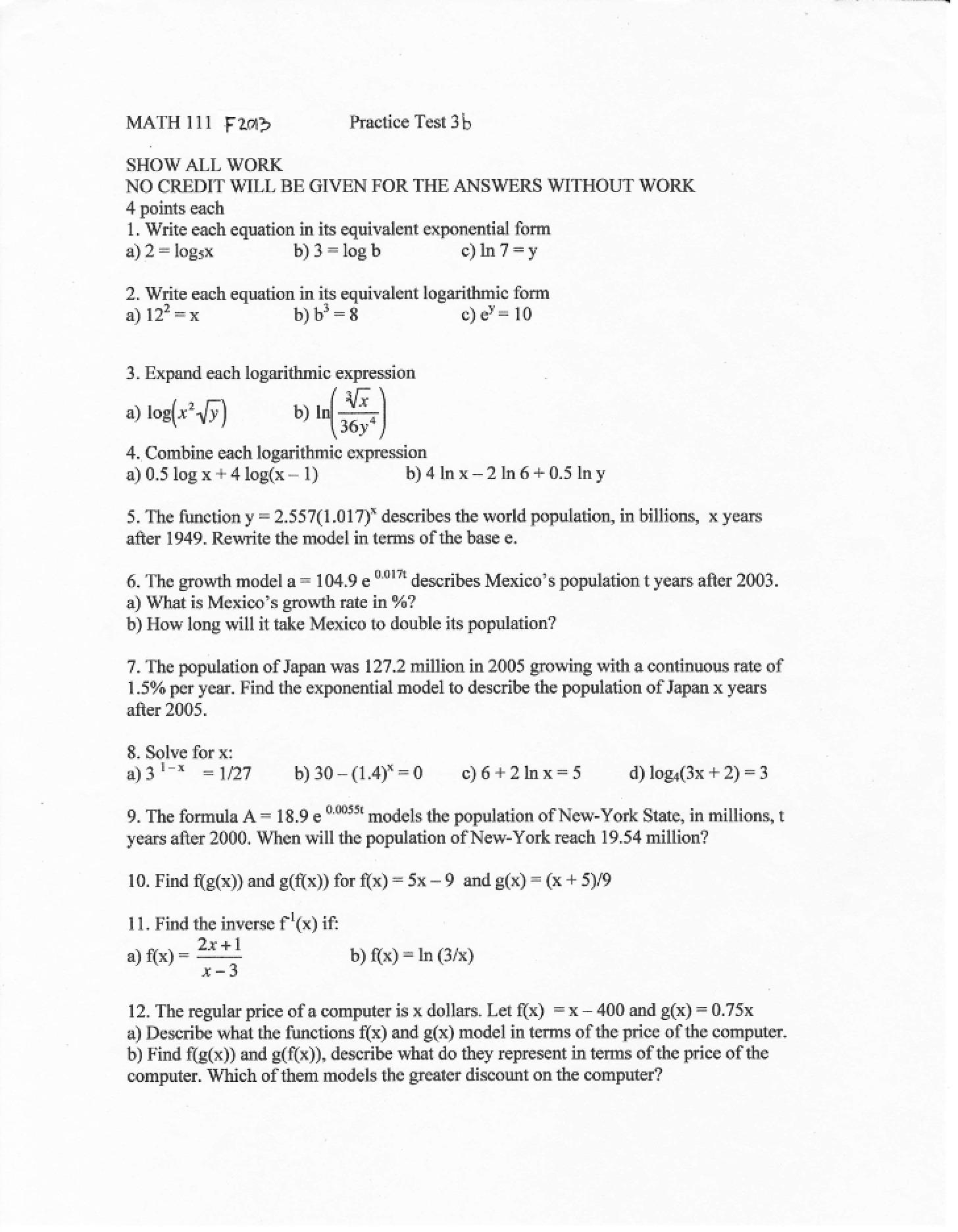
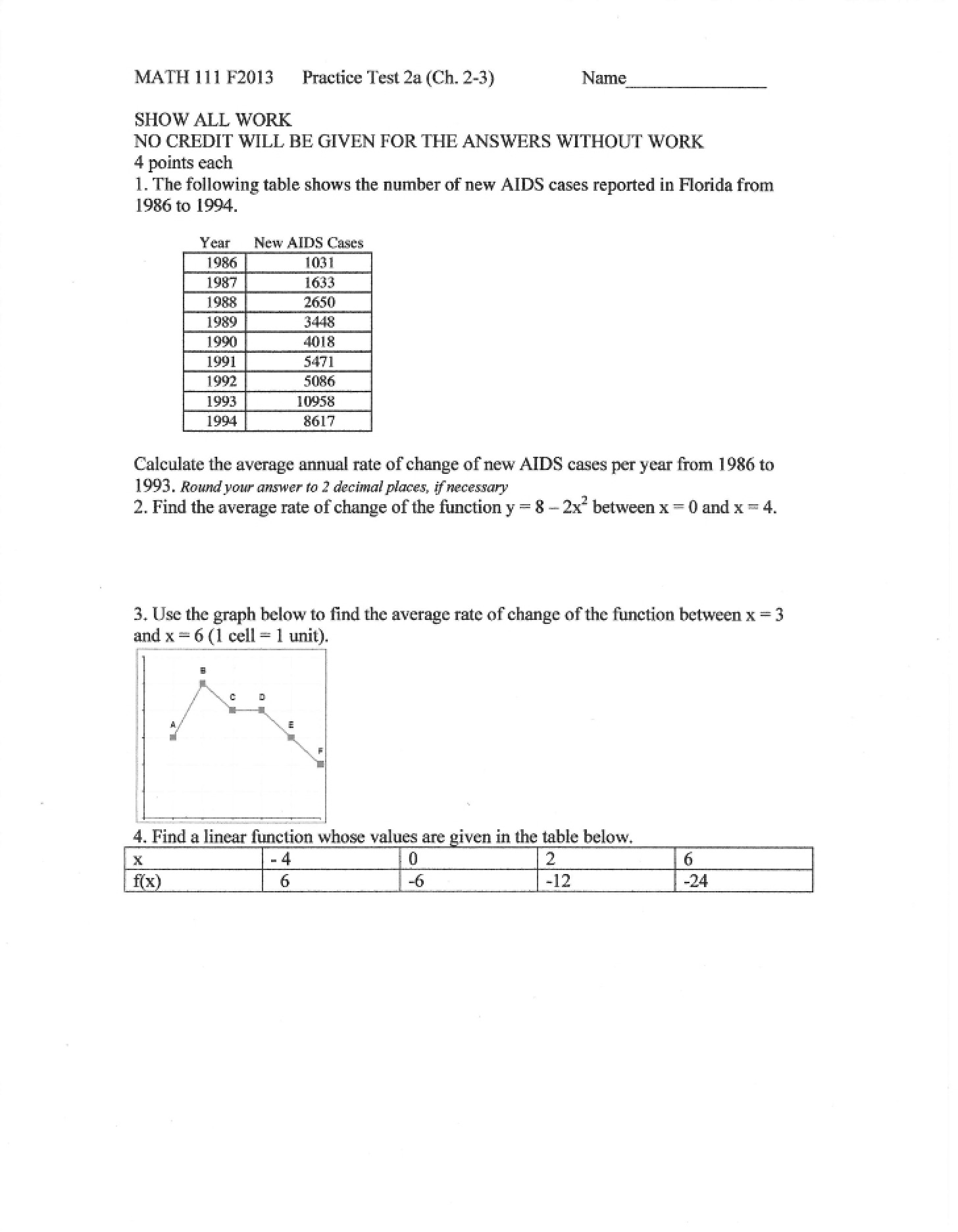
This is a practice exam designed to help students prepare for Exam 2 in MATH 111, Basic College Mathematics, at the University of South Carolina. It’s structured to mirror the format and scope of questions you can expect on the actual exam, covering a range of core concepts from several key sections of the course. The practice exam focuses on applying mathematical principles to solve problems, rather than simply recalling definitions.
Why This Document Matters
This resource is invaluable for any student looking to assess their understanding of the material covered in MATH 111 leading up to Exam 2. It’s best used *after* you’ve reviewed your notes, completed assigned homework, and feel ready to test your skills under exam-like conditions. Working through this practice exam will help identify areas where you excel and, more importantly, pinpoint topics needing further review. It’s a crucial step in building confidence and maximizing your performance on the official exam.
Common Limitations or Challenges
This practice exam is a sample and doesn’t encompass *every* possible question type or topic that may appear on Exam 2. It’s designed to be representative, but shouldn’t be considered a complete substitute for thorough study of all course materials. Furthermore, while the exam aims to replicate the difficulty of the actual test, it doesn’t include detailed explanations or step-by-step solutions – those are reserved for students who purchase access. This resource also doesn’t include any graphical questions that were presented in class.
What This Document Provides
* Problems relating to finding equations of lines given various conditions (points, slopes, parallel/perpendicular relationships).
* Application problems involving modeling real-world scenarios with linear equations, including cost analysis and break-even points.
* Exercises focused on exponential growth models, including calculating growth factors and predicting future values.
* Problems involving compound interest calculations.
* Tasks requiring identification of linear versus exponential models from provided data.
* Coverage of material from sections 2.3, 2.4, 2.6, 2.7, 3.1, and 3.2.