What This Document Is
This is a problem set designed for an International Trade course (ECON 450) at the University of Southern California. It’s a challenging assignment intended to test your understanding of core trade concepts, specifically relating to the impacts of international commerce and trade policy. The set focuses on applying theoretical models to a historical context – 19th-century trade between the United States and Great Britain – and requires analytical thinking about factor endowments, relative prices, and welfare effects.
Why This Document Matters
This problem set is crucial for students aiming to solidify their grasp of international trade theory. Successfully completing this assignment will demonstrate your ability to translate abstract economic models into real-world scenarios and analyze the distributional consequences of trade. It’s particularly valuable for students preparing for exams, further coursework in economics, or careers involving international economic policy or analysis. Working through these problems will build your analytical skillset and prepare you for more advanced topics.
Common Limitations or Challenges
This problem set does *not* provide step-by-step solutions or worked examples. It assumes a foundational understanding of Ricardian and Heckscher-Ohlin models, as well as familiarity with resource allocation diagrams. It also doesn’t offer a comprehensive historical account of 19th-century trade; instead, it uses a simplified historical setting to explore economic principles. Access to the course textbook (Krugman-Obstfeld) is essential for completing the assignment.
What This Document Provides
* A series of analytical questions centered around a two-country, two-good model.
* A historical framing of trade policy debates, using Abraham Lincoln’s quote as a starting point.
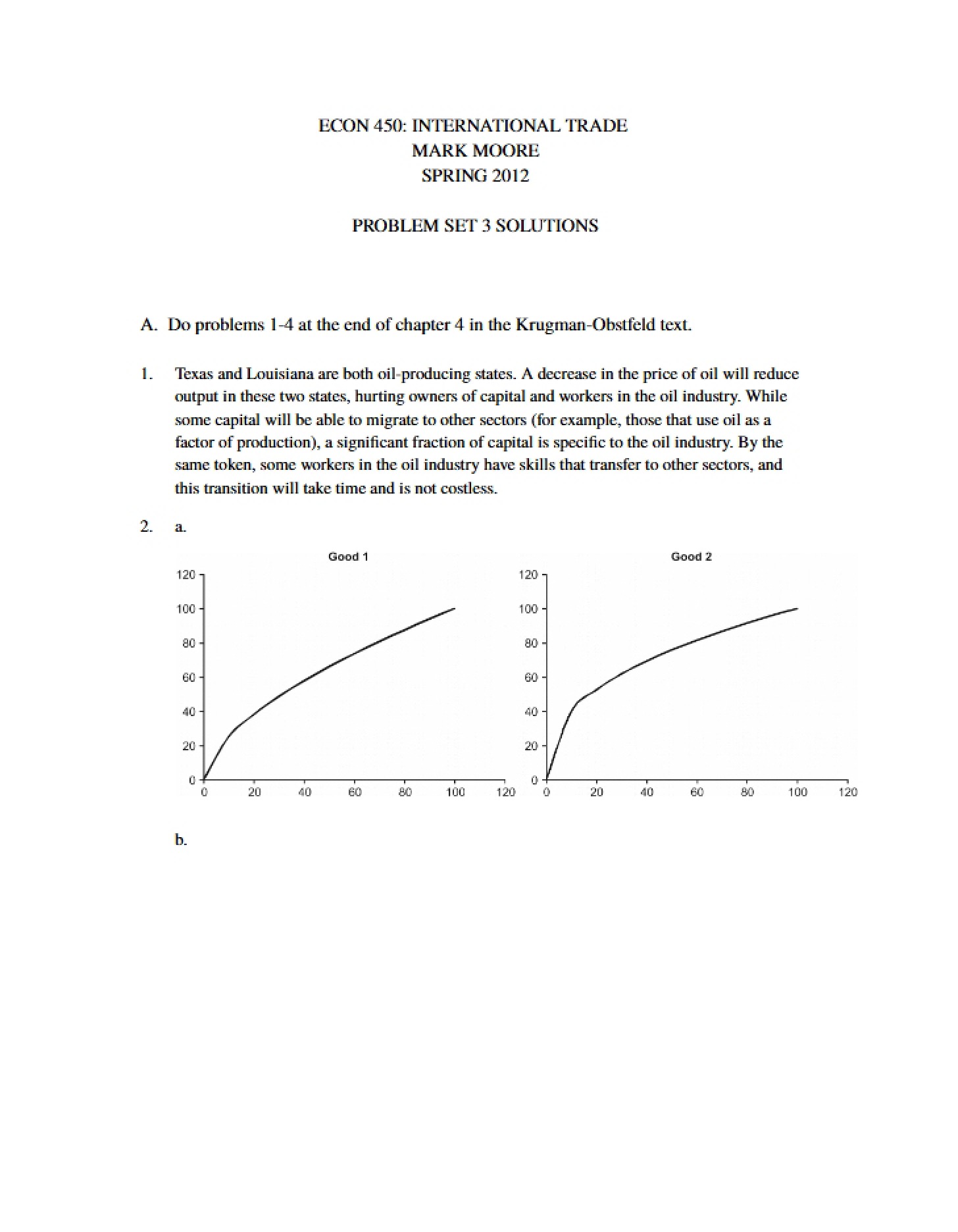
* Exercises requiring the use of resource allocation (RD/RS) diagrams.
* Scenarios exploring the welfare effects of trade on different factors of production (capital, land, labor).
* Questions prompting analysis of the political economy of trade policy, considering the interests of different groups.
* A challenge to consider the role of factor immobility and its impact on trade outcomes.