What This Document Is
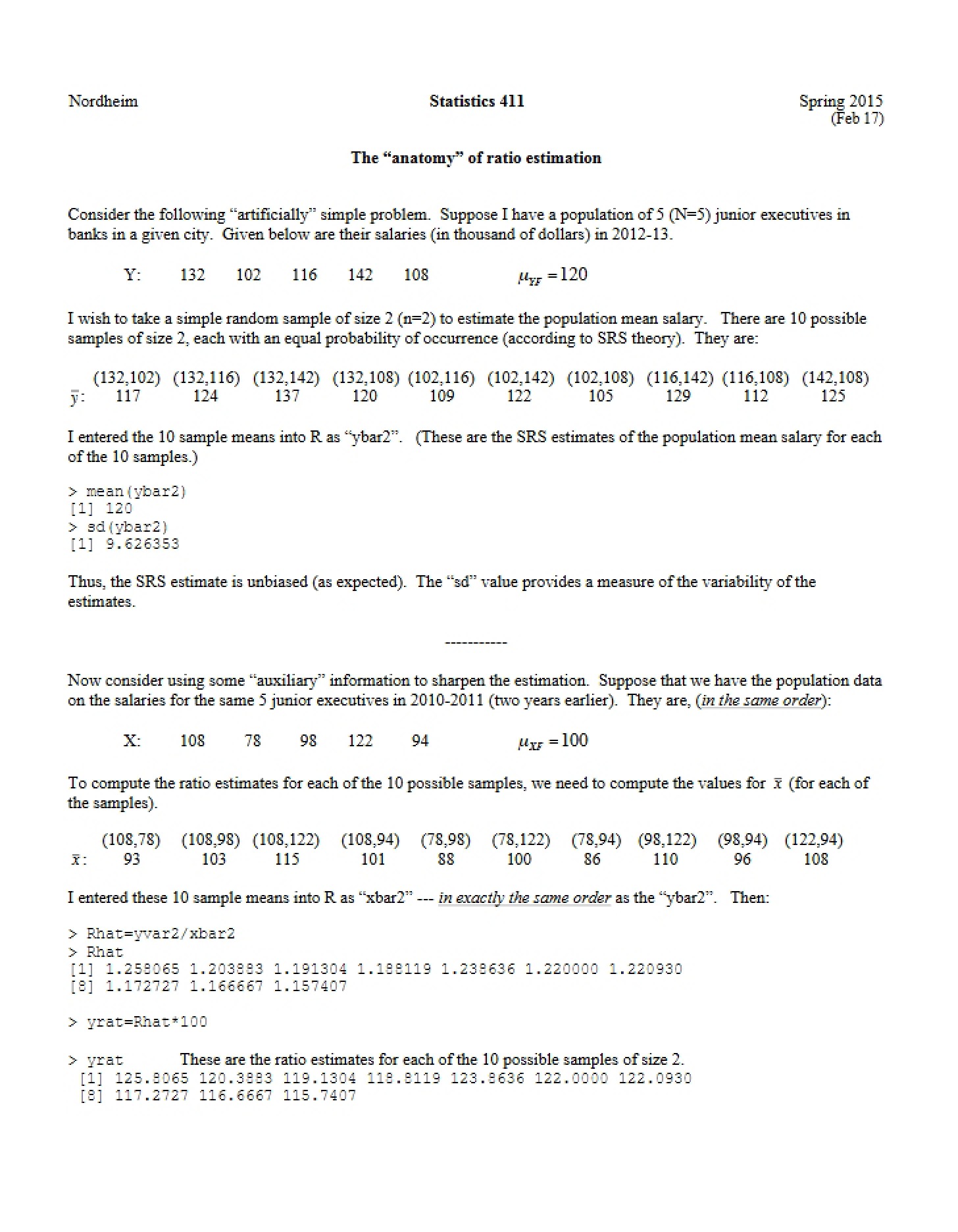
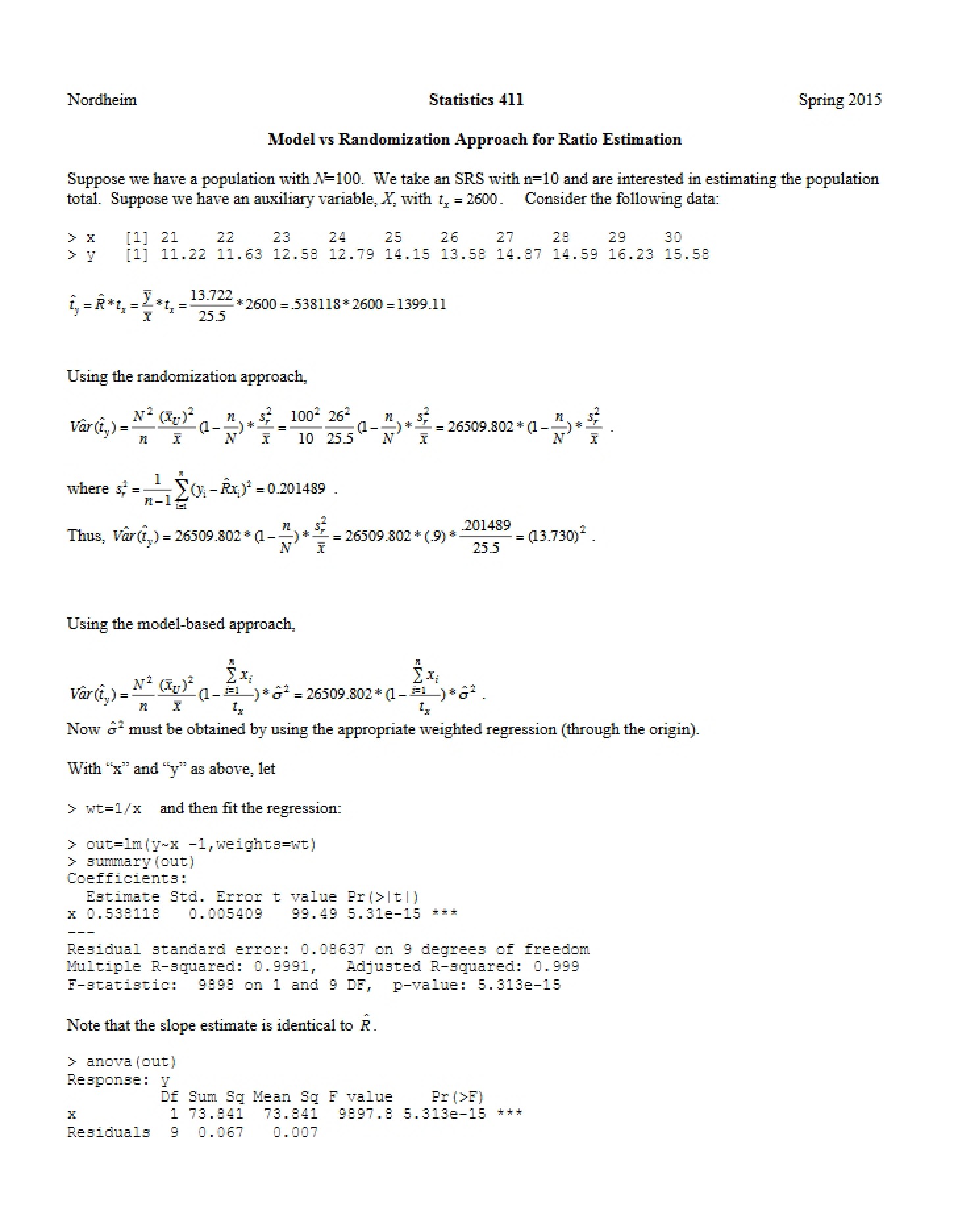
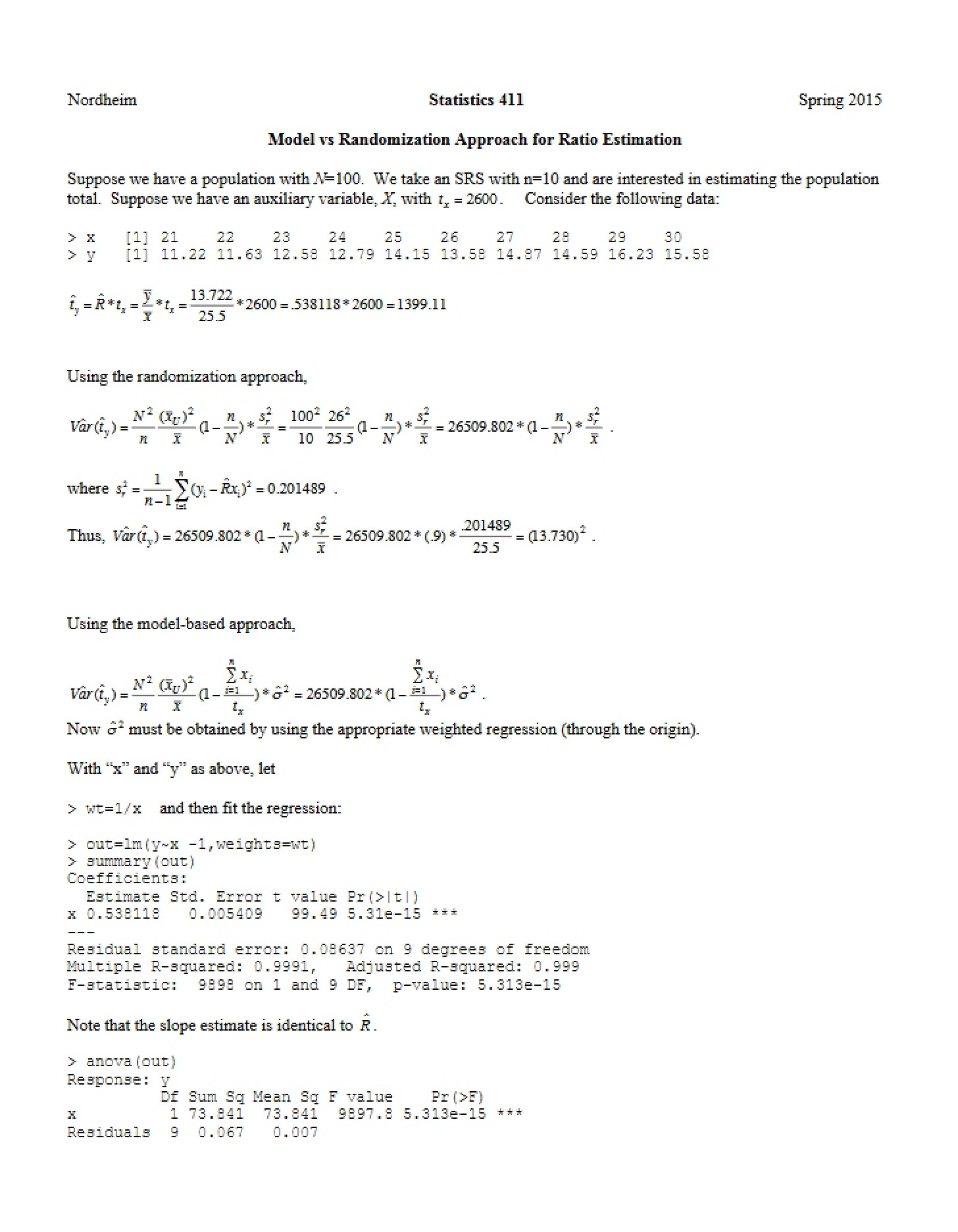
This resource is a focused guide detailing the practical application of the R statistical programming language to a specific estimation technique within survey methodology: ratio estimation. It bridges the gap between theoretical understanding of ratio estimation and its real-world implementation using a powerful statistical software package. The material centers around a worked example, demonstrating how to perform calculations and interpret results.
Why This Document Matters
Students enrolled in courses on survey sampling, statistical inference, or applied regression analysis will find this particularly valuable. It’s ideal for those seeking to solidify their understanding of ratio estimation beyond textbook formulas and conceptual explanations. Researchers and practitioners needing a starting point for implementing ratio estimation in R will also benefit. This is especially useful when dealing with larger datasets where manual calculations become impractical. Understanding the underlying calculations, as this guide emphasizes, is crucial before relying on automated functions in more comprehensive statistical packages.
Common Limitations or Challenges
This guide focuses specifically on ratio estimation and its implementation in R. It does *not* provide a comprehensive introduction to R programming itself – a basic familiarity with the language is assumed. It also doesn’t cover alternative estimation techniques or a detailed comparison of different survey sampling packages available within R. The example used is relatively simple; applying these methods to complex survey designs or datasets may require further adaptation and understanding.
What This Document Provides
* A step-by-step approach to performing ratio estimation calculations in R.
* Illustrative examples demonstrating the process from data input to variance estimation.
* Explanation of key statistical measures related to ratio estimation, such as the ratio estimator itself and its standard error.
* Discussion of how to estimate totals using ratio estimation.
* A comparison of the variance obtained using ratio estimation versus simple random sampling, highlighting the potential benefits of the ratio method.