What This Document Is
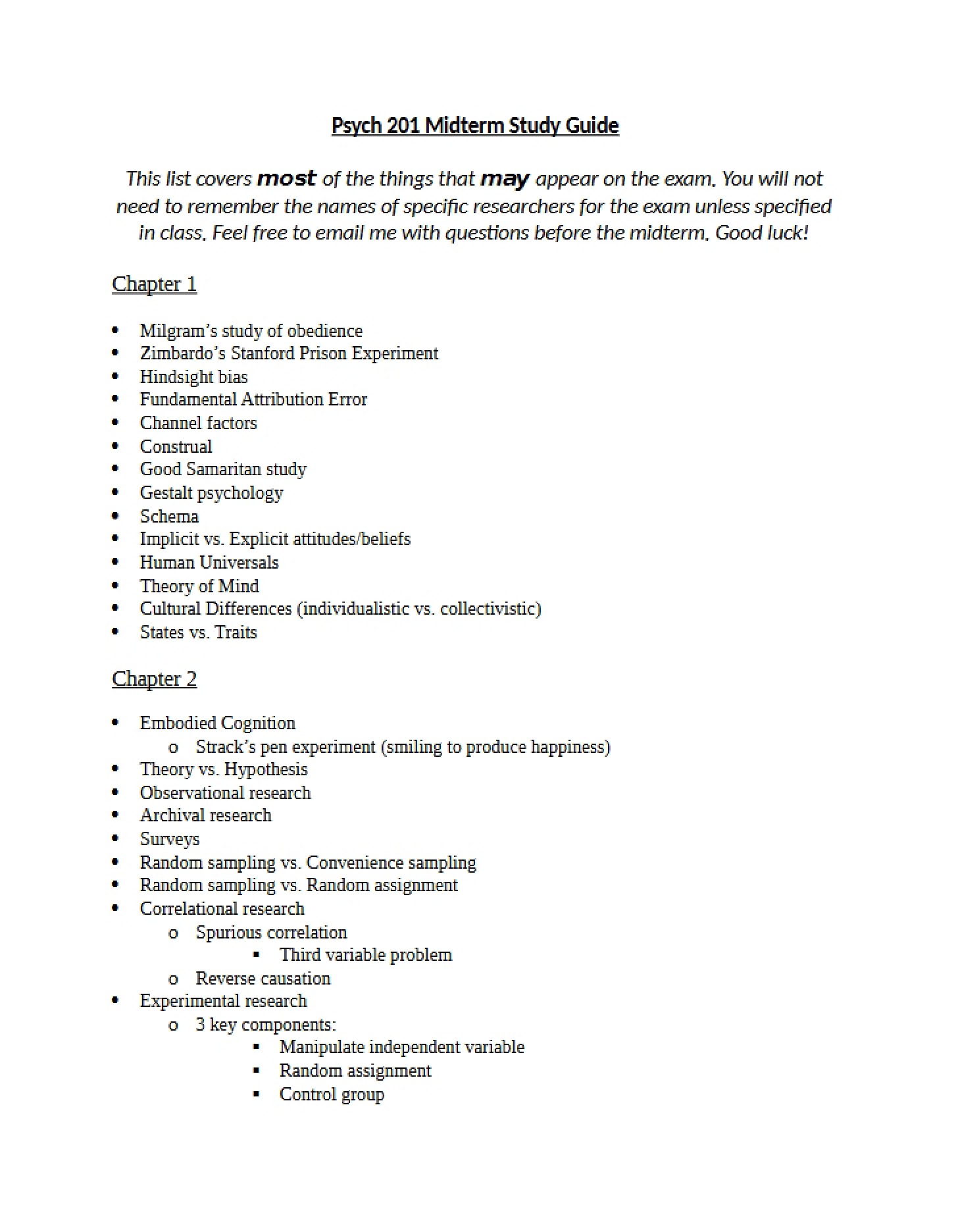
This is a focused review sheet designed to help students prepare for an upcoming midterm examination in PSYC 201 at the University of Illinois at Urbana-Champaign. It concentrates on core concepts from Chapters 1 & 2 of the course, covering foundational principles within the field of social psychology. The material is presented in a question-and-answer format, prompting critical thinking about key ideas.
Why This Document Matters
This review sheet is an invaluable resource for students aiming to solidify their understanding of introductory social psychology concepts before a midterm assessment. It’s particularly useful for those who benefit from a structured review, identifying key areas for focused study. Students who are looking to differentiate between core psychological approaches and research methodologies will find this especially helpful. Utilizing this resource alongside lecture notes and textbook readings can significantly improve exam preparedness.
Common Limitations or Challenges
This review sheet is *not* a substitute for attending lectures, completing assigned readings, or engaging with other course materials. It provides a concentrated overview, but does not offer exhaustive coverage of every topic. It also doesn’t include detailed explanations of complex studies or provide practice questions with solutions. The sheet is designed to *guide* your review, not to *be* your entire review.
What This Document Provides
* A focused overview of the distinctions between social psychology and related fields like personality psychology.
* Clarification of the differences between various research approaches used in social psychology (observational, archival, survey, and experimental).
* An exploration of the core principles underpinning experimental research, including the importance of causality.
* A breakdown of the relationship between correlational and experimental studies.
* Key terminology related to experimental design, including definitions of independent and dependent variables, and control conditions.