What This Document Is
These are detailed session notes from PHYS 211, University Physics – Mechanics, offered at the University of Illinois at Urbana-Champaign. The notes comprehensively cover core principles relating to work, energy, and their associated concepts within a mechanical systems framework. Expect a deep dive into the theoretical underpinnings of these topics, focusing on the relationships between different forms of energy and the forces that act upon them. The material builds upon foundational physics concepts and prepares students for more advanced problem-solving.
Why This Document Matters
This resource is invaluable for students currently enrolled in a university-level introductory mechanics course. It’s particularly helpful for those who benefit from seeing concepts explained in a detailed, step-by-step manner alongside in-class examples. These notes can be used to reinforce lecture material, prepare for quizzes and exams, or as a reference while tackling challenging homework assignments. Students who struggle with visualizing energy transformations or understanding the nuances of conservative versus non-conservative forces will find this particularly useful.
Common Limitations or Challenges
These session notes are a record of course material and are not a substitute for attending lectures or completing assigned readings. They do not include fully worked-out example problems with step-by-step solutions; rather, they present the theoretical framework needed to *approach* such problems. The notes also assume a foundational understanding of calculus and basic physics principles. Access to the full document is required to unlock the complete explanations and detailed derivations presented within.
What This Document Provides
* A focused exploration of the relationship between work and energy.
* Detailed discussion of conservative and non-conservative forces.
* Explanations of how to determine potential energy differences.
* Analysis of mechanical energy and its conservation.
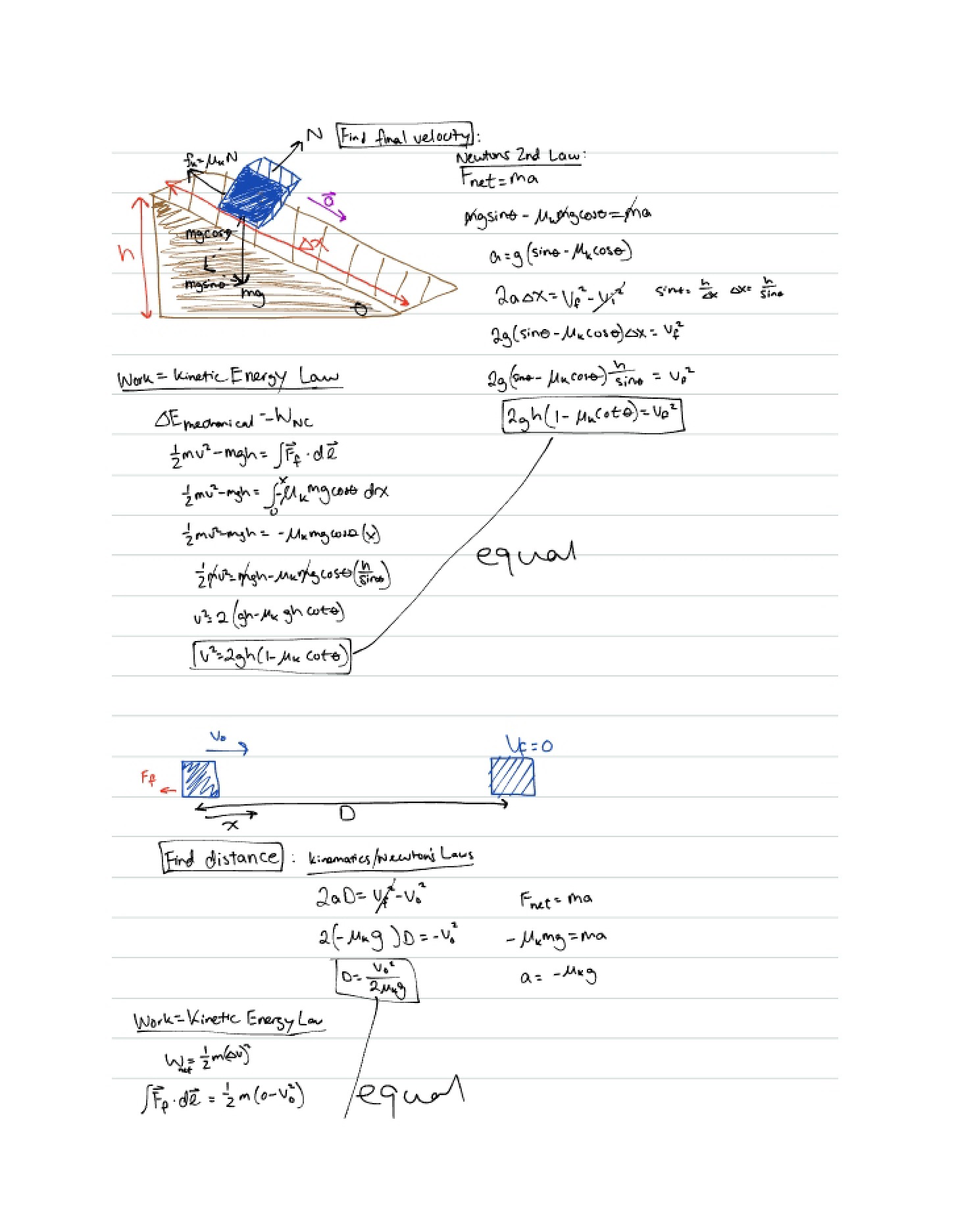
* Connections between force, displacement, and energy changes.
* Key definitions and relationships related to kinetic and potential energy.
* Discussion of system-level energy considerations.