What This Document Is
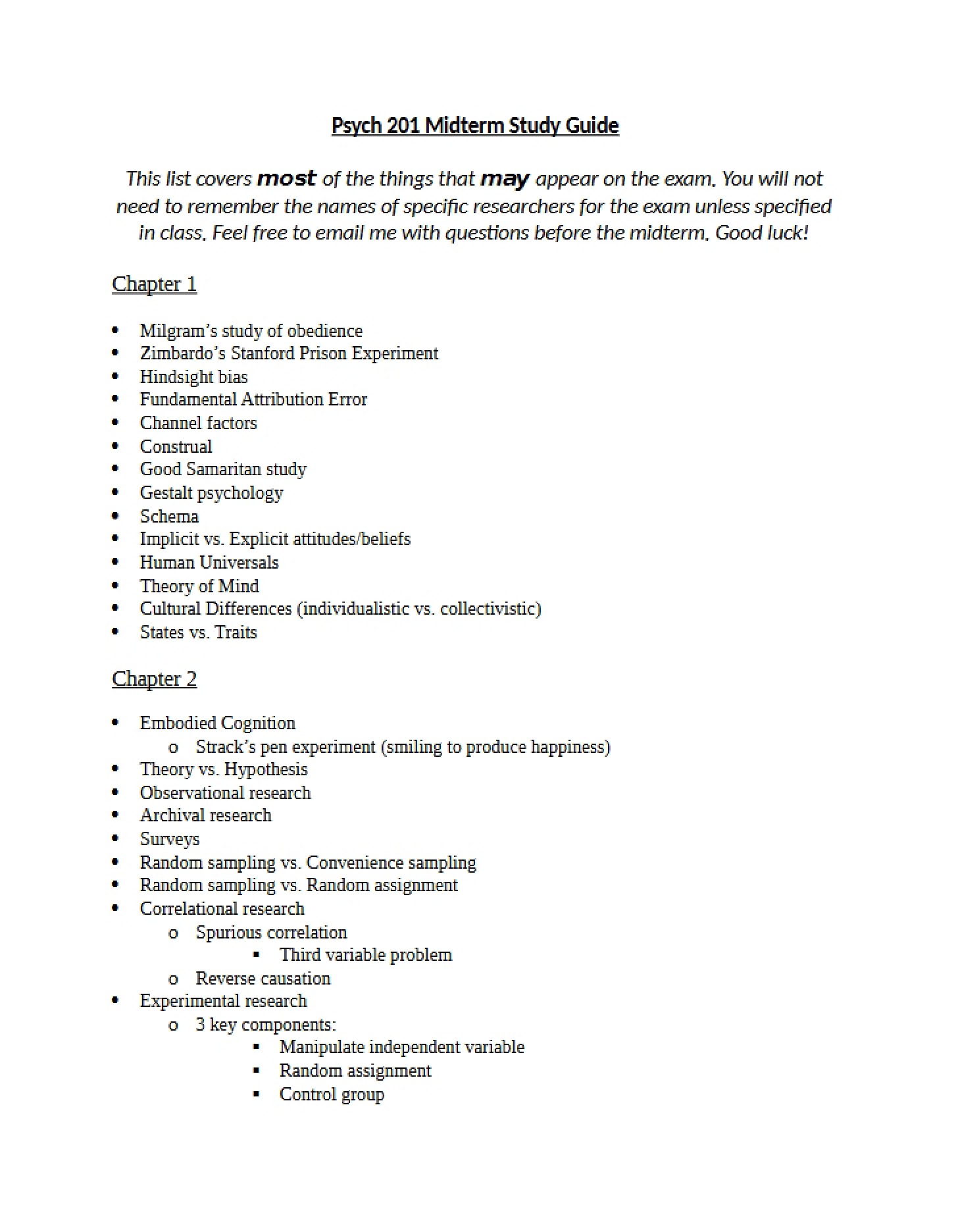
This study guide provides a focused overview of research methodologies commonly employed within the field of social psychology. It delves into the different approaches researchers utilize to investigate how people’s thoughts, feelings, and behaviors are influenced by the actual or imagined presence of others. The material systematically breaks down various research designs, moving from observational techniques to more complex correlational and experimental approaches. It’s designed for students seeking a solid foundation in understanding *how* social psychological knowledge is acquired, not just *what* the knowledge is.
Why This Document Matters
This resource is particularly valuable for students enrolled in introductory or intermediate social psychology courses, especially those at the University of Illinois at Urbana-Champaign (PSYC 201). It’s ideal for students preparing for exams, working on research projects, or simply aiming to deepen their understanding of the scientific basis of social psychological findings. Understanding research methods is crucial for critically evaluating studies and interpreting results – skills essential for success in the course and beyond. It will be most helpful when you are beginning to analyze research articles or design your own studies.
Common Limitations or Challenges
This guide focuses on the *principles* of social psychology research methods. It does not provide detailed statistical analyses or step-by-step instructions for conducting specific experiments. It also doesn’t offer pre-existing research findings or conclusions – its purpose is to equip you with the tools to understand the research process itself. It won’t substitute for a thorough reading of your textbook or attendance in lectures, but rather serves as a focused companion to those resources.
What This Document Provides
* A categorization of different research approaches used in social psychology.
* An exploration of the strengths and weaknesses of observational and archival research.
* A detailed examination of correlational research, including how to interpret correlation coefficients.
* Discussion of the challenges in establishing cause-and-effect relationships.
* An overview of potential issues that can arise when interpreting correlational data.
* Key terminology related to research design and data analysis.