What This Document Is
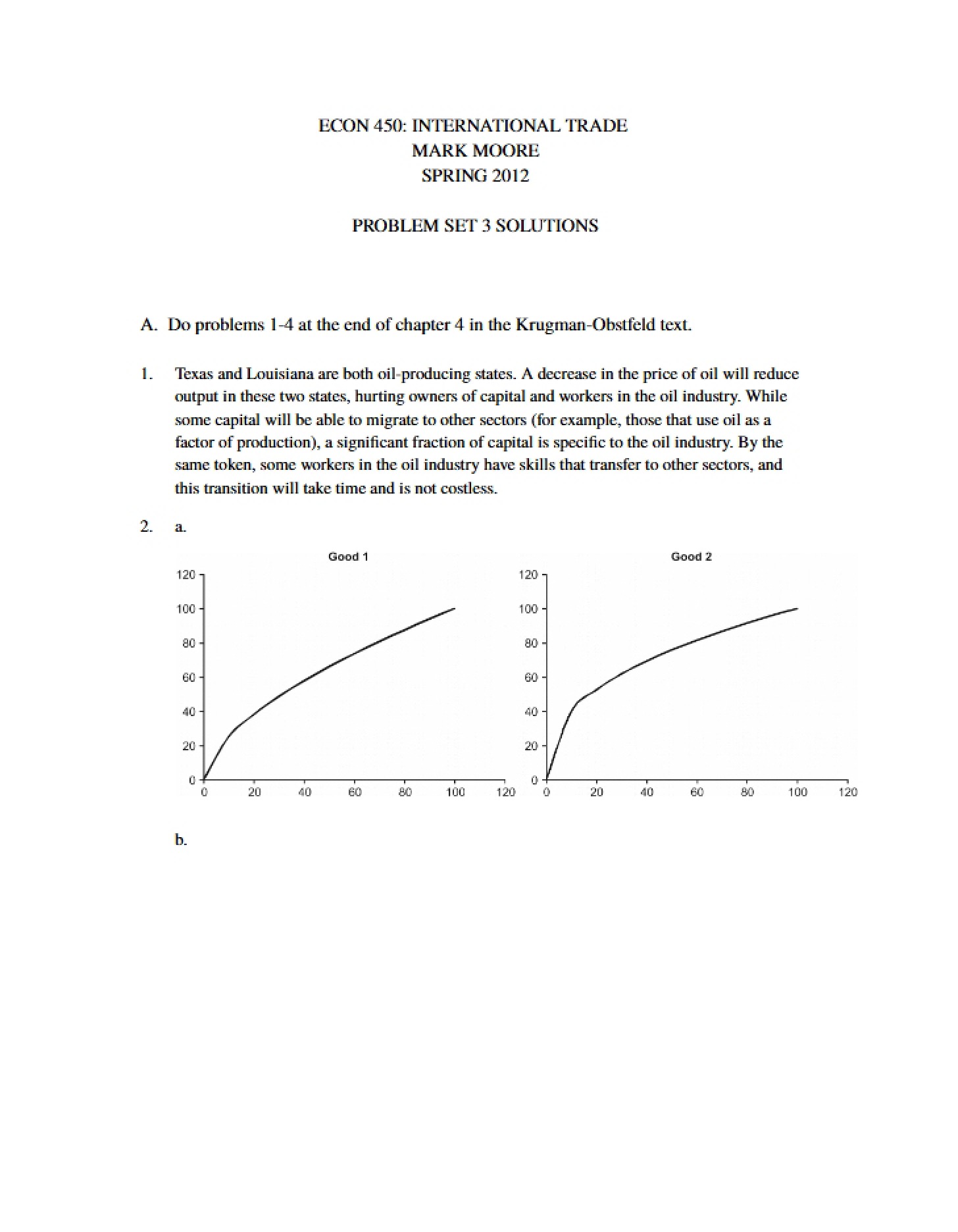
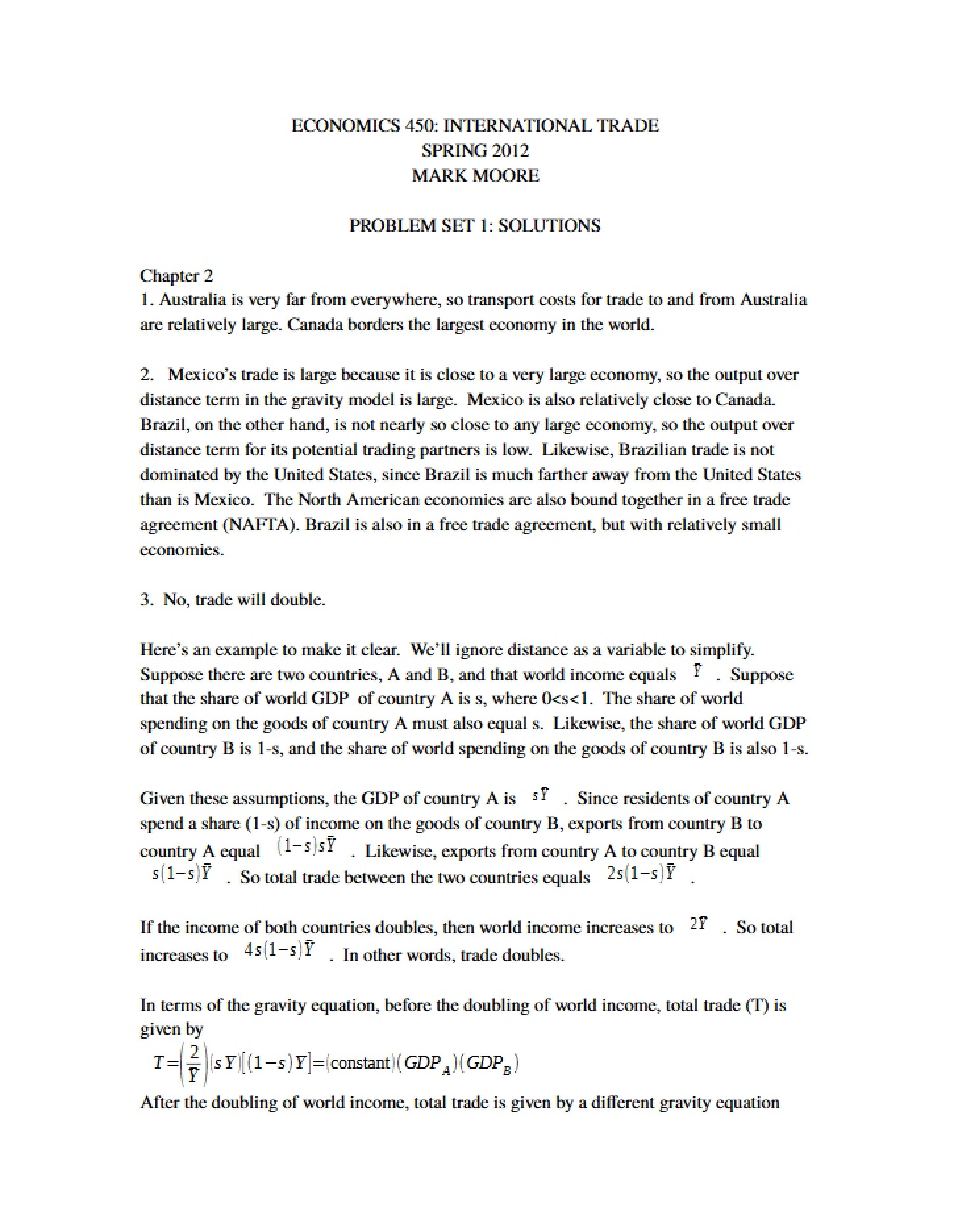
This study guide provides detailed worked solutions for a problem set in an upper-level International Trade course (ECON 450) at the University of Southern California. It focuses on core concepts within the Ricardian model of international trade, building upon foundational principles to explore more complex scenarios. The material is designed to reinforce understanding of trade patterns, comparative advantage, and welfare implications. It delves into the mathematical underpinnings of these concepts, offering a robust approach to mastering the course material.
Why This Document Matters
This resource is invaluable for students enrolled in similar international trade courses, particularly those utilizing a mathematical approach. It’s most beneficial when you’re actively working through problem sets and need to check your understanding of the underlying principles. It can help identify areas where your approach differs from the established solutions, allowing for targeted review and clarification. Students preparing for exams or quizzes will also find this a useful tool for solidifying their grasp of key concepts and problem-solving techniques.
Common Limitations or Challenges
This guide focuses *specifically* on the solutions to Problem Set 2. It does not offer a comprehensive review of all international trade theory, nor does it cover alternative models beyond the Ricardian framework presented in the problem set. It assumes a foundational understanding of economic principles and mathematical notation. It will not provide explanations of the *original* problem statements – access to the problem set itself is required to fully utilize this resource.
What This Document Provides
* Detailed analysis of production possibilities frontiers (PPFs) under varying conditions.
* Exploration of opportunity costs and their impact on production decisions.
* Illustrations of how relative prices influence production and trade patterns.
* Examination of the effects of trade on consumption possibilities.
* Discussion of the relationship between relative wages and productivity.
* Consideration of the impact of non-traded goods on trade outcomes.
* Analysis of comparative and absolute advantage.
* Mathematical derivations related to relative supply and demand.