What This Document Is
This document is a detailed solution set for a problem set within an International Trade course (ECON 450) at the University of Southern California. It functions as a study guide, walking through the application of economic principles to real-world trade scenarios. The material focuses on welfare analysis related to trade policies, specifically tariffs and subsidies, within a small country framework. It utilizes supply and demand curves and explores concepts of consumer and producer surplus.
Why This Document Matters
This resource is invaluable for students enrolled in similar International Trade courses, particularly those grappling with the complexities of trade policy analysis. It’s most beneficial when used *after* attempting the original problem set independently. Reviewing a detailed solution set can solidify understanding of core concepts, identify areas of weakness, and improve problem-solving skills. It’s especially helpful when preparing for exams or quizzes that assess your ability to apply trade theory to practical situations. Access to this detailed breakdown can significantly enhance your grasp of welfare economics in an international context.
Common Limitations or Challenges
This document provides a worked-through example, but it does not offer a substitute for understanding the underlying economic principles. It won’t teach you *how* to initially approach these types of problems; it assumes you’ve already been introduced to the core concepts in class or through assigned readings. Furthermore, it focuses on a specific set of problems and may not cover all possible variations or complexities within the topic of trade policy. It is designed to complement, not replace, active learning and classroom participation.
What This Document Provides
* A step-by-step analysis of a problem involving the welfare effects of an import tariff.
* An examination of how tariffs impact consumer surplus, producer surplus, and government revenue.
* A discussion of the potential for net welfare gains or losses from trade policies.
* An exploration of the effects of a production subsidy on market outcomes.
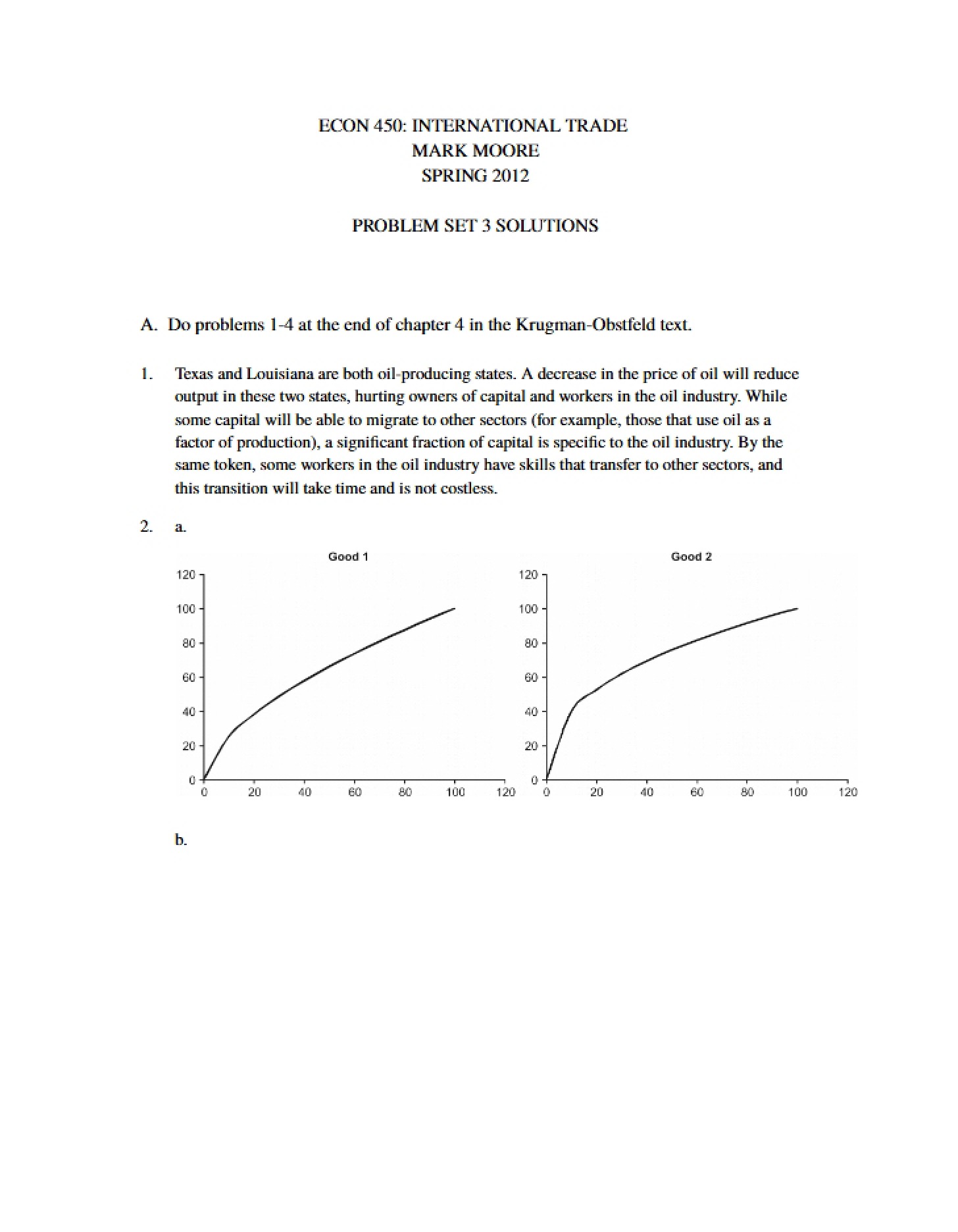
* Graphical illustrations to aid in visualizing the economic concepts.
* Detailed calculations related to changes in quantity supplied, quantity demanded, and overall welfare.