What This Document Is
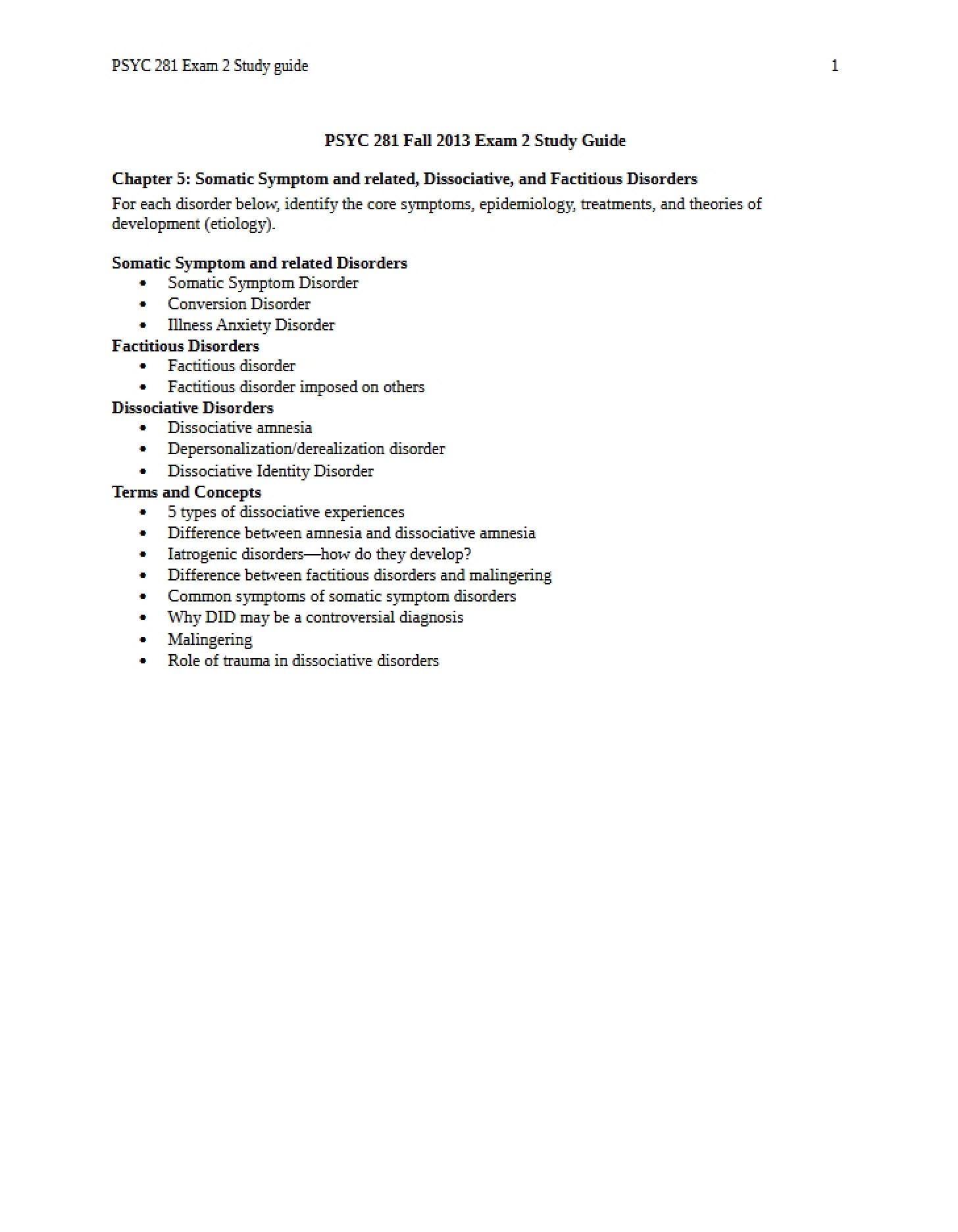
This study guide provides a focused overview of Somatic Symptoms and Related Disorders, Factitious Disorders, and Dissociative Disorders – key areas within the broader field of psychological disorders. Created for students in an introductory psychology course (PSYC 281 at West Virginia University), it’s designed to help you navigate the complexities of these often misunderstood conditions. It’s structured to support exam preparation and deeper understanding of diagnostic criteria and theoretical perspectives.
Why This Document Matters
If you’re enrolled in an introductory psychology course covering psychopathology, or preparing for an exam specifically addressing these disorders, this guide will be a valuable resource. It’s particularly helpful for students who benefit from a concise, organized summary of core concepts. It’s best used *in conjunction* with your course textbook and lecture notes to reinforce learning and identify areas needing further study. Understanding these disorders is crucial for anyone pursuing a career in mental health, healthcare, or related fields.
Common Limitations or Challenges
This guide is not a substitute for comprehensive course materials or clinical experience. It does not offer in-depth case studies, detailed treatment protocols, or a complete exploration of the diagnostic manual. It also doesn’t provide a definitive “cure” or exhaustive list of every possible symptom presentation. The information presented is intended as a study aid and should not be used for self-diagnosis or treatment.
What This Document Provides
* An overview of Somatic Symptom and Related Disorders, including distinctions between different presentations.
* Exploration of the characteristics of Factitious Disorders and their differentiation from related conditions.
* A breakdown of key Dissociative Disorders, including amnesia, depersonalization/derealization, and identity disruption.
* Discussion of potential contributing factors (etiology) considered in the development of these disorders.
* General approaches to treatment commonly discussed in the field.