What This Document Is
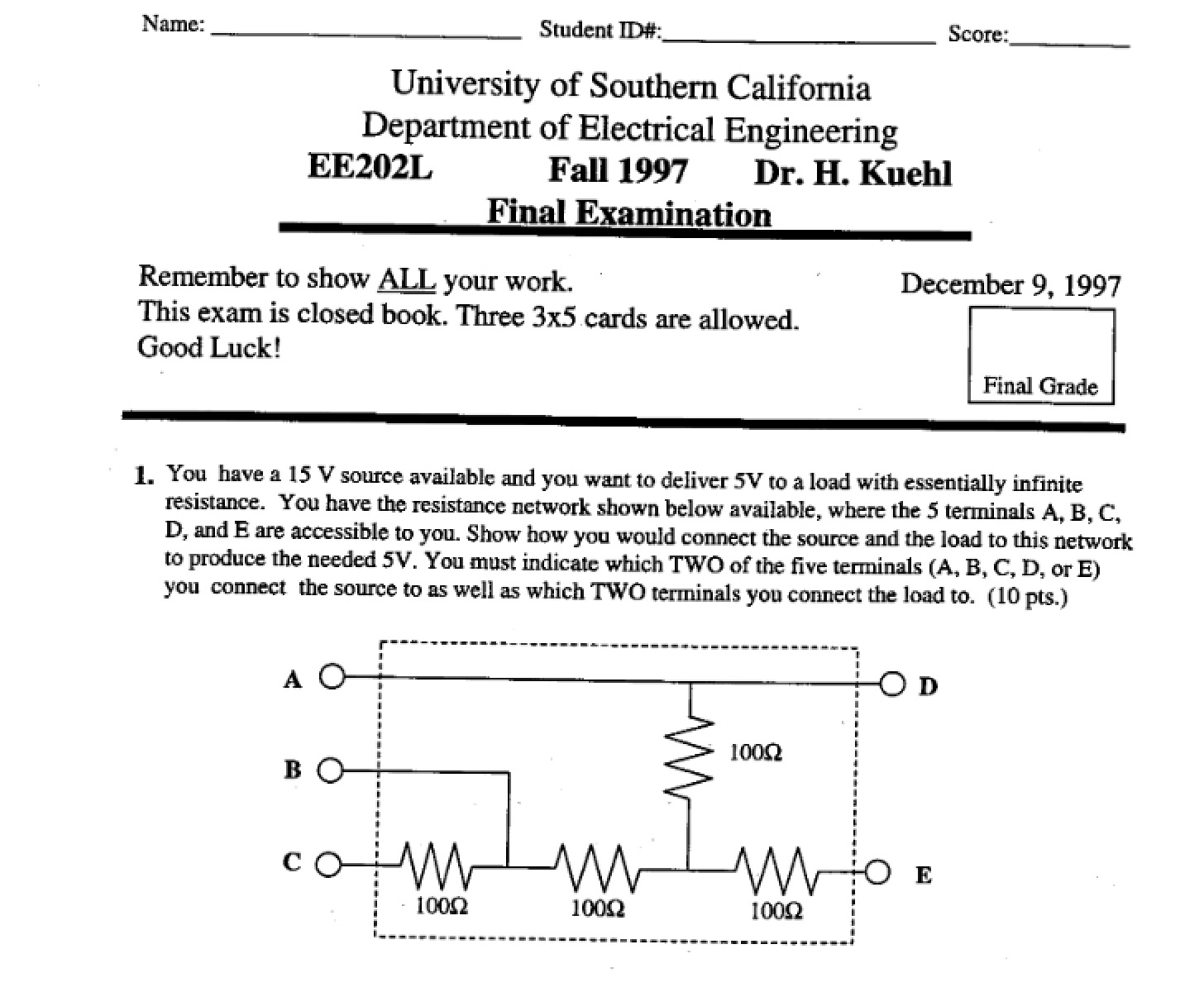
This is a past final examination for EE 202L, Linear Circuits, offered at the University of Southern California in Spring 2000. It’s a closed-book exam, meaning students were permitted a limited number of notes during the assessment. The exam focuses on core concepts within linear circuit analysis, testing a student’s ability to apply theoretical knowledge to practical problem-solving. It’s designed to comprehensively evaluate understanding of the material covered throughout the semester.
Why This Document Matters
This resource is invaluable for students currently enrolled in or preparing for a similar linear circuits course. It’s particularly helpful for understanding the *style* and *scope* of questions asked by Professor Kuehl. Reviewing past exams allows students to identify key topics emphasized in the course and gauge the level of difficulty they can expect. It’s a strong tool for self-assessment and targeted study, helping you pinpoint areas where further review is needed. Utilizing this exam as a practice tool can significantly reduce test-day anxiety and improve performance.
Common Limitations or Challenges
Please note that this is a historical exam. While the fundamental principles of circuit analysis remain constant, specific course content, emphasis, and even the instructor’s approach may have evolved since 2000. Therefore, this exam should be used as a supplemental resource and not as a definitive predictor of all possible questions. It does not include explanations or worked solutions; it is purely the original exam as administered.
What This Document Provides
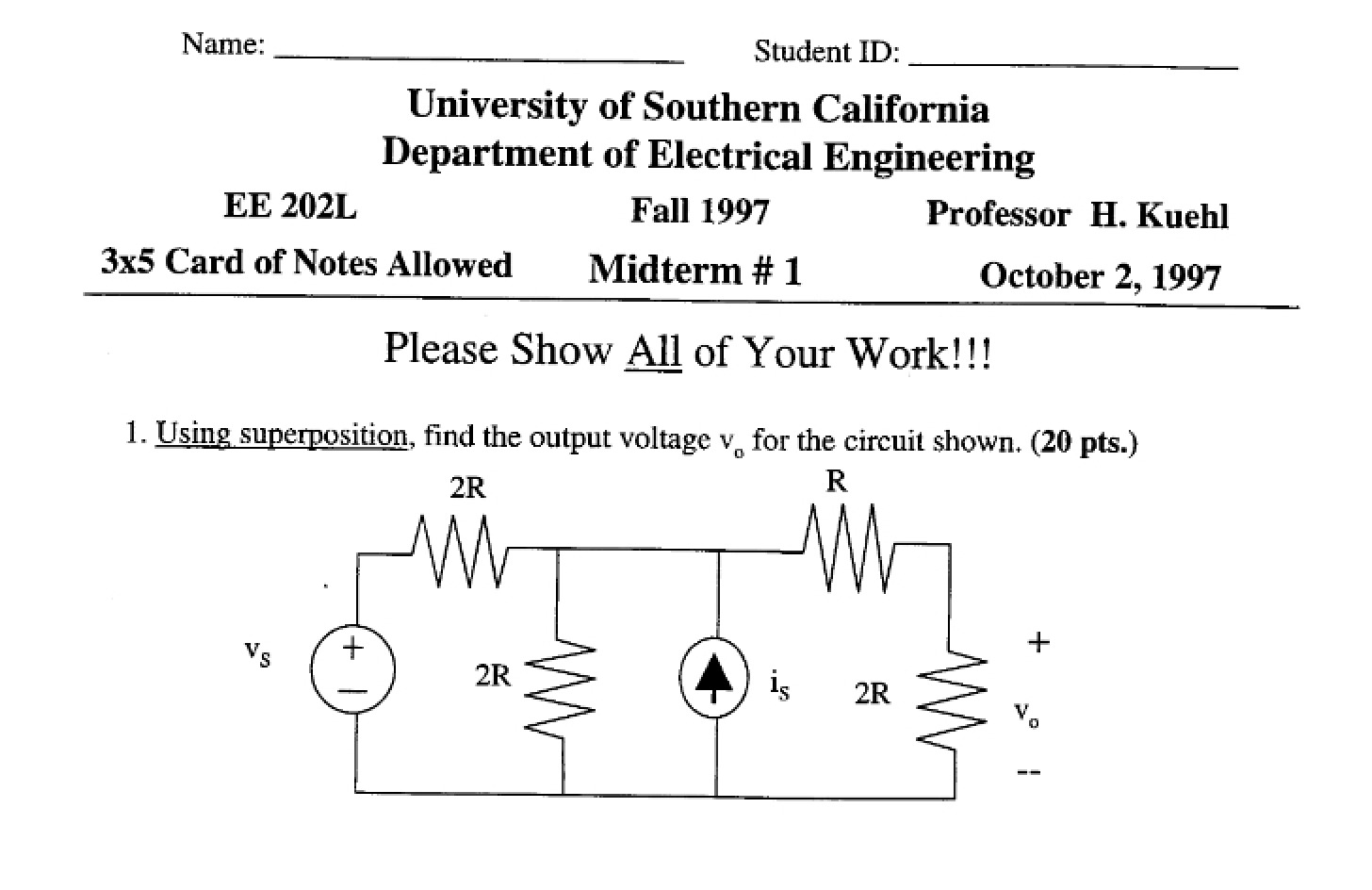
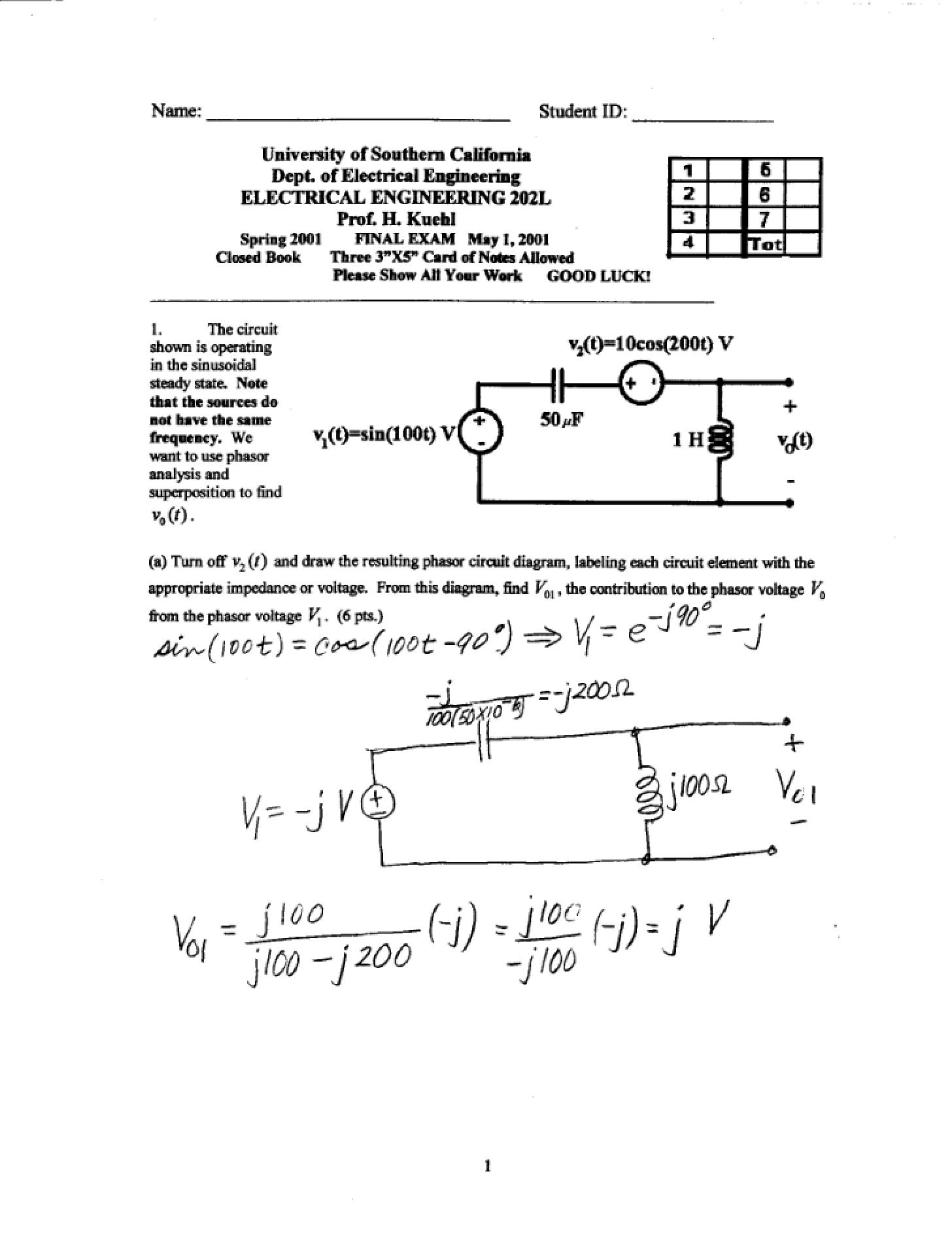
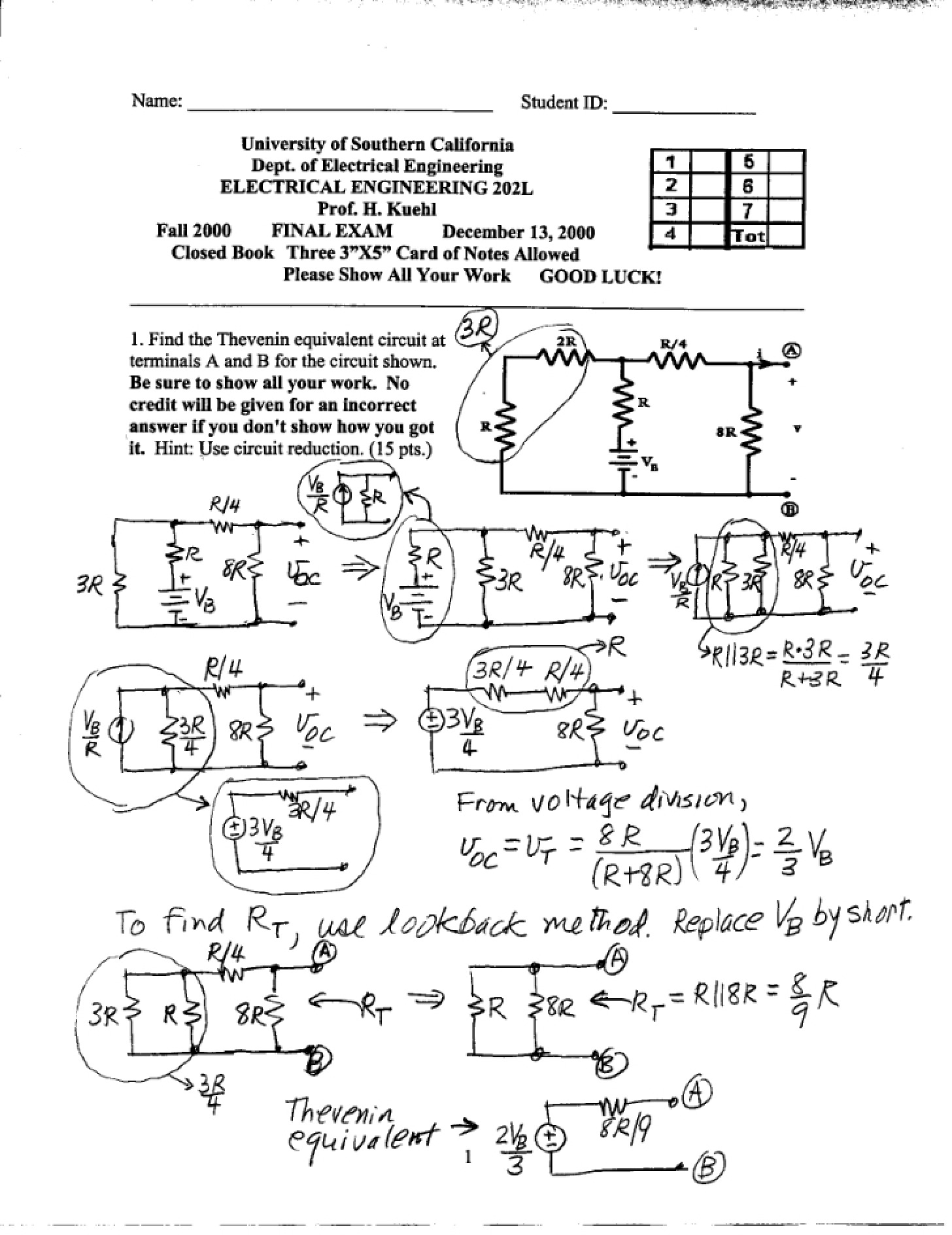
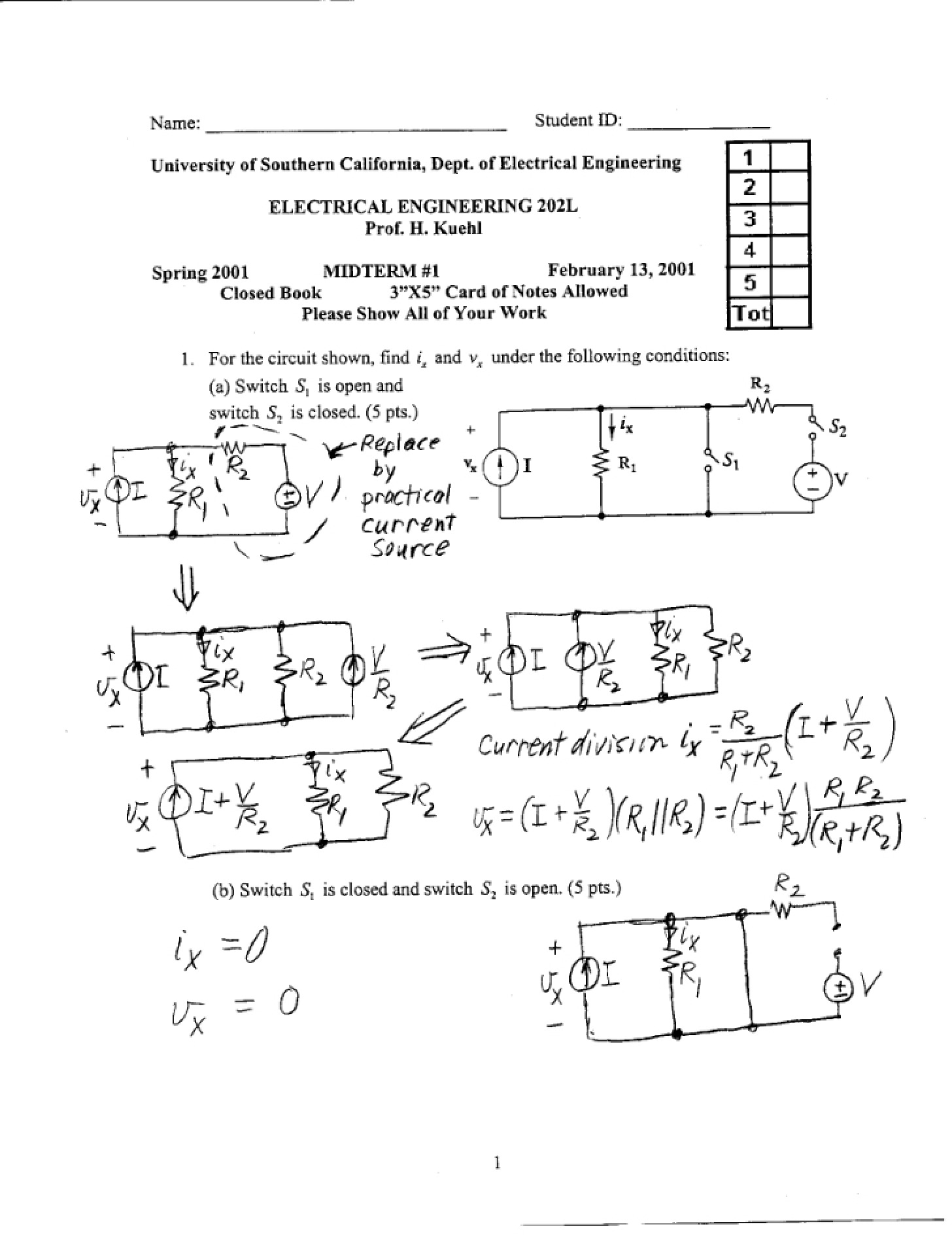
* A full copy of the original Spring 2000 EE 202L final exam.
* Problems covering circuit analysis techniques, including s-domain analysis.
* Questions involving phasor domain transformations and mesh-current analysis.
* Problems requiring Laplace transforms and inverse Laplace transforms.
* Questions assessing understanding of Thevenin equivalent circuits.
* A representative sample of the exam format and question types used by the instructor.