What This Document Is
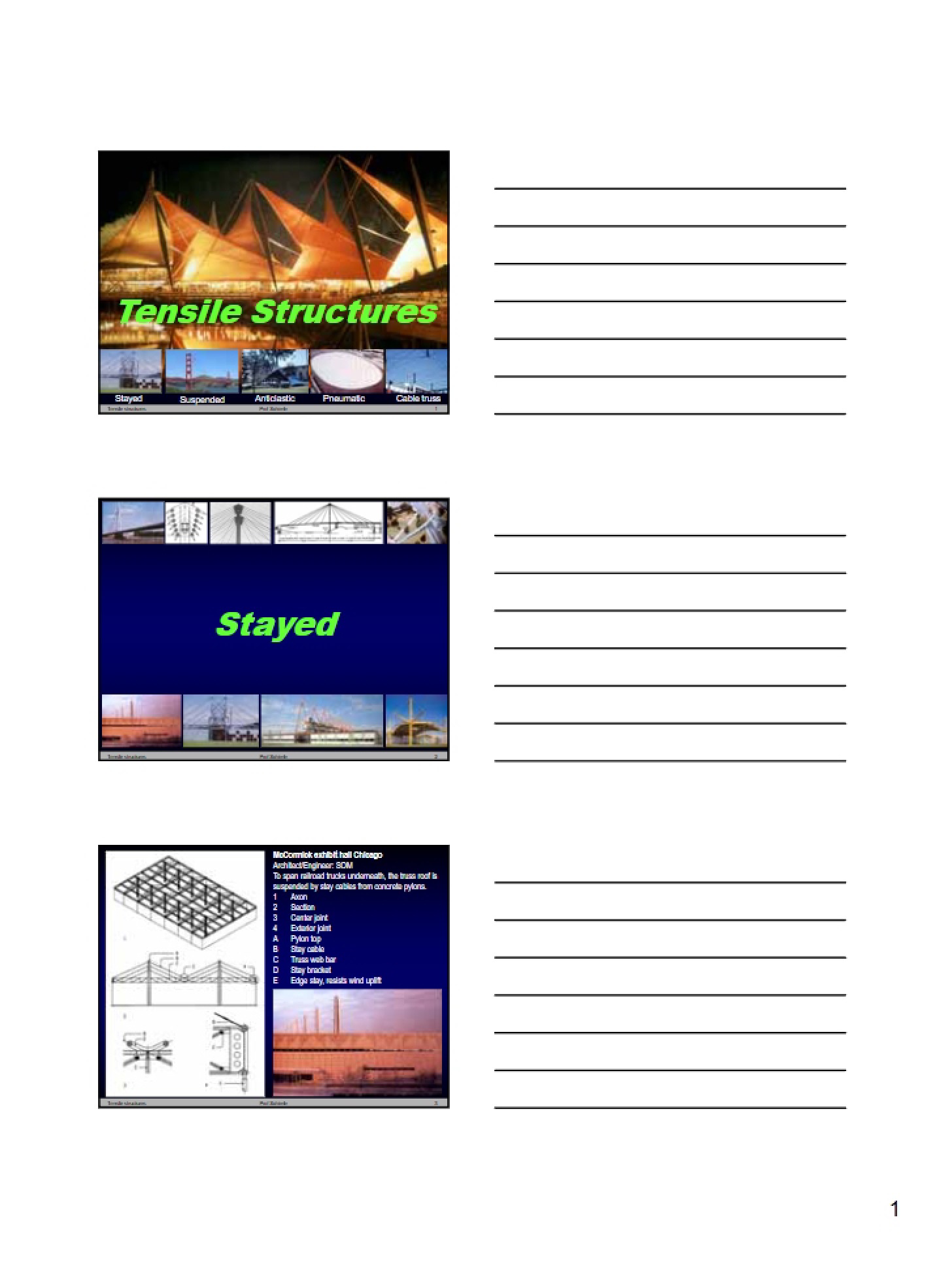
This is a detailed exploration of stayed structural systems, a core topic within an advanced architectural structures course. It delves into the principles behind these systems, focusing on their application in real-world architectural projects. The material examines various configurations of stayed systems, analyzing their behavior under different load conditions and design considerations. It’s a focused study intended for students seeking a deeper understanding of complex structural engineering concepts.
Why This Document Matters
This resource is invaluable for architecture students, particularly those specializing in advanced structural design, and for structural engineering students seeking architectural applications. It’s most beneficial when studying load distribution, structural stability, and innovative construction techniques. Professionals looking to refresh their knowledge of stayed systems or explore case studies will also find it useful. Understanding these systems is crucial for designing efficient, safe, and aesthetically compelling structures, especially those with large spans or unique geometric requirements.
Common Limitations or Challenges
This material presents a focused analysis of stayed systems and does *not* provide a comprehensive overview of all structural engineering principles. It assumes a foundational understanding of statics, mechanics of materials, and basic structural analysis. It does not include step-by-step calculations for every scenario, nor does it offer complete design specifications for all possible applications. It focuses on conceptual understanding and illustrative examples rather than exhaustive procedural guidance.
What This Document Provides
* Analysis of different stayed system configurations (radial, branched, single mast).
* Examination of load transfer mechanisms within stayed structures.
* Case studies of notable architectural projects utilizing stayed systems.
* Discussion of design considerations related to deflection and material selection.
* Exploration of the application of vector analysis in stayed system design.
* Considerations for component sizing and material properties.
* Insights into the challenges and solutions related to buckling and stability.