What This Document Is
This study guide provides a comprehensive overview of major theoretical perspectives in the field of personality psychology. It delves into the core principles of different schools of thought, examining how each attempts to explain the development and expression of individual personality. The material is geared towards students in an introductory psychology course, specifically those seeking a deeper understanding of the foundational concepts within personality theory.
Why This Document Matters
This resource is ideal for students enrolled in PSYC 100 at the University of Illinois at Urbana-Champaign, or similar introductory psychology courses at other institutions. It’s particularly helpful when preparing for exams, completing assignments, or simply seeking to solidify your grasp of complex psychological theories. Understanding these perspectives is crucial for building a strong foundation for further study in psychology and related fields. It will help you critically analyze different approaches to understanding human behavior and thought.
Common Limitations or Challenges
This guide focuses on outlining the *frameworks* of various personality theories. It does not offer detailed case studies, empirical research findings, or in-depth critiques of specific studies. It also doesn’t provide a complete history of each theorist’s life or a comprehensive list of all personality theories – rather, it concentrates on key, influential perspectives. Access to the full material is required for a complete and nuanced understanding of each theory.
What This Document Provides
* An exploration of the core tenets of Behaviorist approaches to personality.
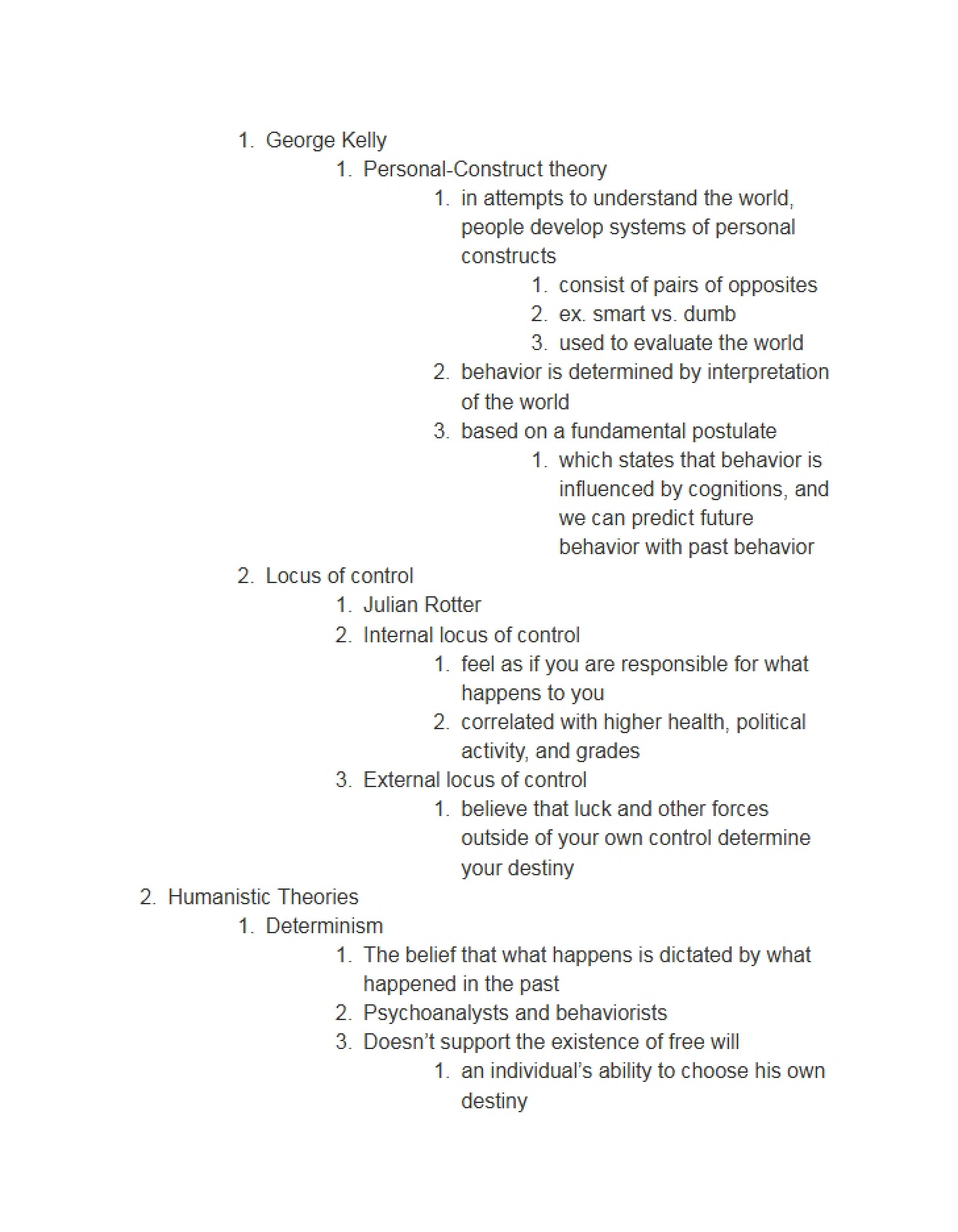
* A detailed look at Social-Cognitive theories, including concepts like reciprocal determinism and self-efficacy.
* An overview of Humanistic perspectives and their emphasis on free will and self-actualization.
* A discussion of different assessment techniques used in personality psychology, including projective tests and self-report inventories.
* Key terminology related to reliability, validity, and potential biases in personality assessment.
* An introduction to the concept of Locus of Control and its implications.