What This Document Is
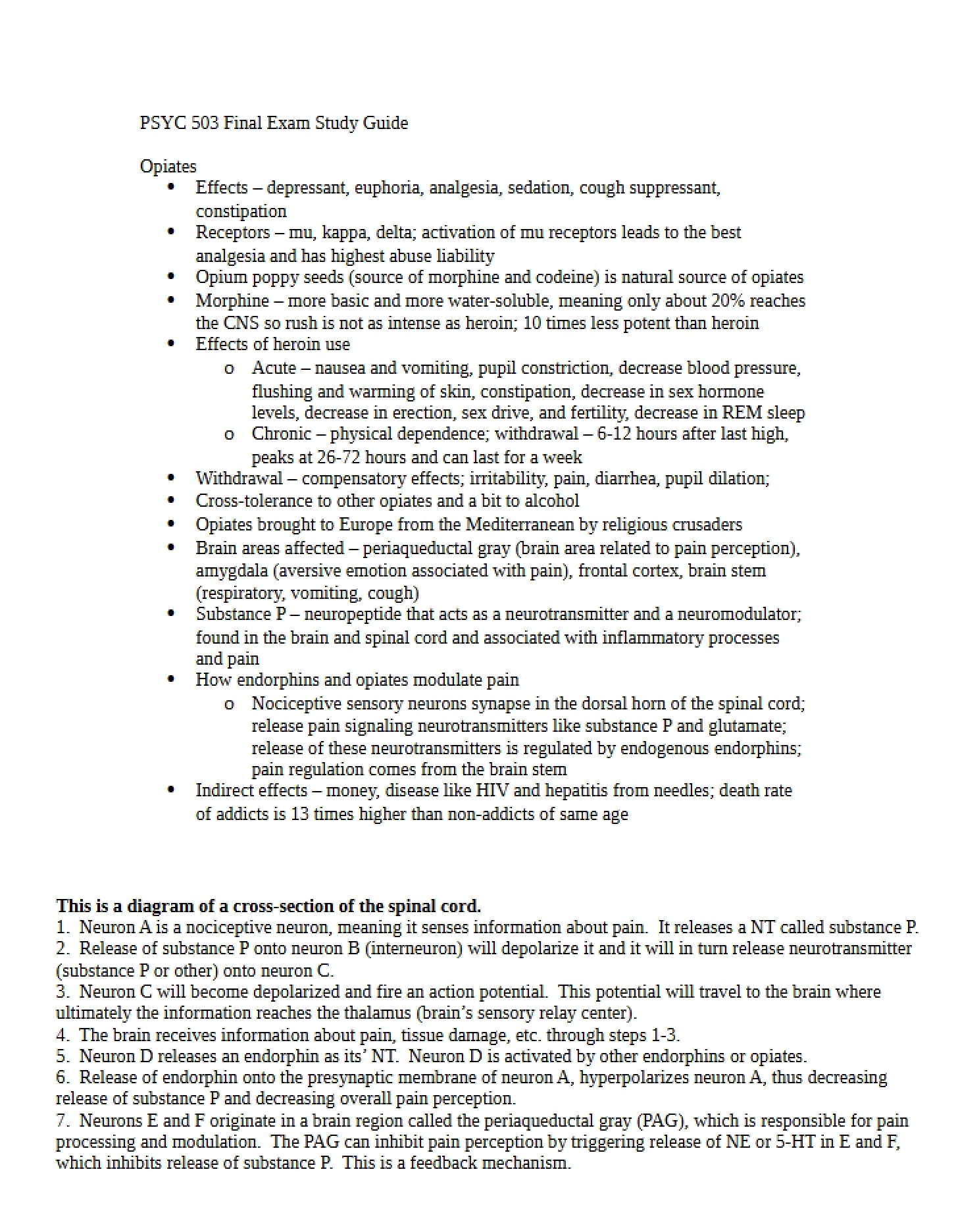
This is a comprehensive study guide designed to support students enrolled in PSYC 503: Drug Use and Effects at the University of South Carolina. It focuses on foundational concepts crucial for understanding the complex interplay between drugs and the human body, as well as the historical context of drug regulation. The guide is specifically tailored to aid in preparation for the first major assessment in the course.
Why This Document Matters
This resource is invaluable for students seeking to solidify their grasp of core principles in psychopharmacology and the socio-historical factors influencing drug policy. It’s particularly helpful for those who benefit from a structured review of key terms and concepts *before* tackling practice questions or in-depth case studies. Utilizing this guide will help you build a strong foundation for more advanced topics covered later in the semester. Students who find themselves needing a focused review of the initial course material will find this especially useful.
Common Limitations or Challenges
This study guide is intended as a *supplement* to course lectures and assigned readings – it is not a replacement for active class participation or thorough engagement with the primary course materials. It does not include detailed explanations of research methodologies, nor does it offer specific clinical applications of the concepts discussed. Furthermore, it does not contain the actual test questions or provide direct answers to potential exam content.
What This Document Provides
* A detailed overview of the different ways the body adapts to repeated drug exposure.
* An exploration of the physiological mechanisms underlying drug tolerance and withdrawal.
* A breakdown of the various routes by which drugs can enter the body and their impact on absorption rates.
* Key information regarding drug metabolism and excretion processes.
* A historical timeline of significant legislation shaping drug policy in the United States.
* An outline of the controlled substances scheduling system and its implications.