What This Document Is
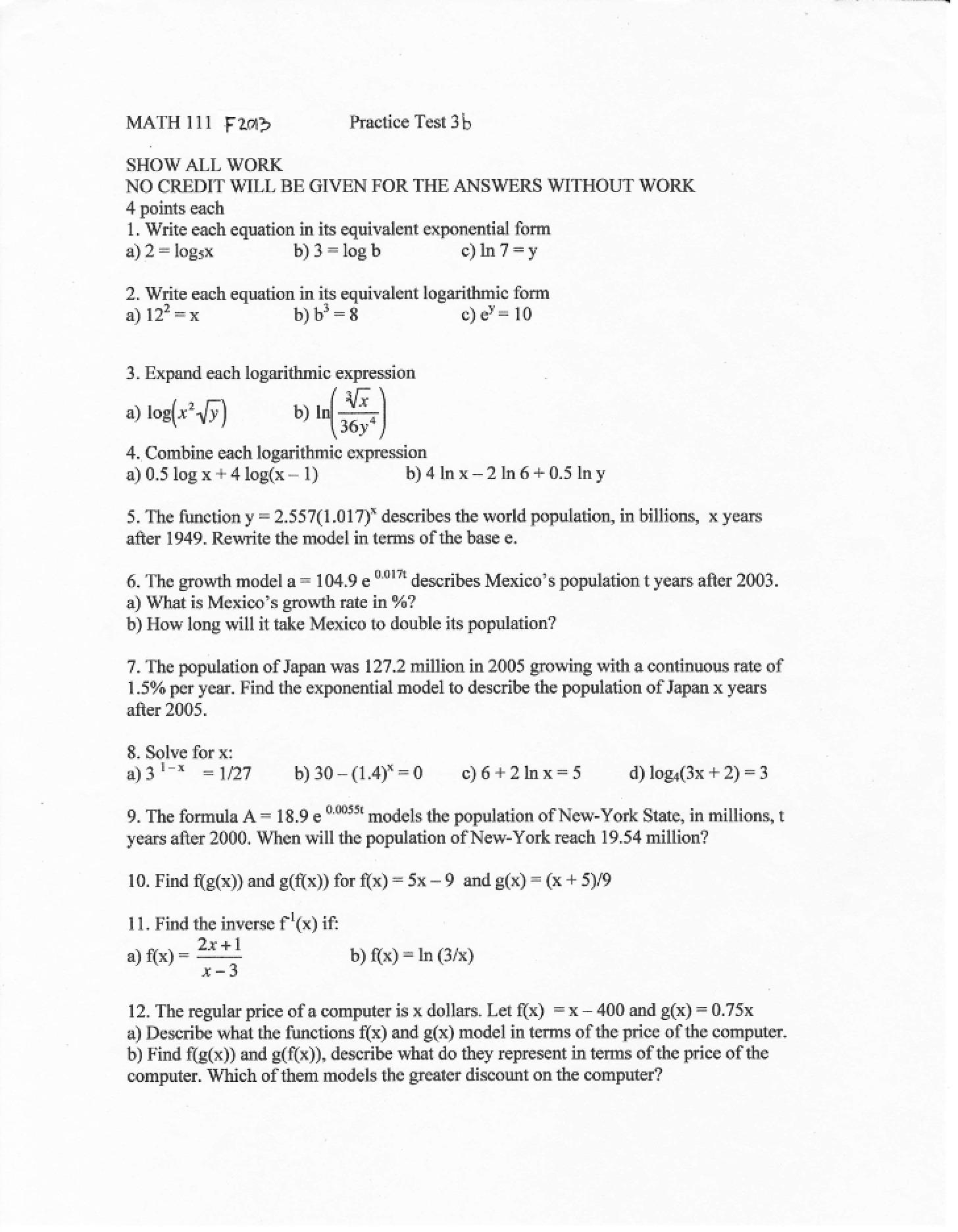
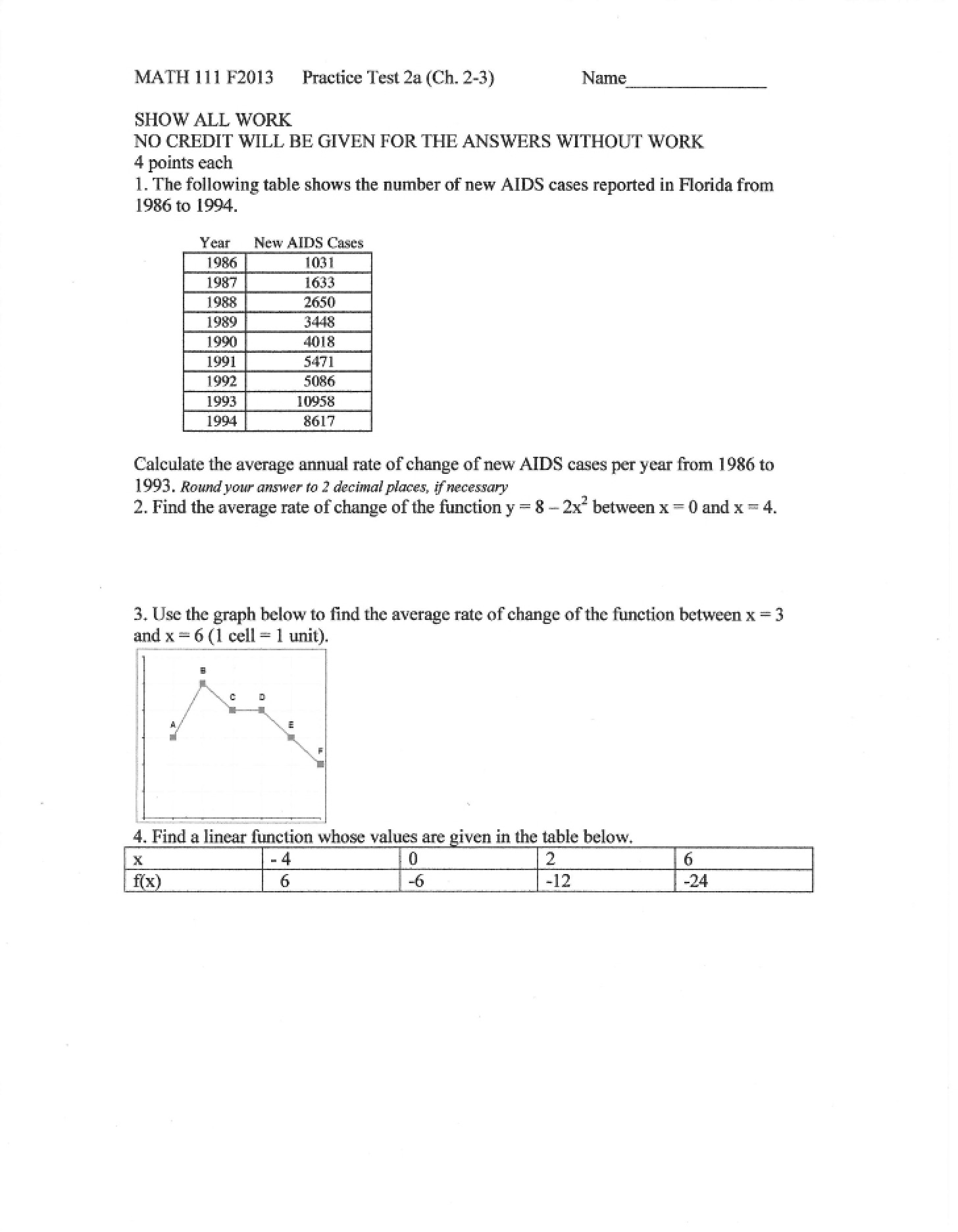
This is a practice test designed to help students prepare for Test 1A in MATH 111, Basic College Mathematics at the University of South Carolina. It’s structured to mimic the format and difficulty level of an actual exam, allowing students to assess their understanding of key concepts covered in the initial stages of the course. The practice test emphasizes showing your work, as that is a critical component of grading.
Why This Document Matters
This resource is invaluable for students aiming to solidify their grasp of foundational mathematical principles. It’s particularly useful for students who benefit from applying concepts to problems, identifying areas where they need further review, and building confidence before a high-stakes assessment. Utilizing this practice test *before* taking Test 1A can significantly improve performance and reduce test-day anxiety. It’s best used after completing related coursework and assigned readings, as a way to synthesize and apply learned material.
Common Limitations or Challenges
This practice test is a tool for self-assessment and does not provide detailed explanations or step-by-step solutions. It’s designed to challenge your existing knowledge, not to teach new concepts. While it covers a range of topics likely to appear on the exam, it may not be exhaustive of *every* possible question type. Students should also remember that a practice test is not a substitute for consistent study habits and engagement with course materials.
What This Document Provides
* Problems covering fundamental algebraic manipulations, including simplifying expressions with exponents.
* Exercises focused on working with inequalities and representing them using interval notation and graphical representations.
* Practice with factoring algebraic expressions.
* Questions designed to assess understanding of function notation, domain, and piecewise-defined functions.
* Application problems involving linear modeling and rate of change.
* Opportunities to interpret and analyze graphical representations of functions, including identifying increasing intervals and local maxima.
* Practice solving various types of equations, including those involving radicals and exponential functions.