What This Document Is
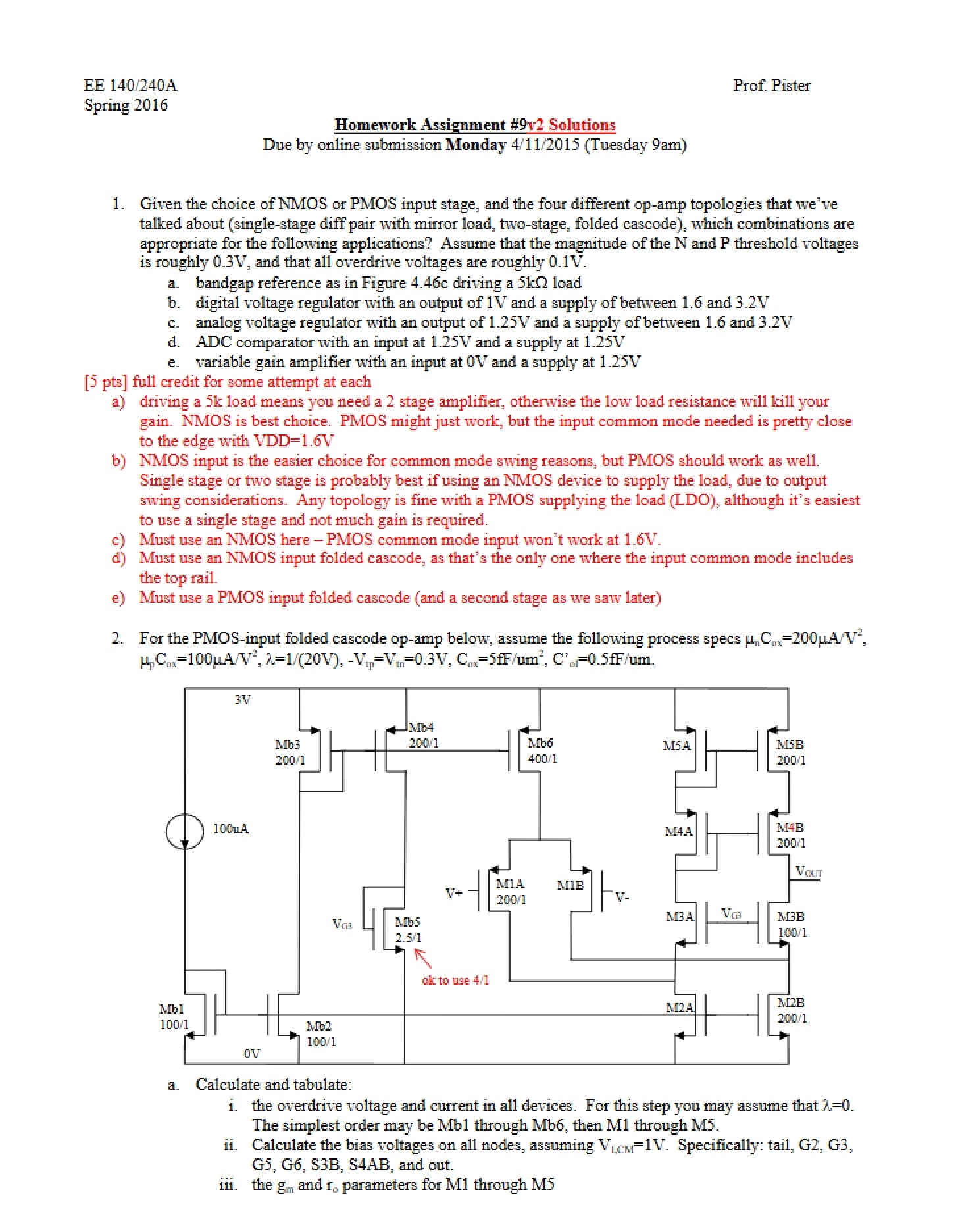
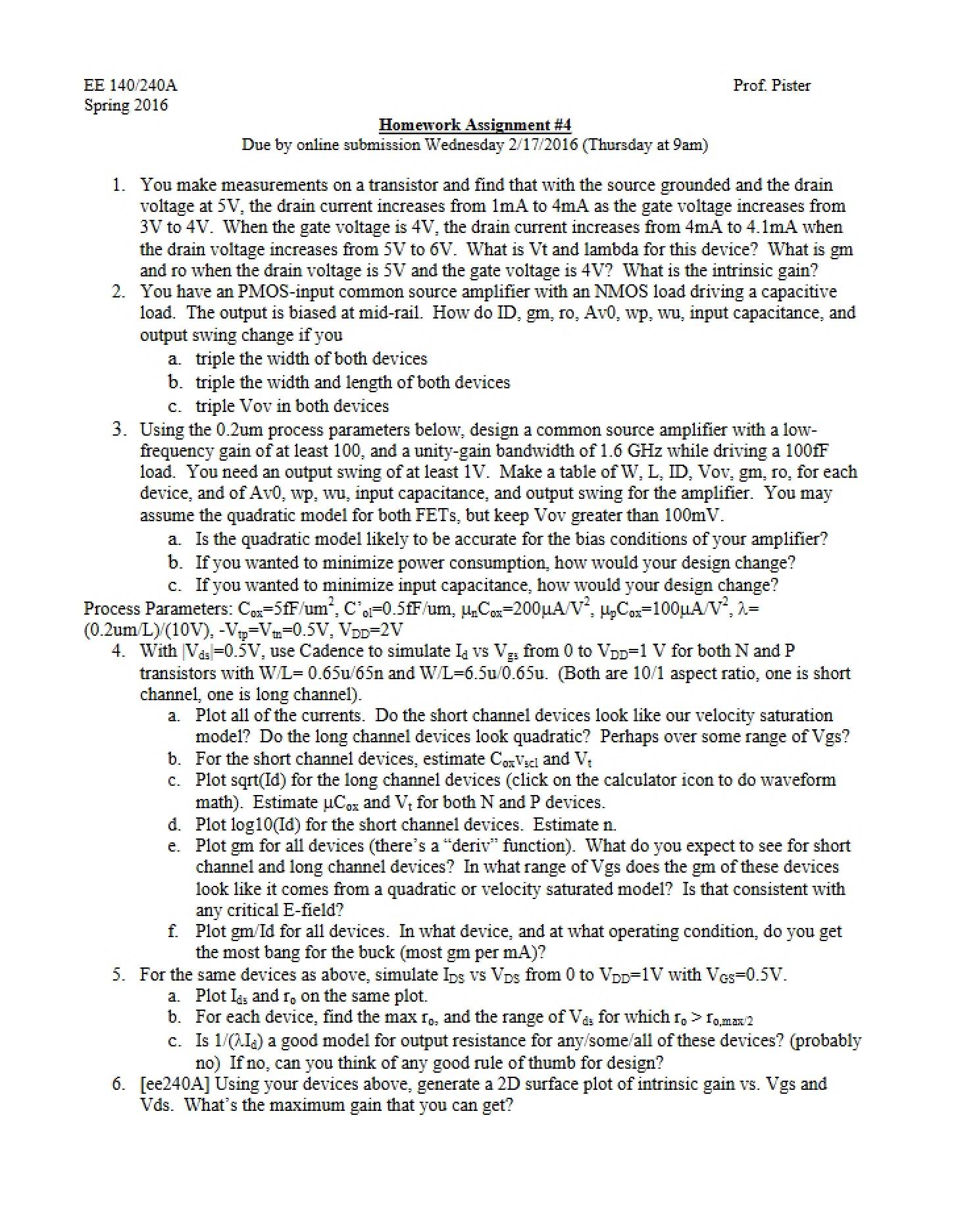
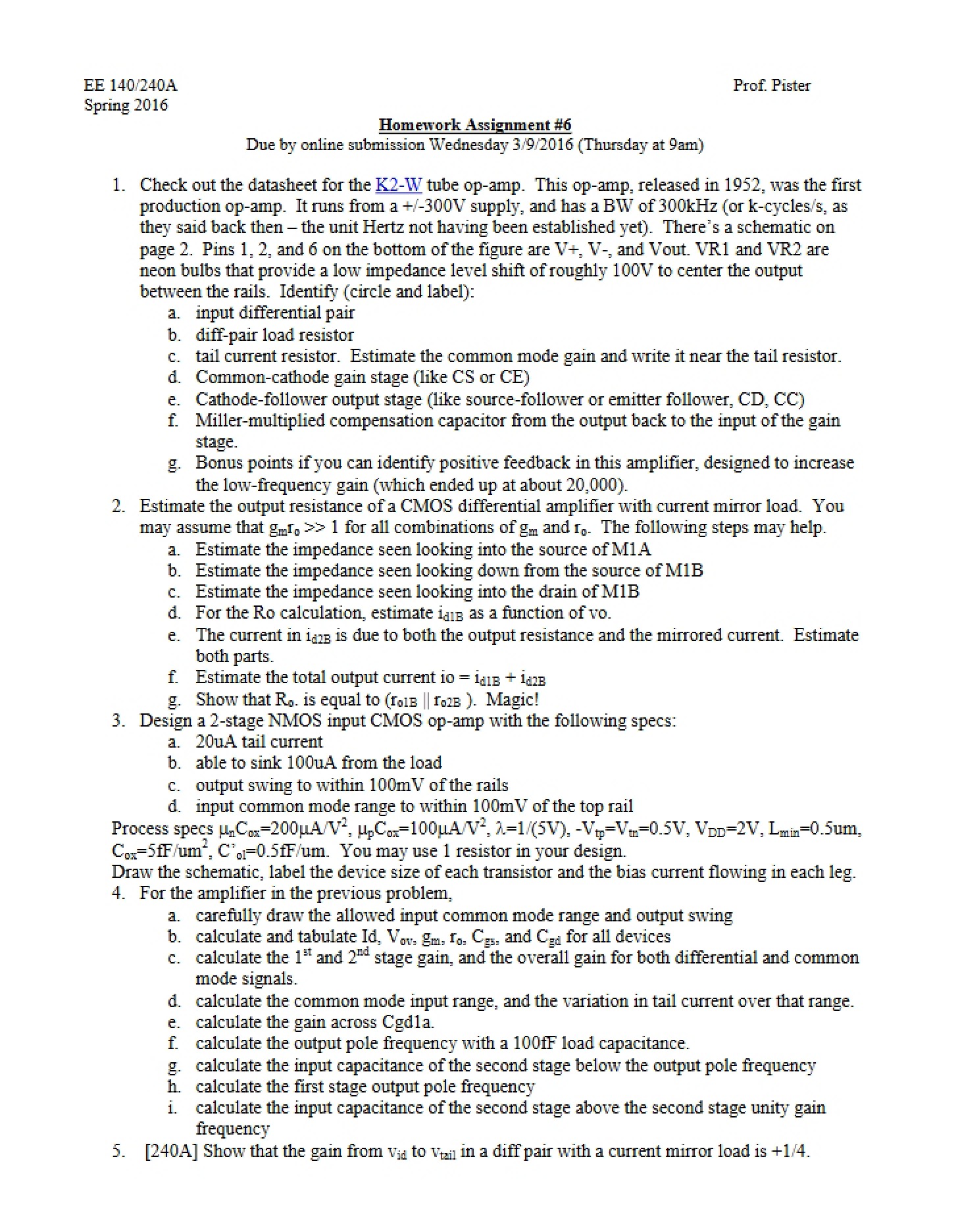
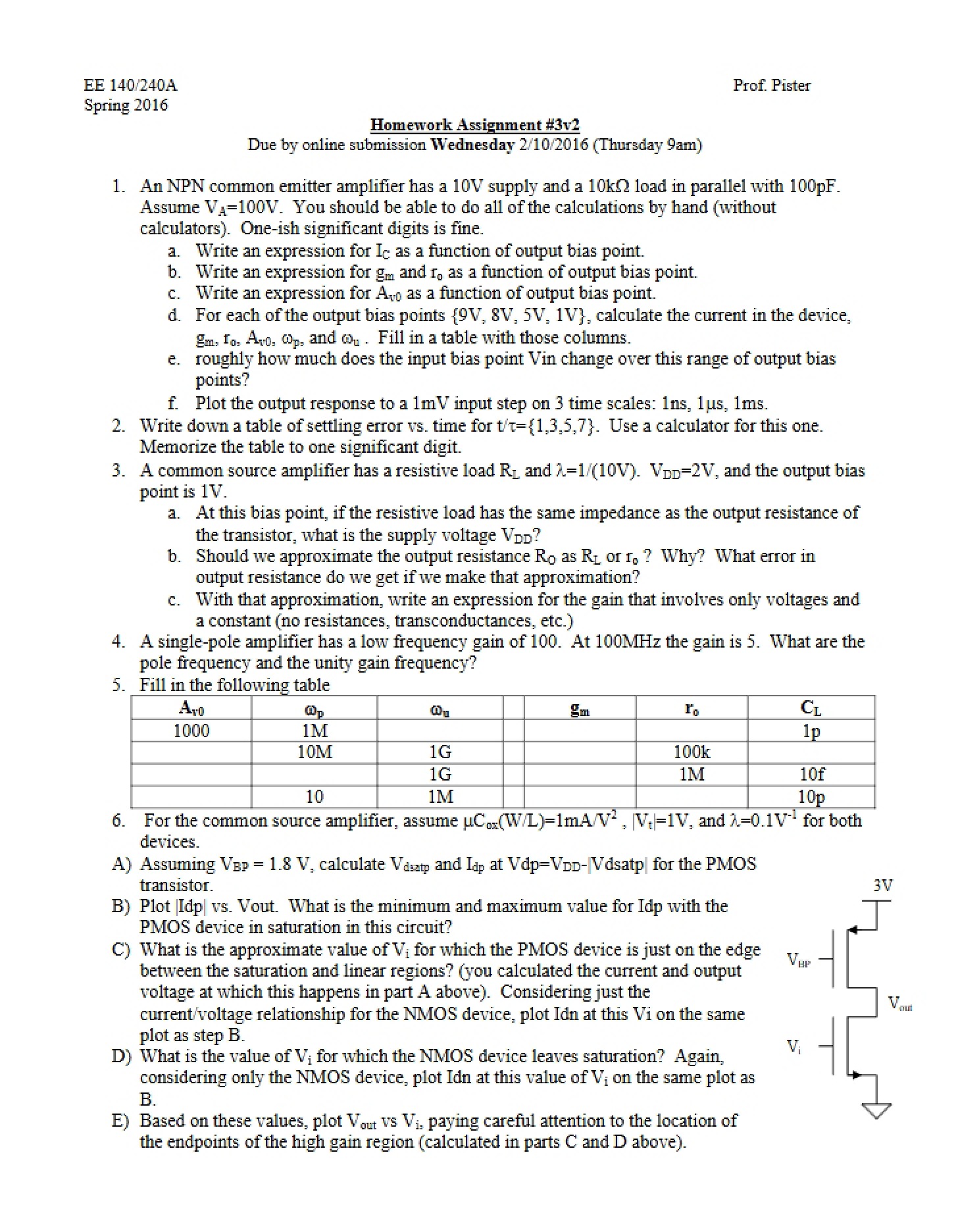
This is a homework assignment for EE 140/240A, Analog Integrated Circuits, at the University of California, Berkeley. It’s designed to reinforce your understanding of fundamental concepts through problem-solving. This assignment focuses on applying theoretical knowledge to practical scenarios involving discrete components and transistor behavior. It requires analytical skills and a solid grasp of circuit analysis techniques.
Why This Document Matters
This assignment is crucial for students enrolled in an introductory analog circuit design course. Successfully completing it will demonstrate your ability to analyze and predict the behavior of basic electronic circuits. It’s particularly helpful for solidifying understanding *after* lectures and readings, and before moving on to more complex design projects. Working through these problems will build a strong foundation for future coursework and practical applications in the field of electrical engineering.
Topics Covered
* Diode Characteristics and Modeling
* Bipolar Junction Transistor (BJT) Parameters (Beta, gm, ro, VA)
* MOSFET Characteristics and Modeling (gm, ro, intrinsic gain, Vt, subthreshold slope)
* Transistor Parameter Extraction from IV Curves
* Small-Signal Analysis of Transistors
* Impact of Device Parameters on Circuit Performance
* Transistor Sizing and its effect on circuit characteristics
* Novel Transistor Characterization
What This Document Provides
* A series of analytical problems requiring calculations and estimations.
* Opportunities to apply theoretical concepts to real-world device data.
* Exercises involving both manual calculations and interpretation of graphical data.
* Problems that require you to analyze transistor behavior under various operating conditions.
* A research component, prompting exploration of cutting-edge transistor technologies.
* A chance to practice sketching key transistor characteristics.