What This Document Is
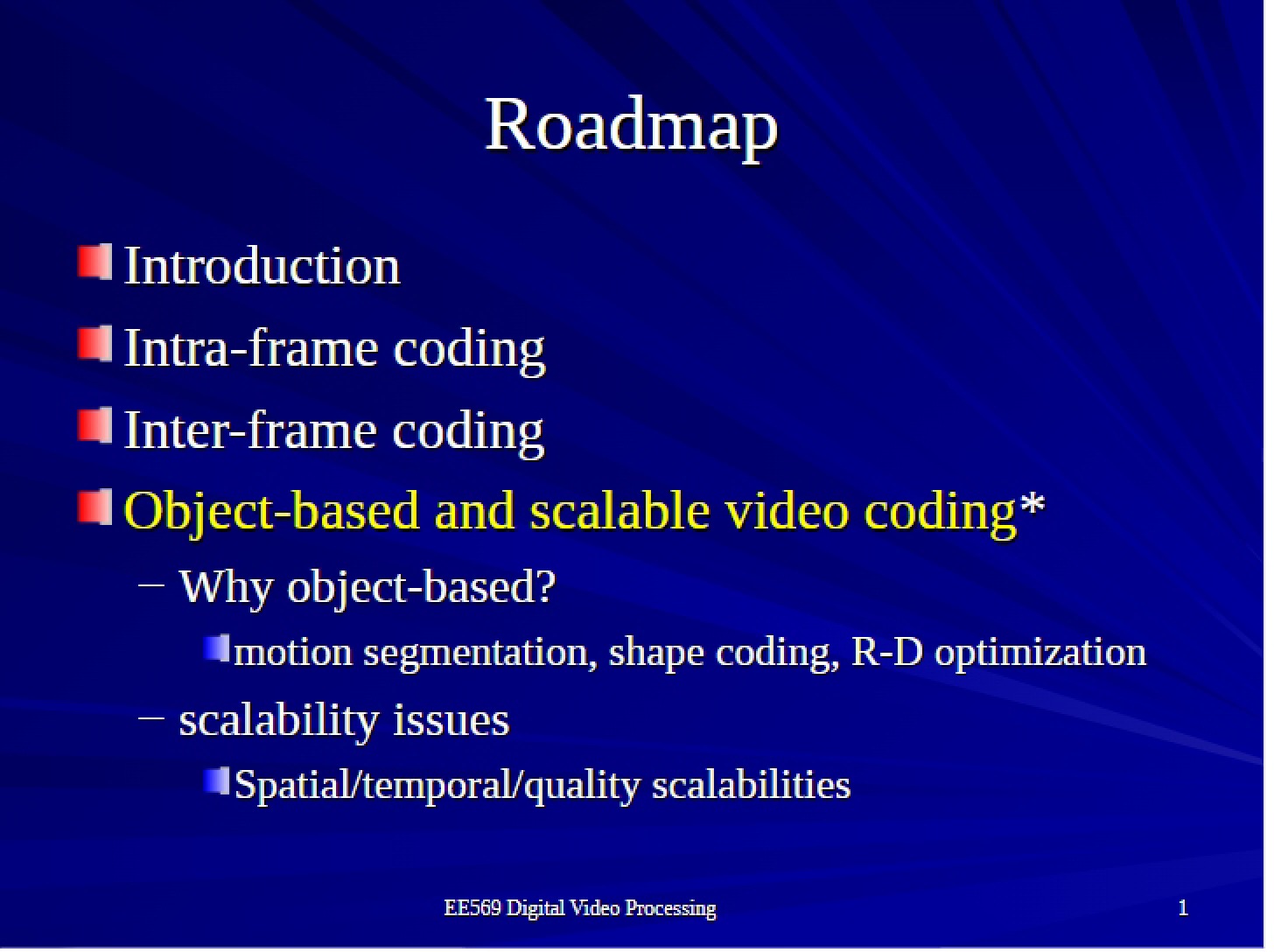
This is a detailed course roadmap for EE 569: Digital Video Processing at West Virginia University. It outlines the core concepts and progression of topics covered within the course, serving as a high-level overview of the entire curriculum. It’s designed to give students a clear understanding of how individual modules connect to the broader field of video coding and compression. The roadmap details the sequence of learning, from foundational principles to more advanced techniques.
Why This Document Matters
This roadmap is invaluable for students beginning the course, or those looking to understand the scope of digital video processing. It’s particularly helpful for planning study schedules, identifying areas of focus, and understanding the prerequisites for later topics. Professionals in related fields – such as multimedia engineering, computer vision, or telecommunications – can also benefit from understanding the structure of a comprehensive video processing curriculum. Use this roadmap to determine if a deeper dive into specific areas aligns with your learning or professional goals.
Common Limitations or Challenges
This roadmap provides a structural overview, but it does *not* contain the detailed explanations, mathematical derivations, or practical implementations covered in the full course materials. It won’t provide solutions to problems, detailed code examples, or in-depth analyses of specific algorithms. It’s a guide to *what* will be learned, not *how* to learn it. Access to the full course content is required for a complete understanding of the subject matter.
What This Document Provides
* A sequential overview of key topics in digital video processing.
* Categorization of core concepts into areas like intra-frame coding, inter-frame coding, and object-based video coding.
* Identification of foundational standards and techniques, including JPEG.
* An introduction to the concepts of lossy and lossless compression and their relationship to rate-distortion theory.
* An overview of both objective and subjective methods for evaluating video quality.
* A glimpse into the applications of video coding technologies.