What This Document Is
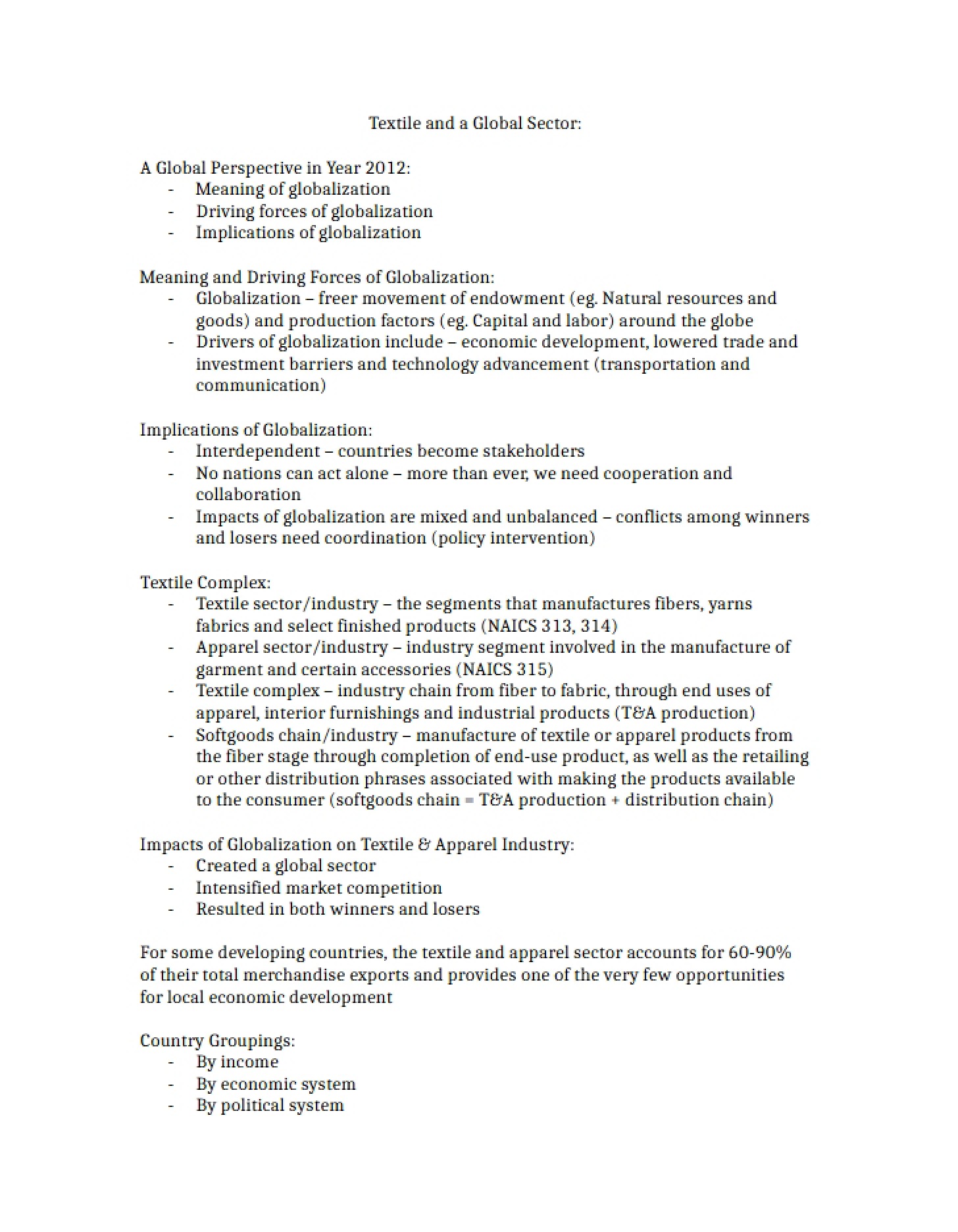
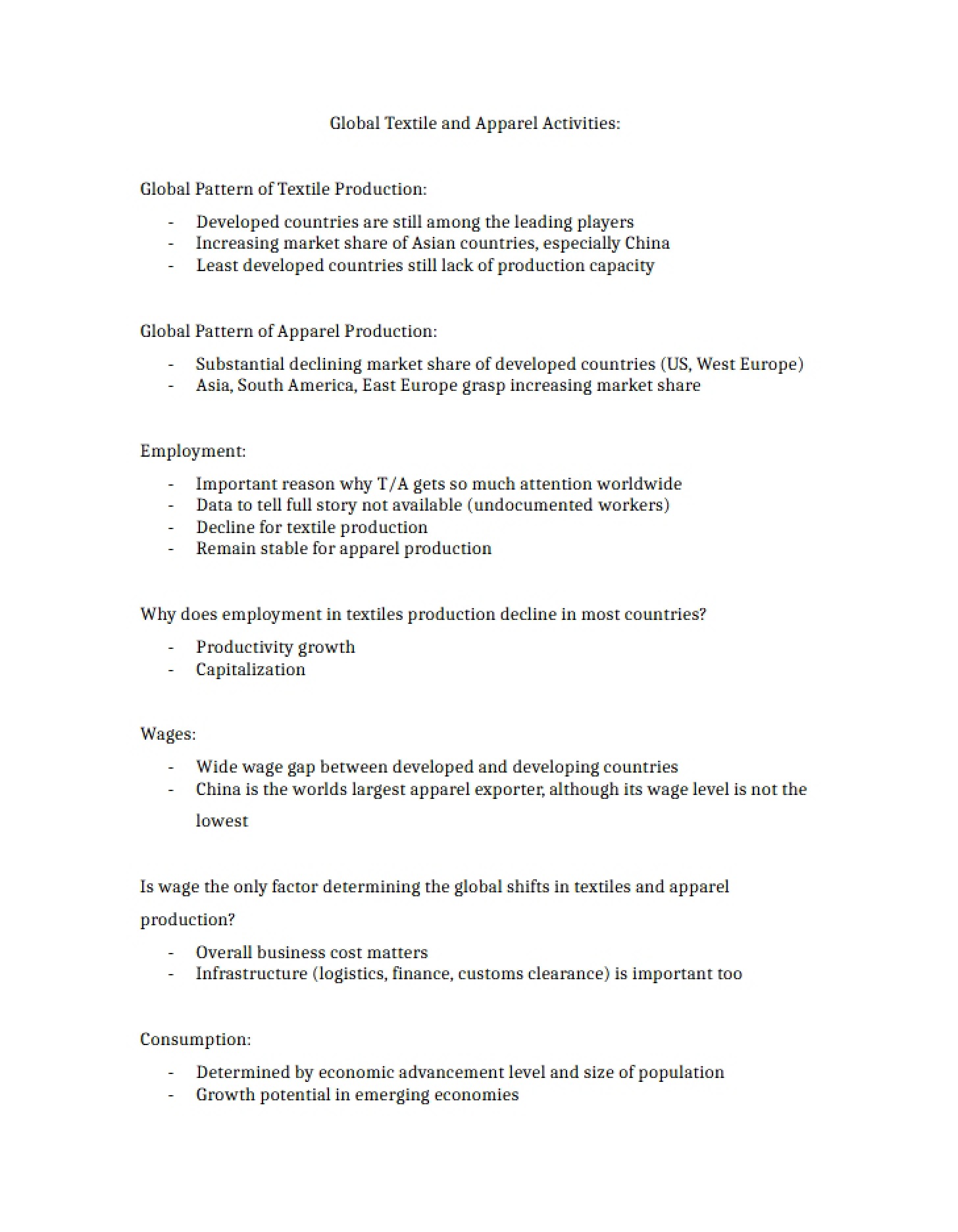
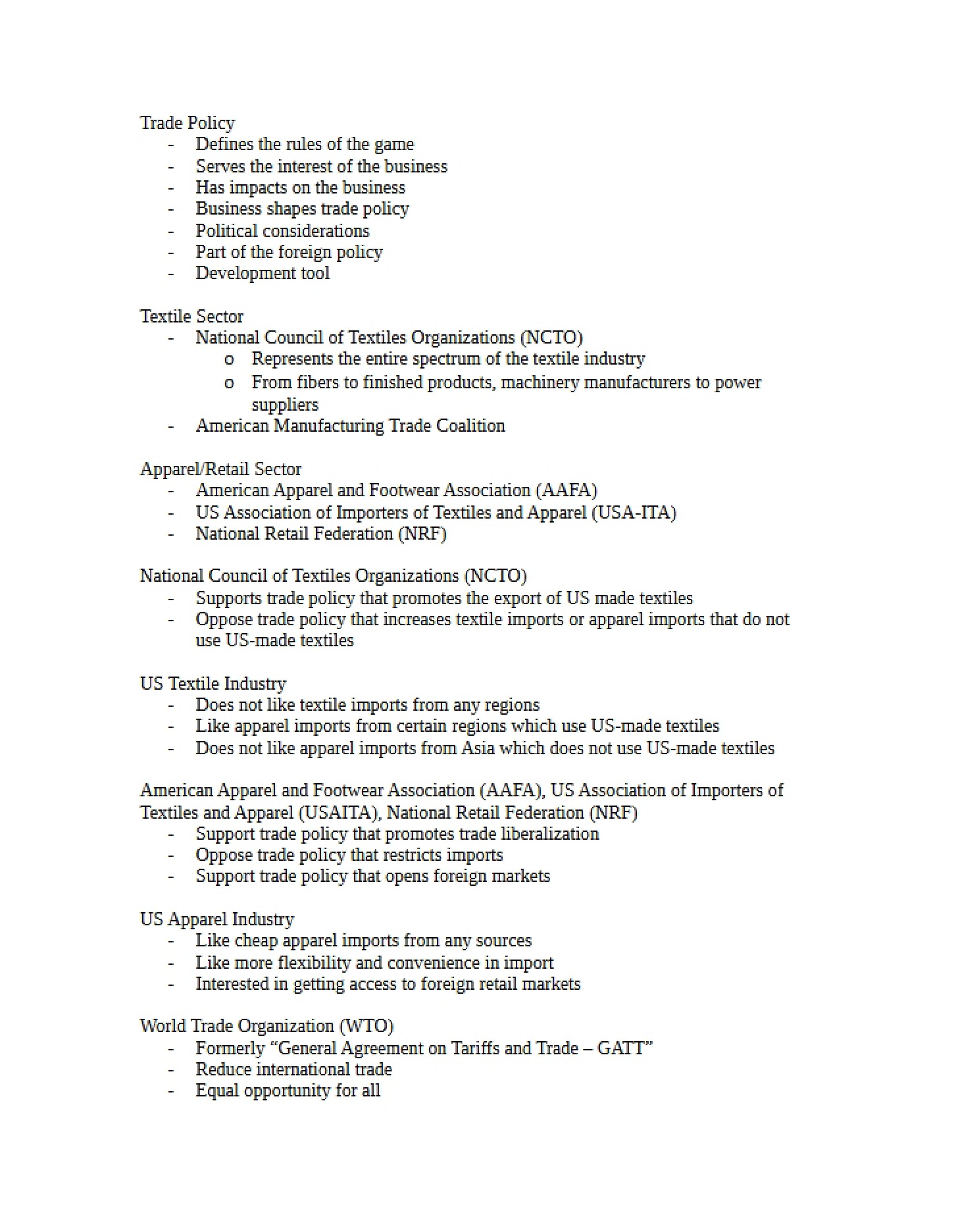
This is a focused review resource designed to prepare students for an upcoming exam in TMD 433: Textile Markets. It centers on the complex relationships between textile and apparel production, trade agreements, and regional economic factors – specifically within North and Central America. The material delves into the dynamics of international trade regulations and how they impact various stakeholders in the textile supply chain. It’s a concentrated look at key concepts crucial for understanding the current landscape of textile markets.
Why This Document Matters
Students enrolled in TMD 433 will find this review particularly helpful when preparing for assessments covering regional trade networks. It’s ideal for those seeking to solidify their understanding of how trade policies influence production decisions and competitive advantages. This resource is best utilized during the final stages of exam preparation, serving as a focused recap of important themes and terminology. Individuals aiming for a comprehensive grasp of the interplay between economic development, trade agreements, and textile/apparel manufacturing will benefit greatly.
Common Limitations or Challenges
This review is not a substitute for attending lectures, completing assigned readings, or engaging in class discussions. It provides a condensed overview and does *not* include detailed explanations of foundational concepts covered earlier in the course. It also doesn’t offer practice questions or model answers. The material assumes a base level of understanding of international trade principles and textile manufacturing processes. It focuses specifically on the Americas and doesn’t provide a global overview of textile markets.
What This Document Provides
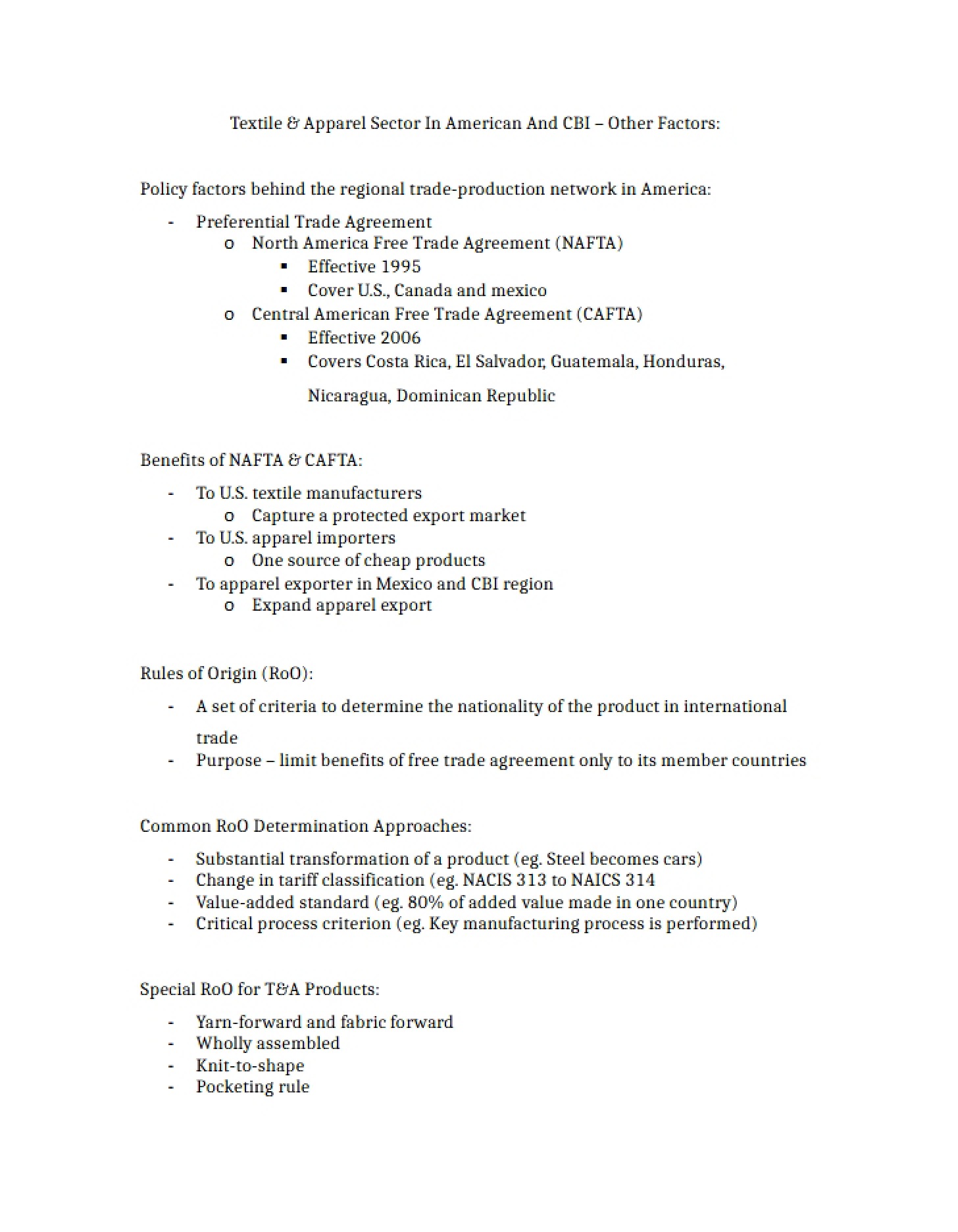
* An overview of the textile and apparel trade relationships between the US, Mexico, and the Caribbean Basin.
* Discussion of the economic factors driving production and trade patterns in the region.
* Examination of the impact of key trade agreements like NAFTA and CAFTA.
* Explanation of the concept and implications of “Rules of Origin” in trade.
* Comparative analysis of different Rules of Origin standards (Yarn-Forward, Fabric-Forward).
* Definitions of specific trade-related terms and classifications (Knit-to-Shape, Wholly Assembled).
* Exploration of regional division of labor models within the textile industry.