What This Document Is
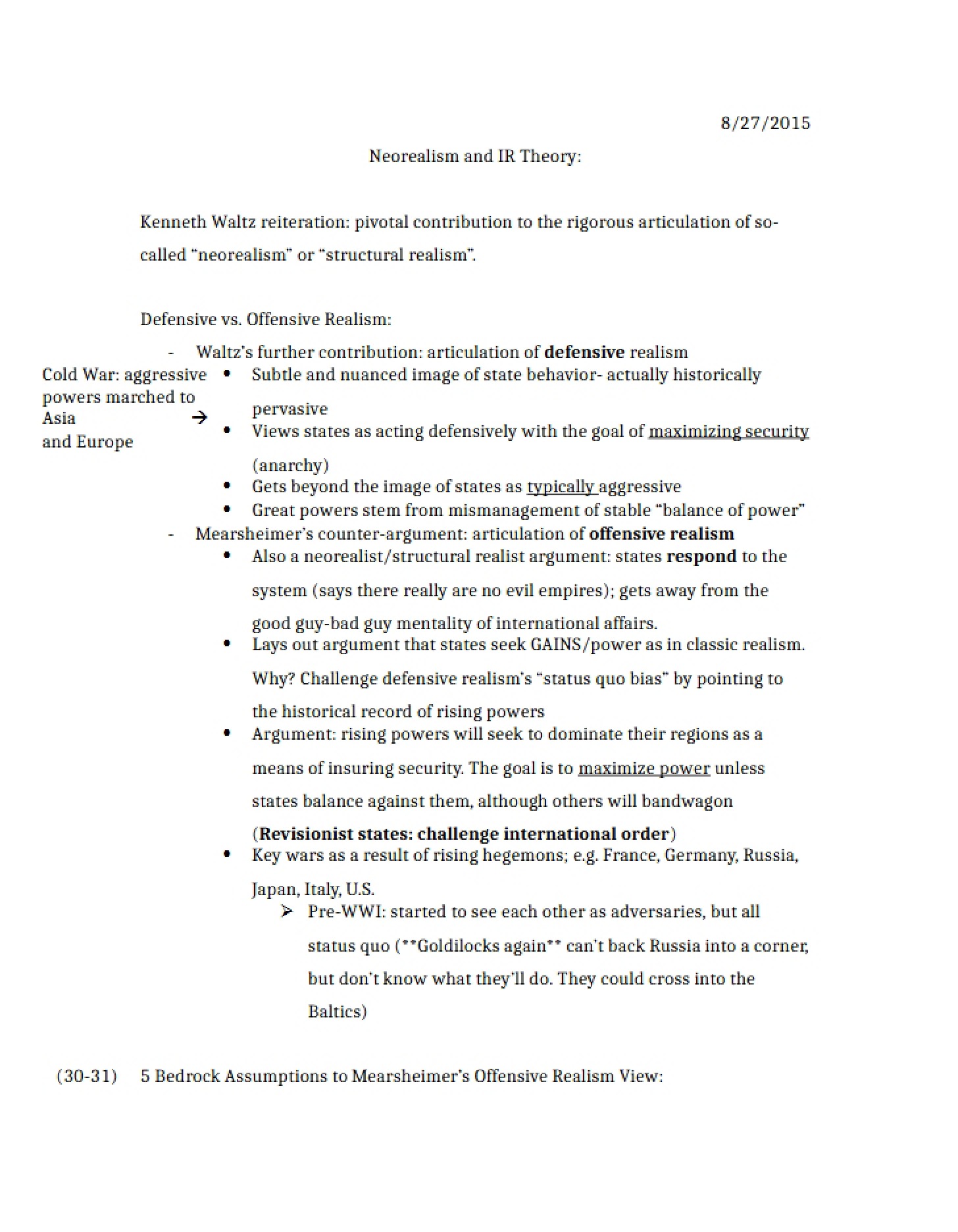
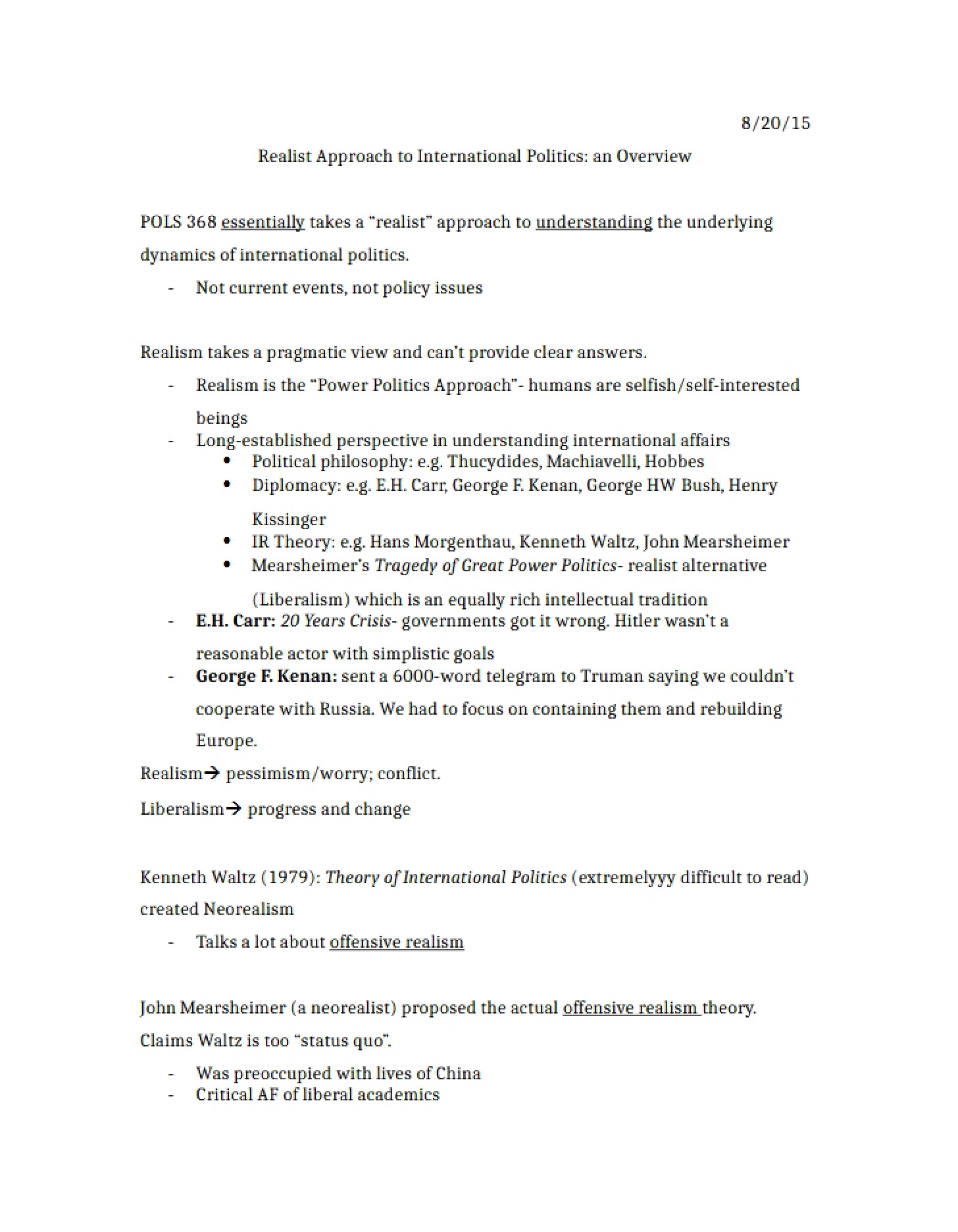
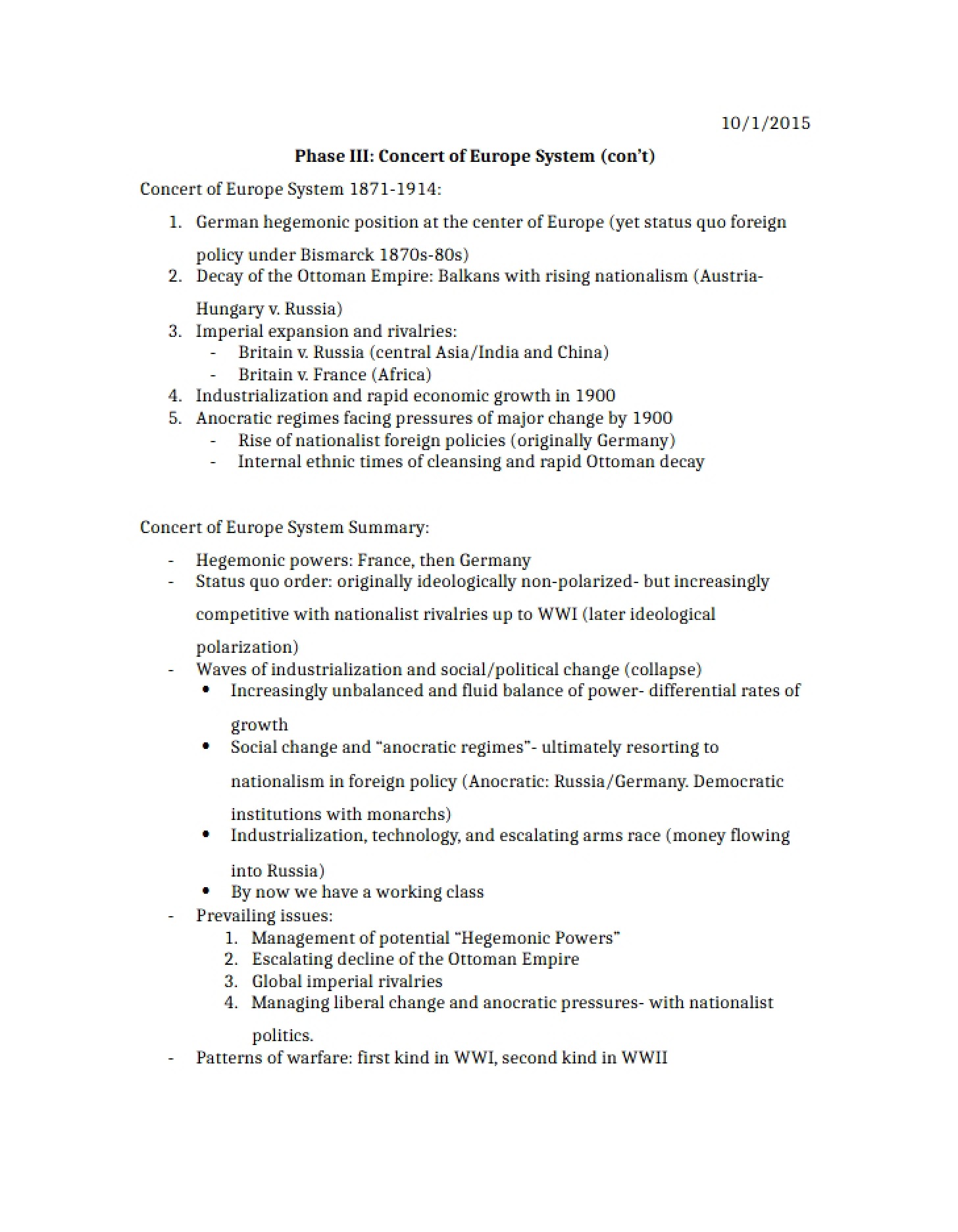
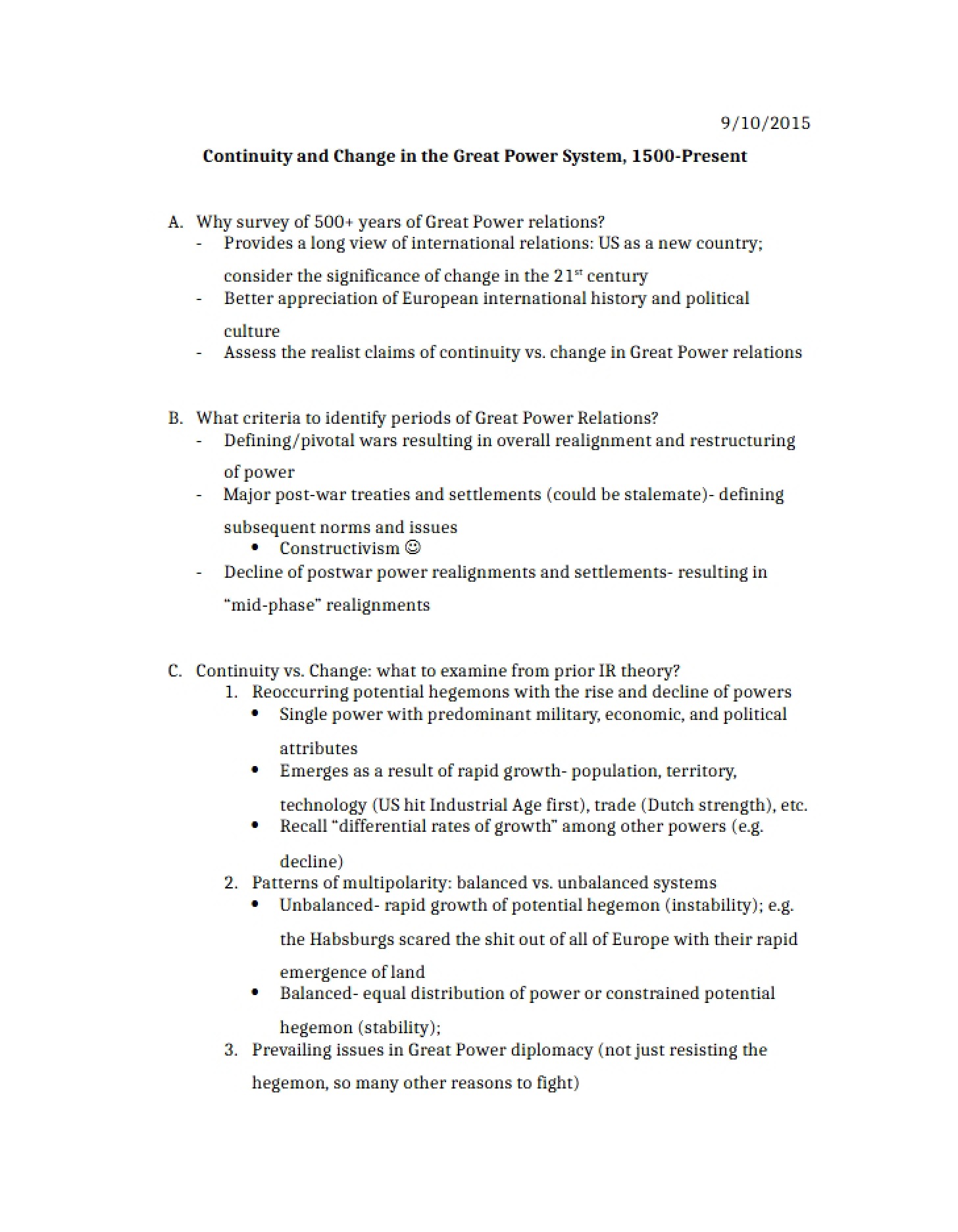
This document comprises lecture notes from a Politics of War and Peace course (POLS 368) at West Virginia University, dated September 1, 2015. It delves into the theoretical framework of Constructivism within the field of International Relations (IR). These notes represent a core lecture exploring alternative perspectives to traditional, power-centric views of global politics, focusing on the role of ideas, norms, and shared understandings in shaping state behavior and the international system.
Why This Document Matters
Students enrolled in upper-level political science courses, particularly those focusing on IR theory, foreign policy analysis, or security studies, will find these notes exceptionally valuable. They are best utilized when seeking a deeper understanding of Constructivist thought and its contrast with Realism. These notes can serve as a foundational resource for coursework, research projects, or exam preparation, offering a structured overview of a complex theoretical approach. Individuals interested in the philosophical underpinnings of international relations will also benefit from exploring this material.
Common Limitations or Challenges
These lecture notes are a snapshot of a single lecture and do not represent a comprehensive textbook treatment of Constructivism. They do not include detailed case studies or empirical analyses to illustrate the theory in practice. Furthermore, the notes are from a specific point in time (2015) and may not reflect the most recent scholarly debates or developments within the field. They are intended to supplement, not replace, assigned readings and broader course materials.
What This Document Provides
* An overview of Constructivism as a major perspective in International Relations theory.
* A critical examination of Constructivism’s emergence in relation to the end of the Cold War and perceived shortcomings of Realism.
* Key points of divergence between Constructivist and Neorealist thought regarding the influence of system structure on state behavior.
* Discussion of core Constructivist concepts such as “identities,” “international society,” “complex learning,” and “intersubjective understandings.”
* Exploration of the compatibility between Constructivism and Realism, including the concept of “Realist Constructivism.”