What This Document Is
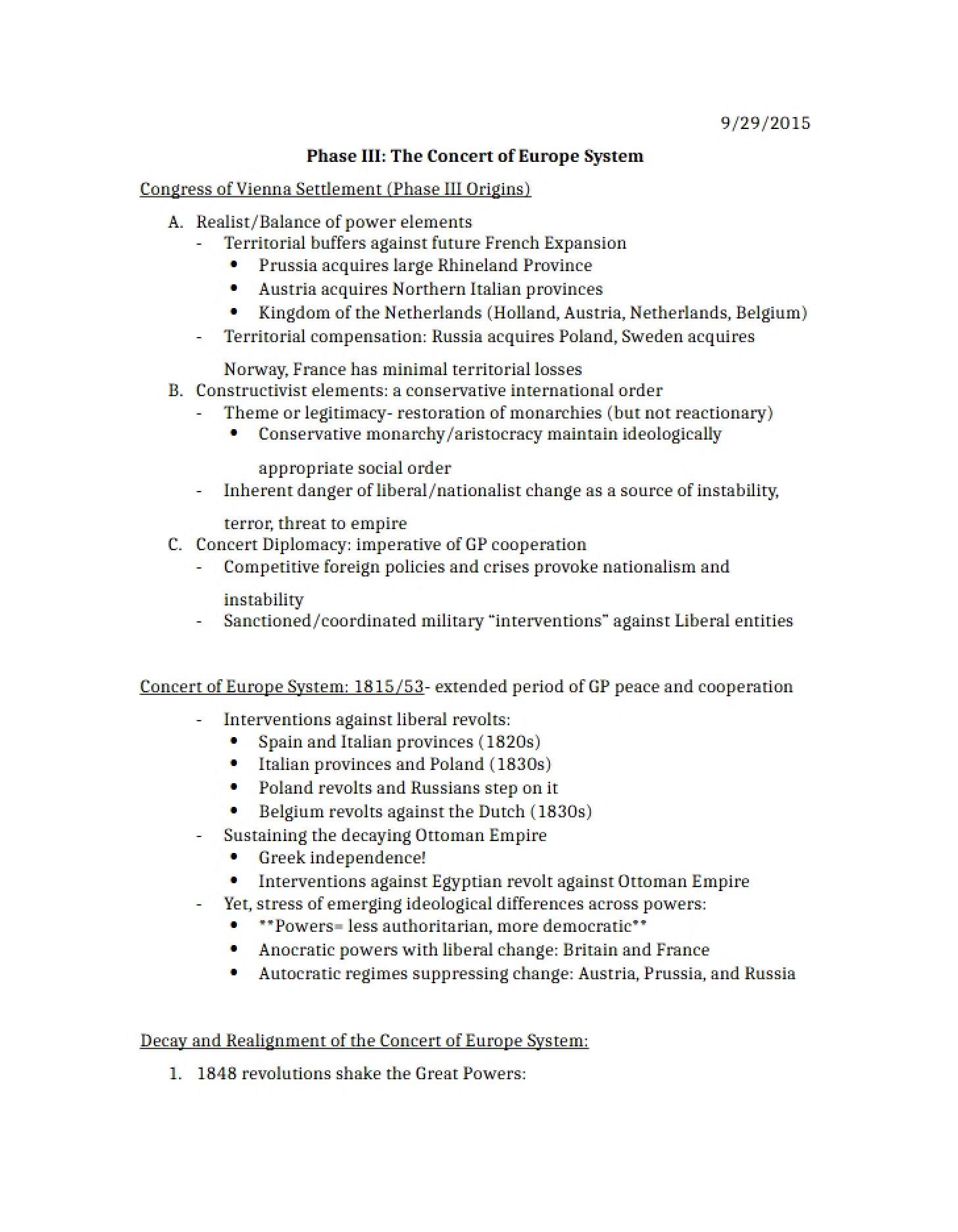
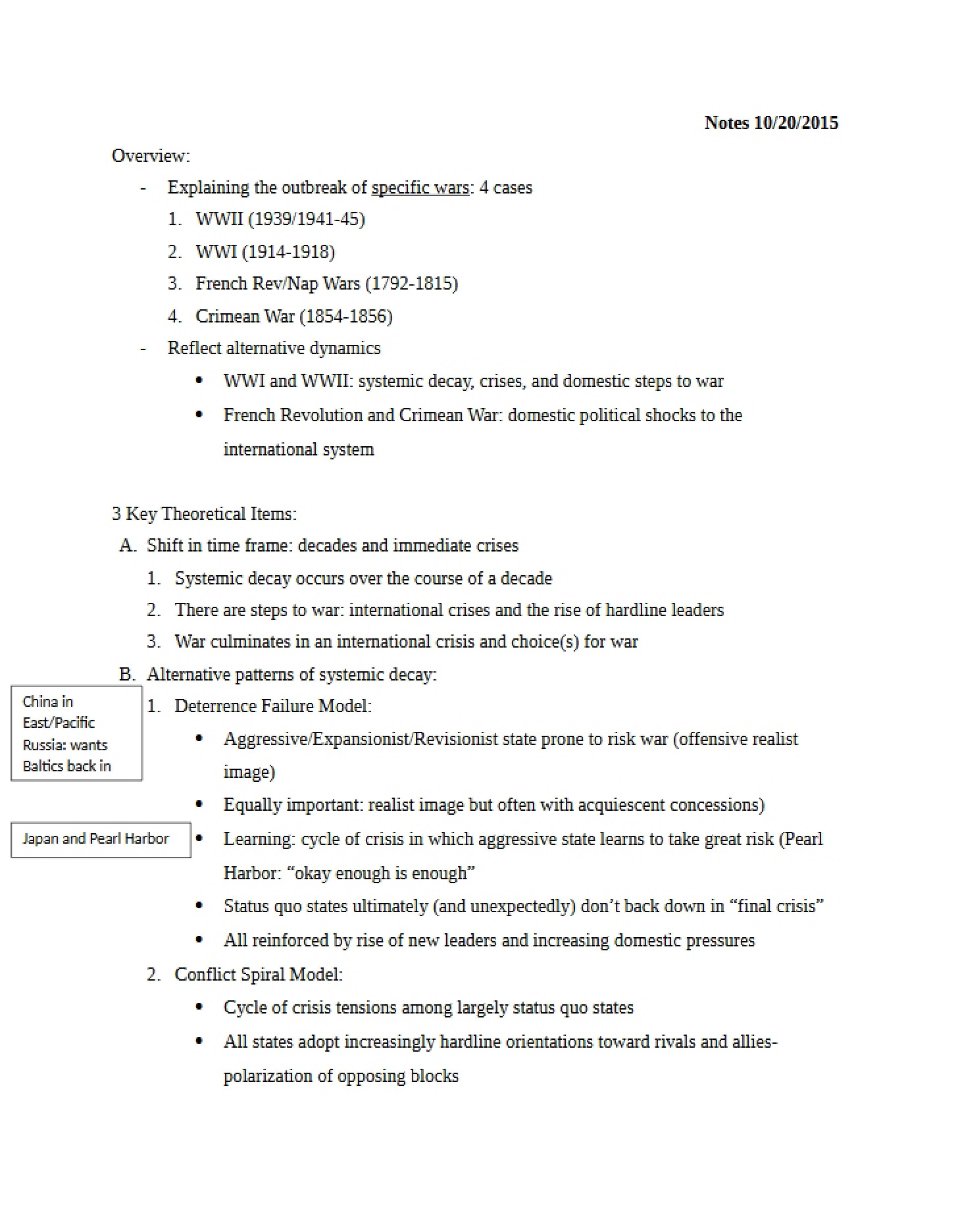
This resource offers detailed notes from a Politics of War and Peace (POLS 368) lecture at West Virginia University, focusing on the historical evolution of the international power system from 1500 to the present day. It’s a deep dive into the dynamics of Great Power relations, examining patterns of continuity and change over centuries. The notes explore the theoretical underpinnings of international relations, connecting historical events to core concepts within the field.
Why This Document Matters
Students enrolled in upper-level political science courses – particularly those focused on international relations, security studies, or foreign policy – will find these notes exceptionally valuable. They are ideal for supplementing textbook readings, preparing for in-class discussions, and building a strong foundation for research papers or exams. These notes are particularly useful when grappling with complex historical trends and attempting to apply theoretical frameworks to real-world events. Anyone seeking a broader understanding of the long-term forces shaping global politics will benefit.
Common Limitations or Challenges
These notes represent a specific interpretation of lecture material and should not be considered a substitute for attending class or completing assigned readings. The notes are focused on providing a framework for understanding Great Power dynamics; they do not offer definitive answers or policy prescriptions. Furthermore, the notes are a snapshot in time and do not include subsequent updates or revisions to the course material. Access to the full document is required for a complete understanding of the concepts presented.
What This Document Provides
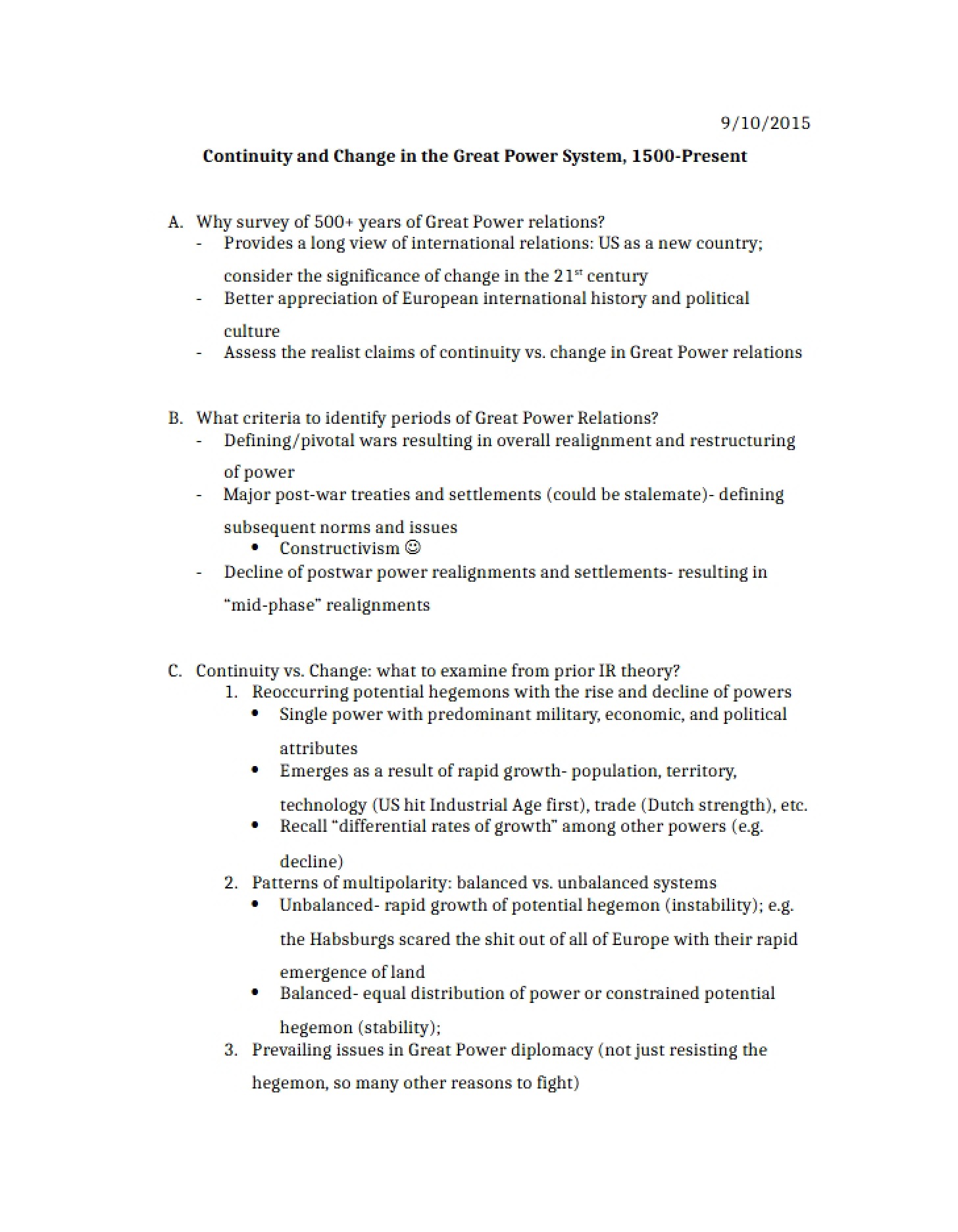
* A historical overview of the Great Power system, spanning over 500 years.
* Criteria for identifying significant periods and shifts in global power structures.
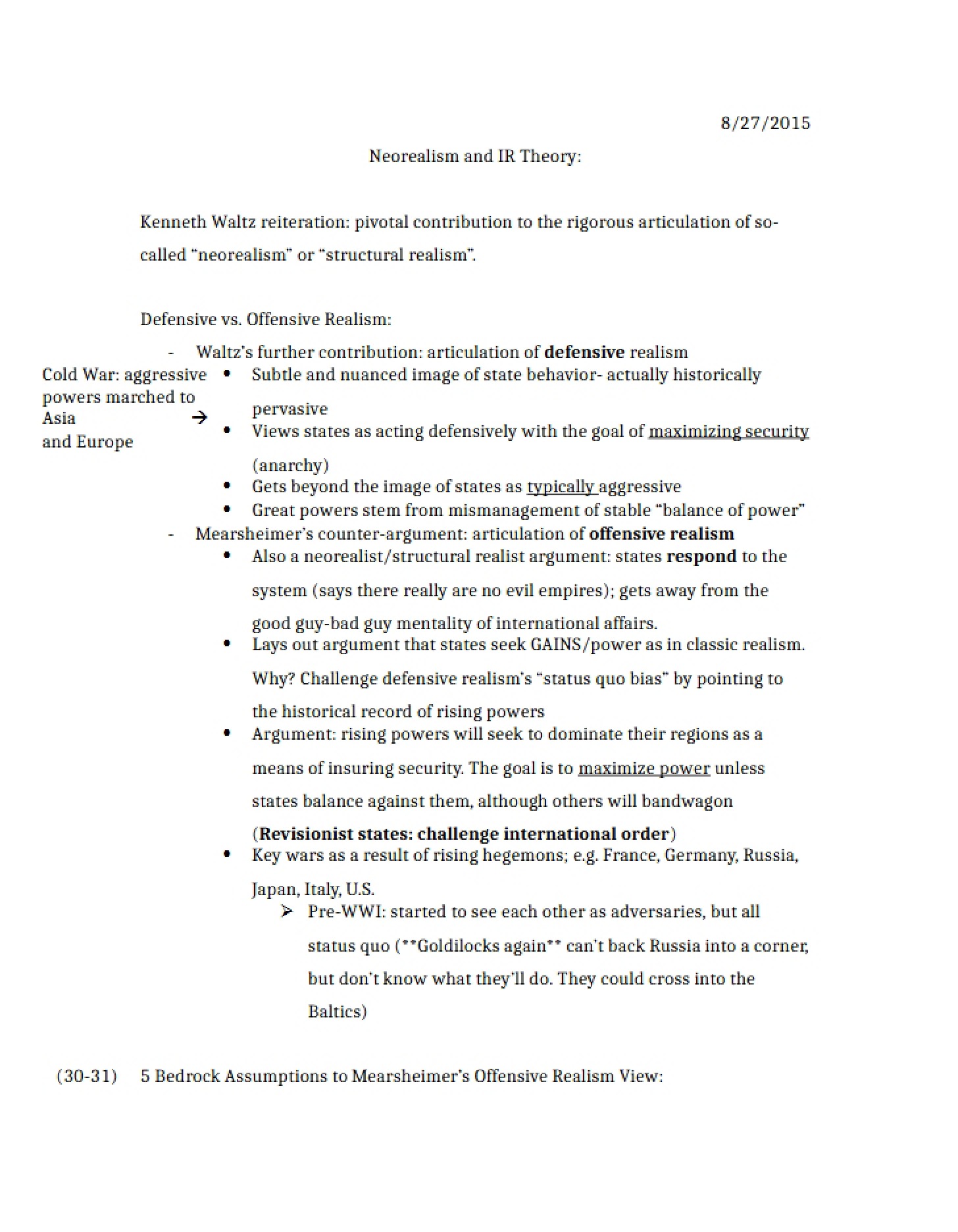
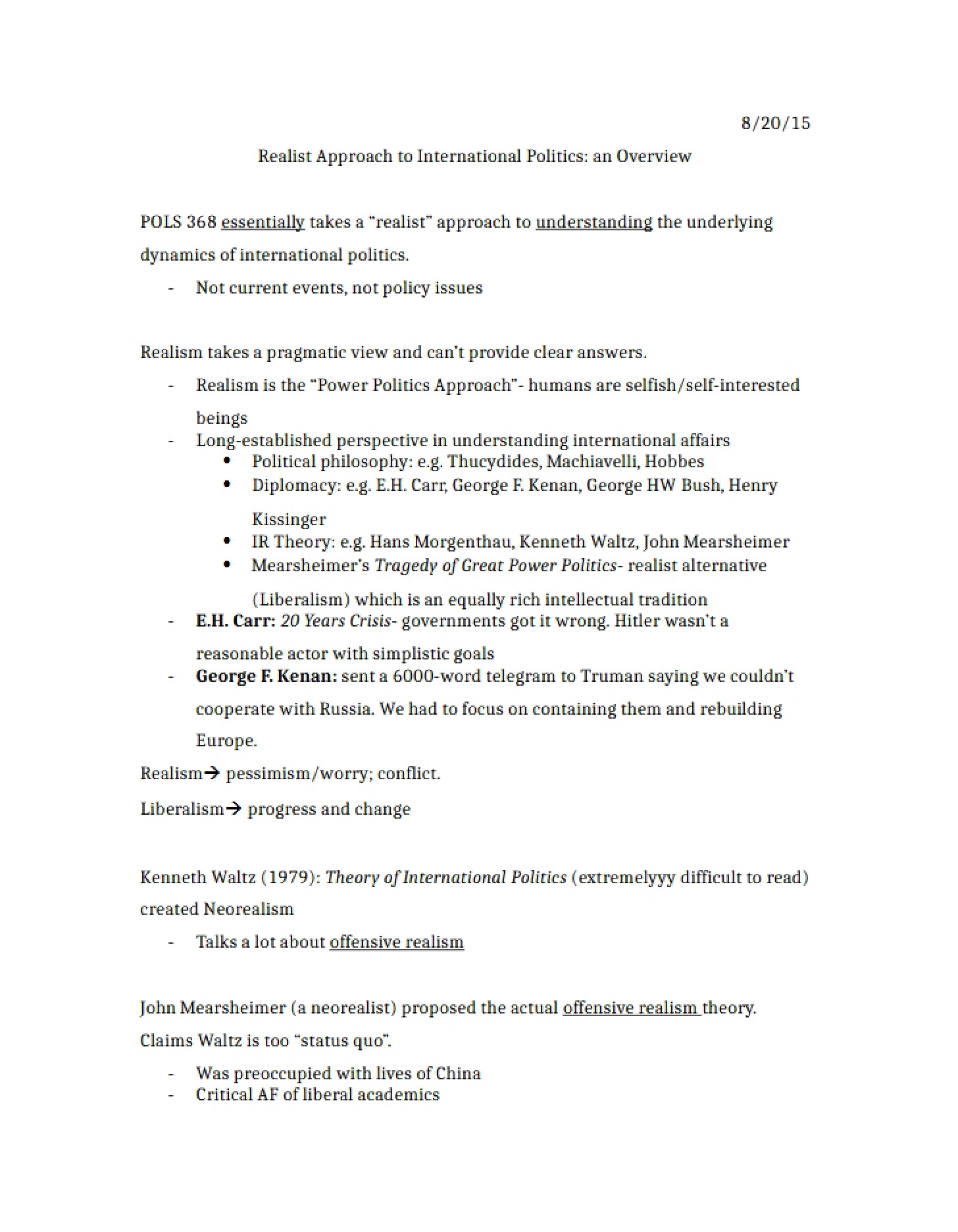
* Exploration of the debate between continuity and change in international relations theory.
* Discussion of the characteristics and implications of different power configurations (e.g., hegemony, multipolarity).
* Analysis of the factors that have historically driven conflict and cooperation between Great Powers.
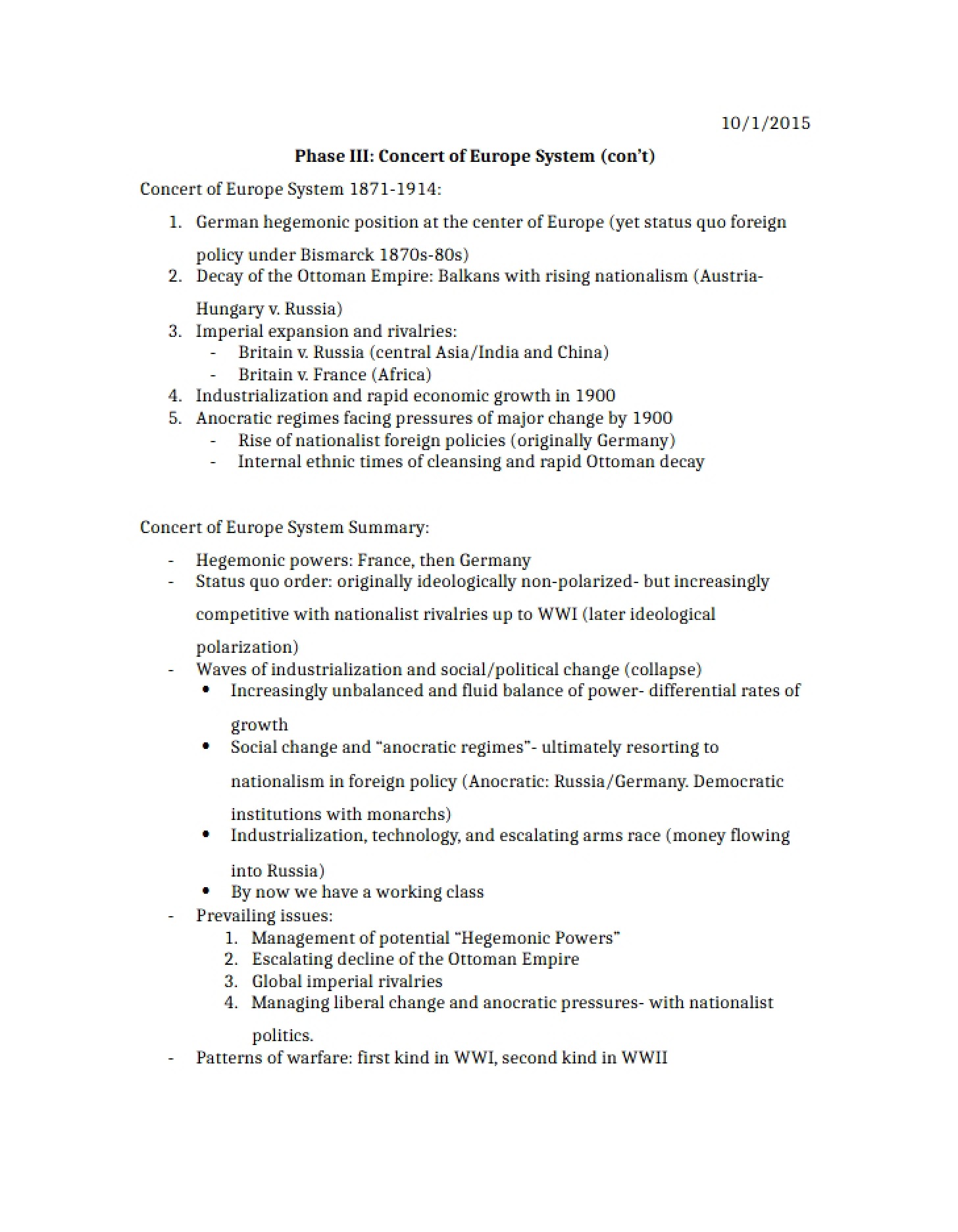
* Consideration of the relationship between domestic political regimes and international behavior.
* Frameworks for understanding the varying scope and intensity of warfare throughout history.