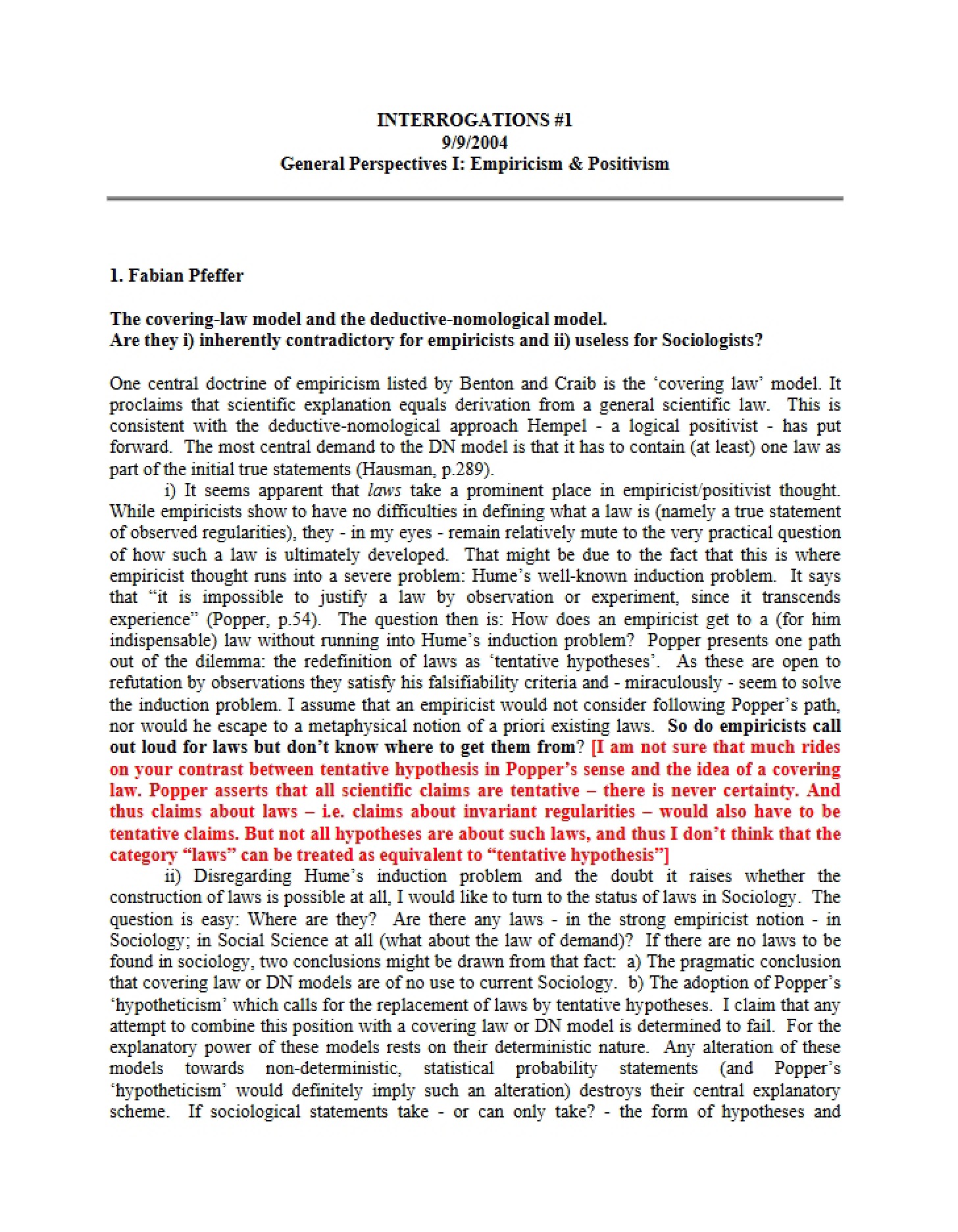
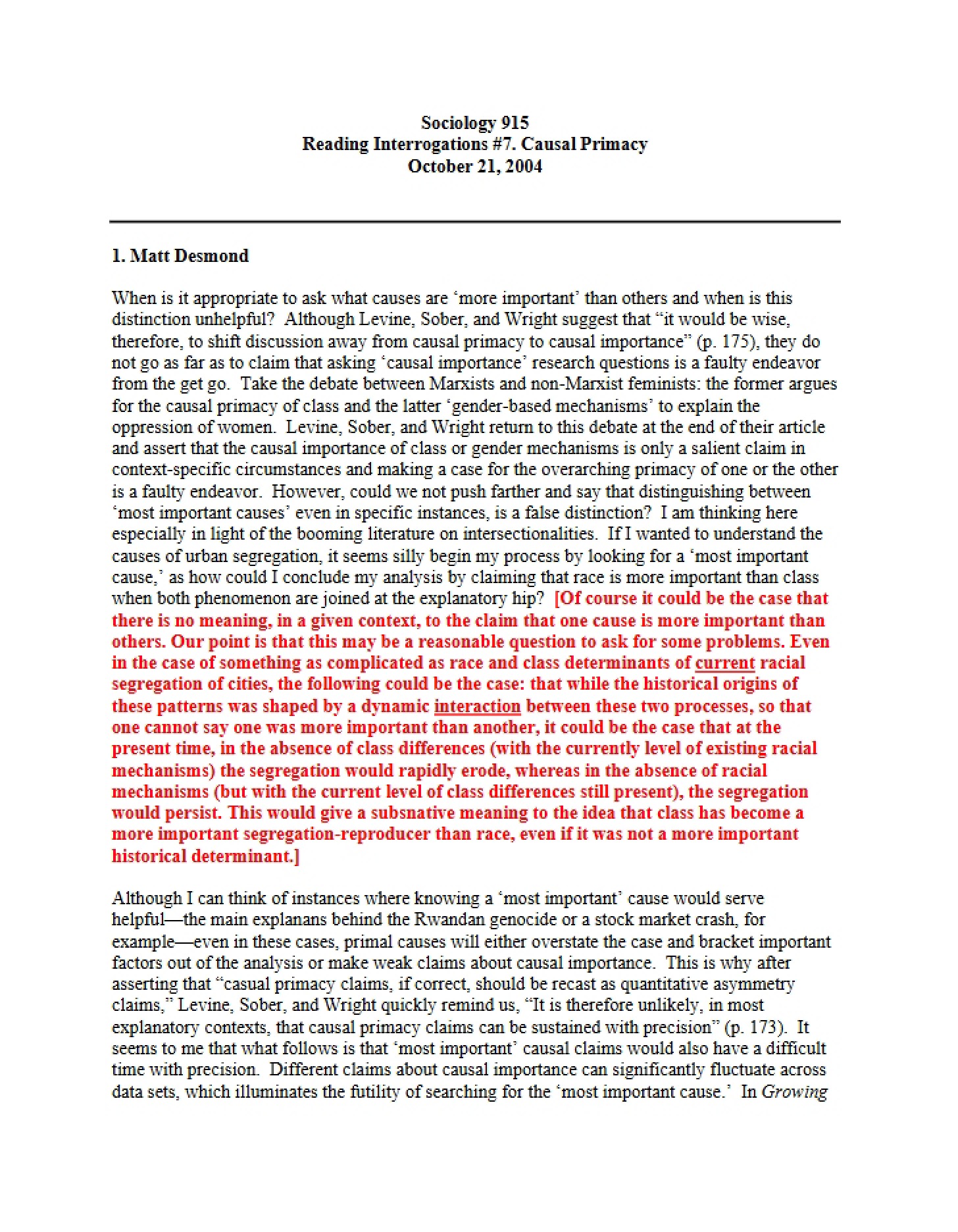
What This Document Is
This document is a critical interrogation of methodological approaches within social science research, specifically focusing on the concept of pluralism. It represents a focused discussion – labeled “Interrogations #8” – stemming from a graduate-level course at the University of Wisconsin-Madison (SOCIOLOGY 915). The core of the analysis centers on evaluating different perspectives regarding the pursuit of knowledge in the social sciences, and the relationship between theoretical understanding and practical application. It delves into debates surrounding the role of generalization, causality, and value-laden reasoning in research.
Why This Document Matters
Students enrolled in advanced social science methodology courses, particularly those exploring qualitative, interpretive, or critical approaches, will find this resource valuable. It’s especially relevant for those grappling with the philosophical underpinnings of their research and seeking to understand the ongoing debates about the best ways to study complex social phenomena. Researchers considering the practical implications of their work, or those aiming to justify a specific methodological choice, will also benefit from engaging with the arguments presented. This is a useful resource when you are looking to deepen your understanding of the theoretical foundations of social science research.
Common Limitations or Challenges
This interrogation is a focused, in-depth analysis of specific arguments and doesn’t offer a comprehensive overview of all methodological approaches. It concentrates on a particular set of scholarly viewpoints and doesn’t necessarily represent a consensus within the field. It is not a “how-to” guide for conducting research, nor does it provide definitive answers to complex methodological questions. It assumes a pre-existing familiarity with key concepts in social science theory and epistemology.
What This Document Provides
* A critical assessment of a proposed alternative to traditional social science research paradigms.
* Exploration of the relationship between different ways of knowing – specifically, contrasting approaches to knowledge generation.
* Discussion of the potential benefits and drawbacks of prioritizing practical application in social science research.
* Analysis of the challenges associated with defining and achieving methodological pluralism.
* Engagement with the work of prominent scholars in the field of social science methodology.