What This Document Is
This is a detailed solutions manual accompanying problem sets for Thermodynamics (ME 300) at the University of Illinois at Urbana-Champaign. Specifically, it focuses on the solutions to problem set 06, covering advanced applications of energy analysis for open systems. It’s designed to reinforce understanding of concepts related to pumps, turbines, and fluid flow within control volumes. The material builds upon foundational thermodynamics principles and applies them to practical engineering scenarios.
Why This Document Matters
This resource is invaluable for students enrolled in a rigorous Thermodynamics course. It’s particularly helpful when you’re struggling to apply theoretical concepts to quantitative problems. Use this when you’ve attempted the problem set independently and need to check your approach, identify areas where your understanding is lacking, or see alternative methods for problem-solving. It’s also a great tool for reinforcing your comprehension before exams. Students who benefit most are those seeking a deeper understanding of energy transfer and its application in mechanical systems.
Common Limitations or Challenges
This document *does not* provide step-by-step explanations of fundamental thermodynamic principles. It assumes you have a solid grasp of core concepts like enthalpy, work, and the energy equation. It also doesn’t offer conceptual derivations of the equations used; rather, it focuses on their application to specific problems. It will not substitute for attending lectures, reading the textbook, or actively participating in class. It is a *supplement* to your learning, not a replacement for it.
What This Document Provides
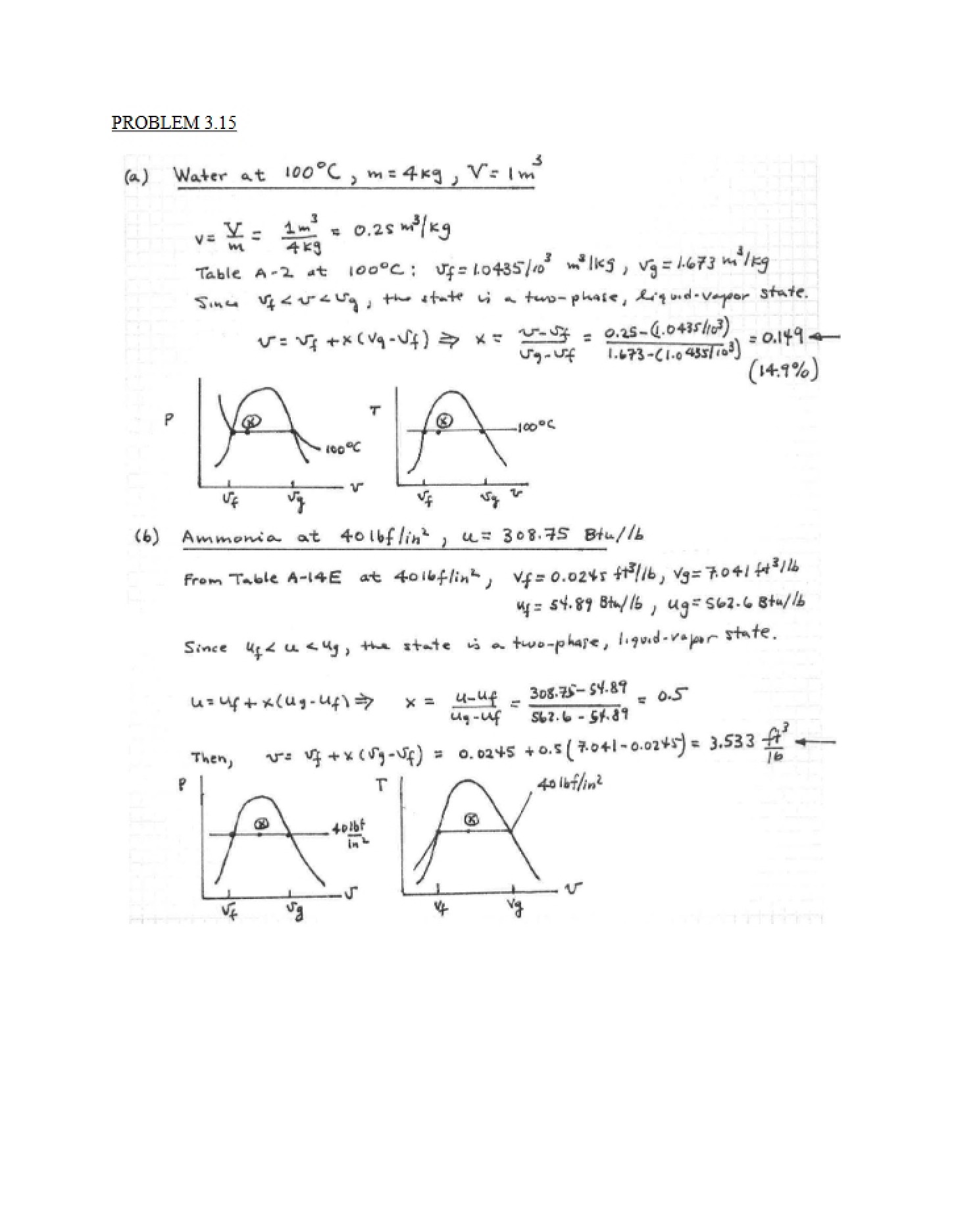
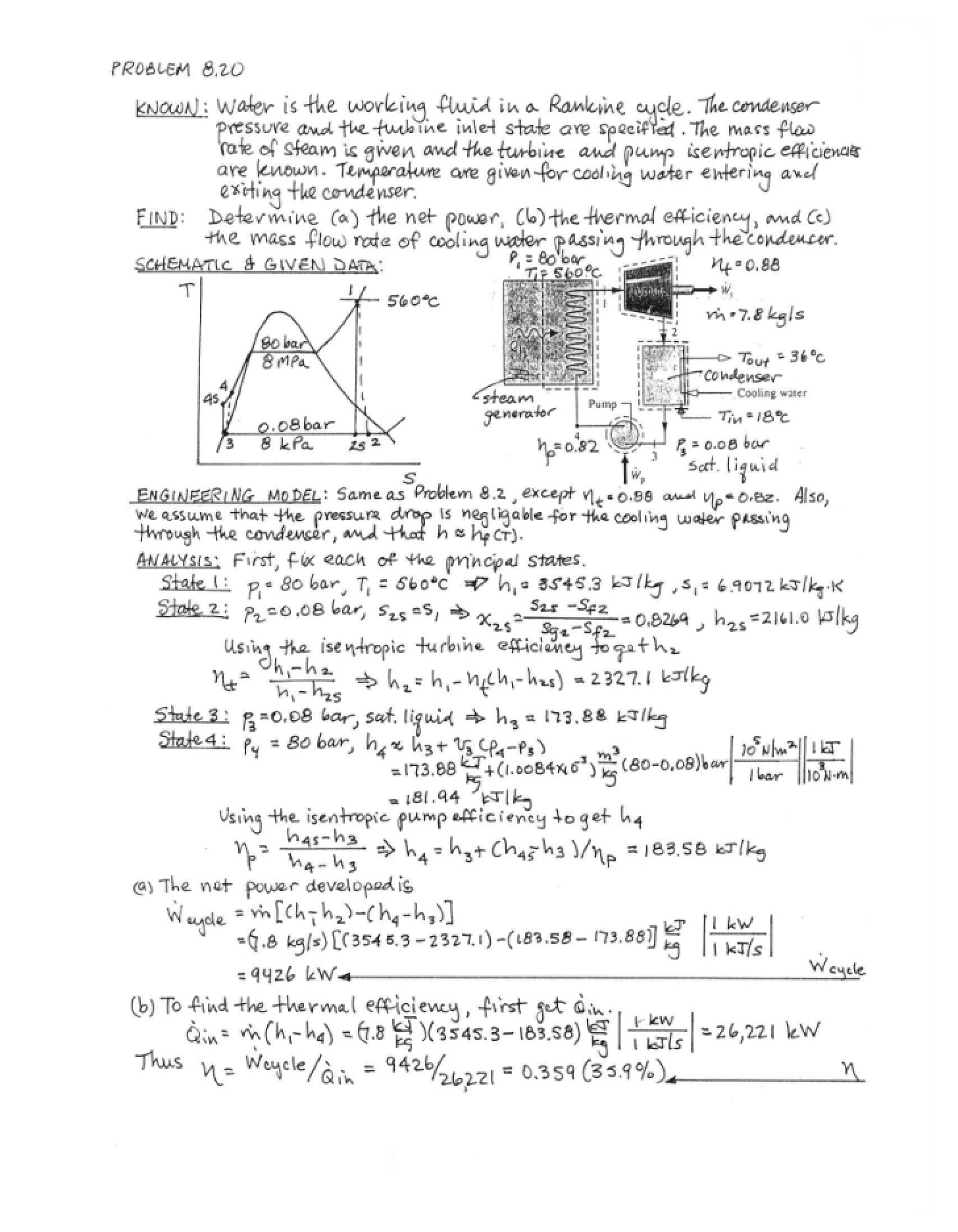
* Detailed analyses of multiple thermodynamics problems involving pumps and turbines.
* Illustrative schematics accompanying each problem to aid in visualization.
* Clear identification of known data and the desired findings for each problem.
* Engineering model breakdowns outlining the assumptions made for each solution.
* Application of the energy equation to steady-state systems.
* Worked examples demonstrating the calculation of power requirements for fluid-handling equipment.
* Discussions of work and energy transfer in control volumes.