What This Document Is
This study guide contains detailed, worked solutions to practice problems in Thermodynamics (ME 300) at the University of Illinois at Urbana-Champaign. Specifically, it focuses on applications of thermodynamic principles to vapor power plant cycles – often referred to as Rankine cycles – and related component analysis. It appears to cover multiple related problems, building on core concepts. The material is presented in a step-by-step problem-solving format, typical of engineering coursework.
Why This Document Matters
This resource is invaluable for students enrolled in a similar Thermodynamics course, particularly those struggling with applying theoretical knowledge to practical power cycle calculations. It’s most beneficial when used *alongside* textbook readings and lecture notes, as a means of reinforcing understanding and developing problem-solving skills. Students preparing for quizzes or exams on Rankine cycles, turbine and pump performance, and heat transfer calculations will find this particularly helpful. It’s designed to help bridge the gap between theory and application.
Common Limitations or Challenges
This document provides *solutions* to specific problems; it does not offer comprehensive explanations of the underlying thermodynamic principles themselves. It assumes a foundational understanding of concepts like enthalpy, entropy, isentropic efficiency, and the properties of water and steam. It will not teach you the fundamental concepts – it’s a tool for solidifying your understanding *after* you’ve learned them. Furthermore, it focuses on a specific set of problems and may not cover all possible variations or complexities within the topic.
What This Document Provides
* Detailed analysis of vapor power cycle problems, including state point determination.
* Application of isentropic efficiencies to turbine and pump calculations.
* Calculations related to heat transfer in condensers and steam generators.
* Problem setups involving cooling water flow rates and temperature changes.
* Worked examples demonstrating the calculation of net power output and thermal efficiency for Rankine cycles.
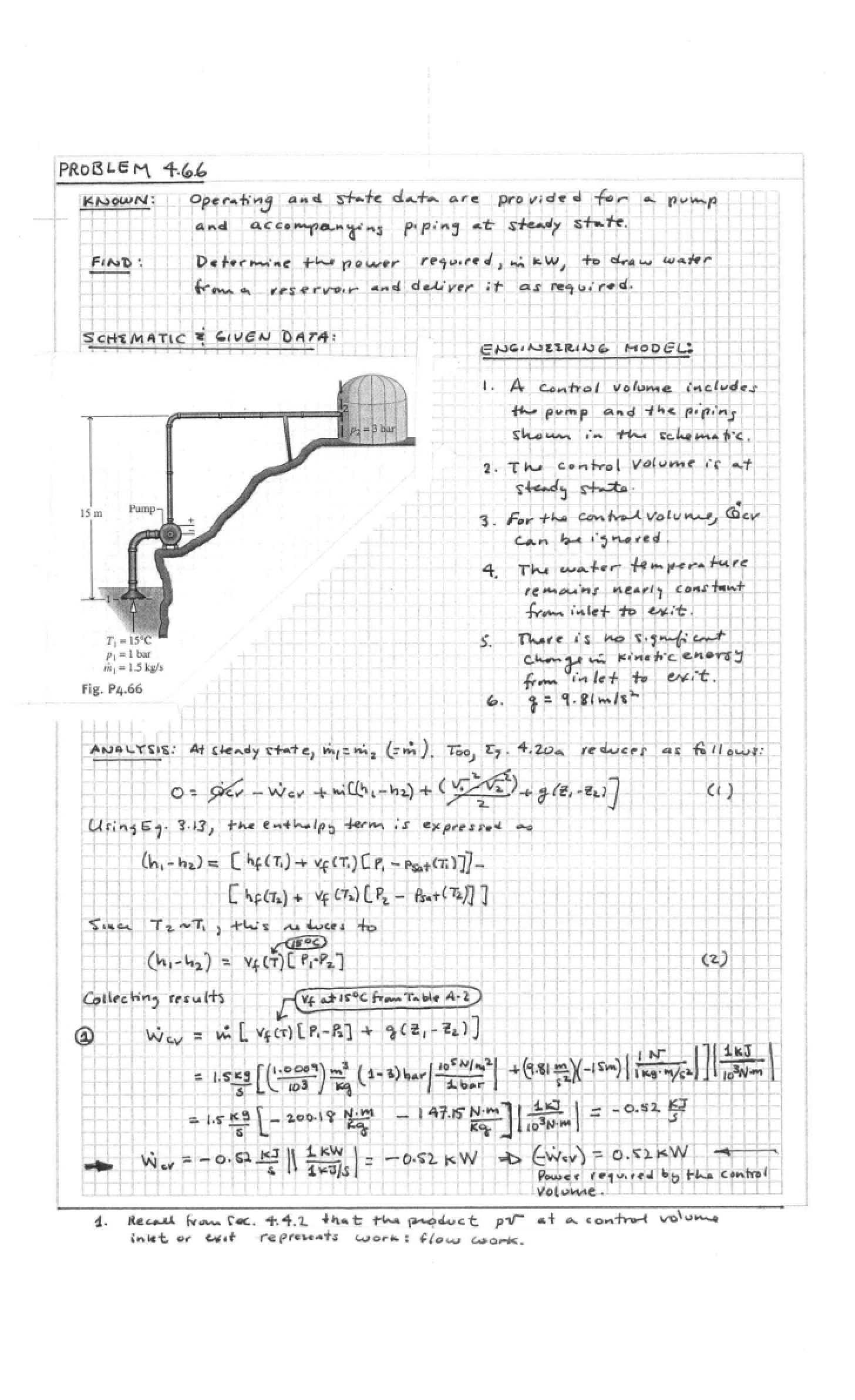
* Problem schematics and given data listings for context.