What This Document Is
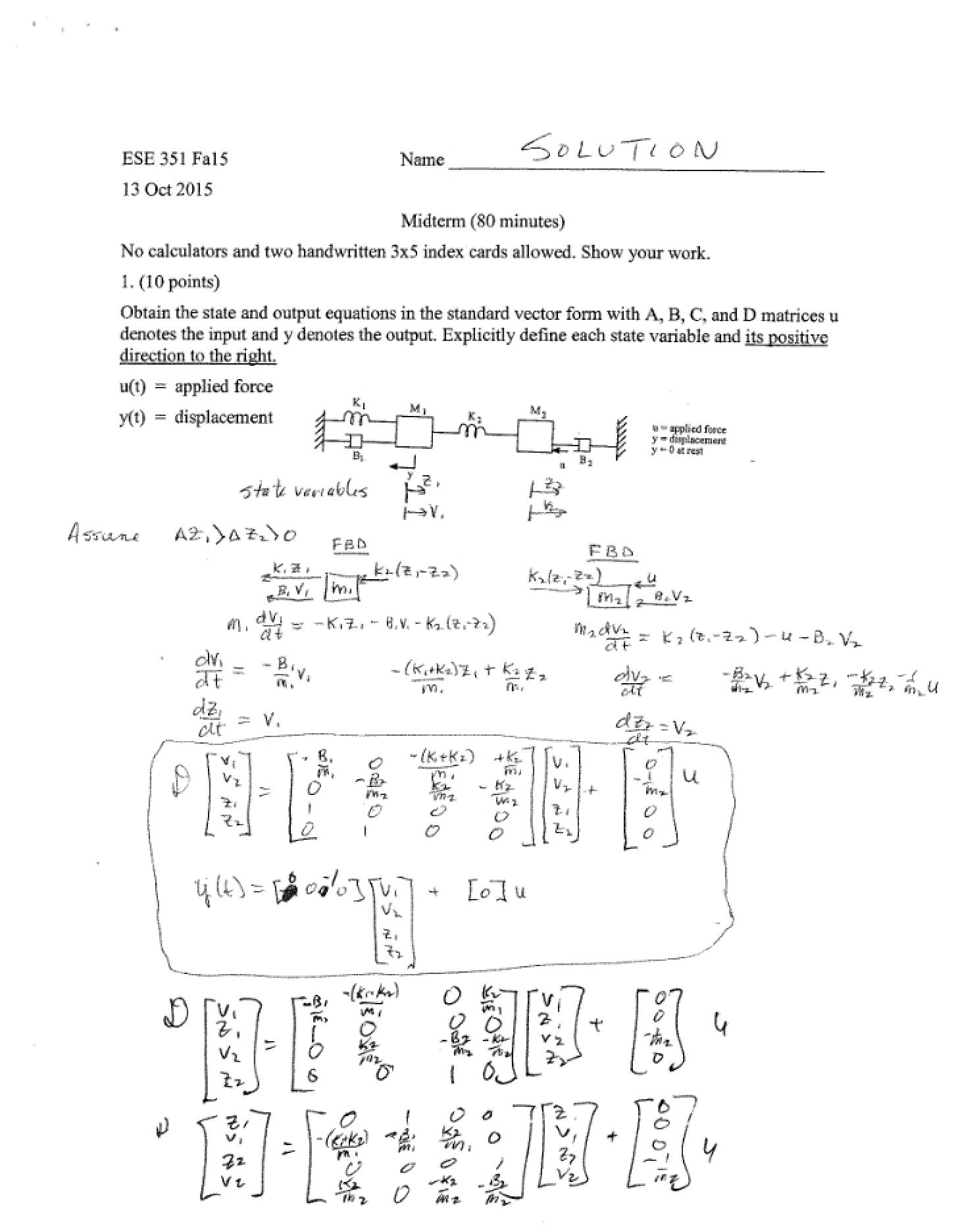
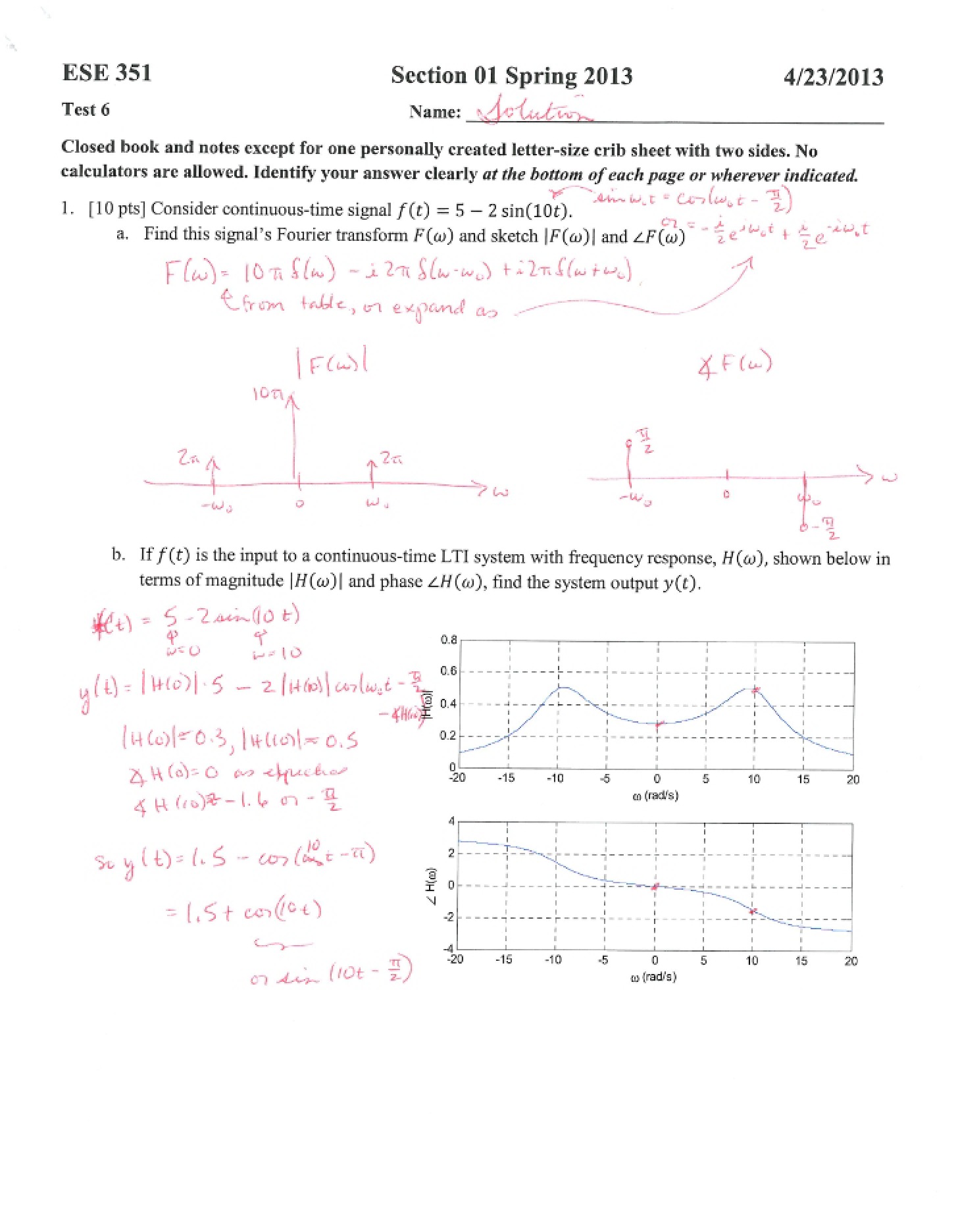
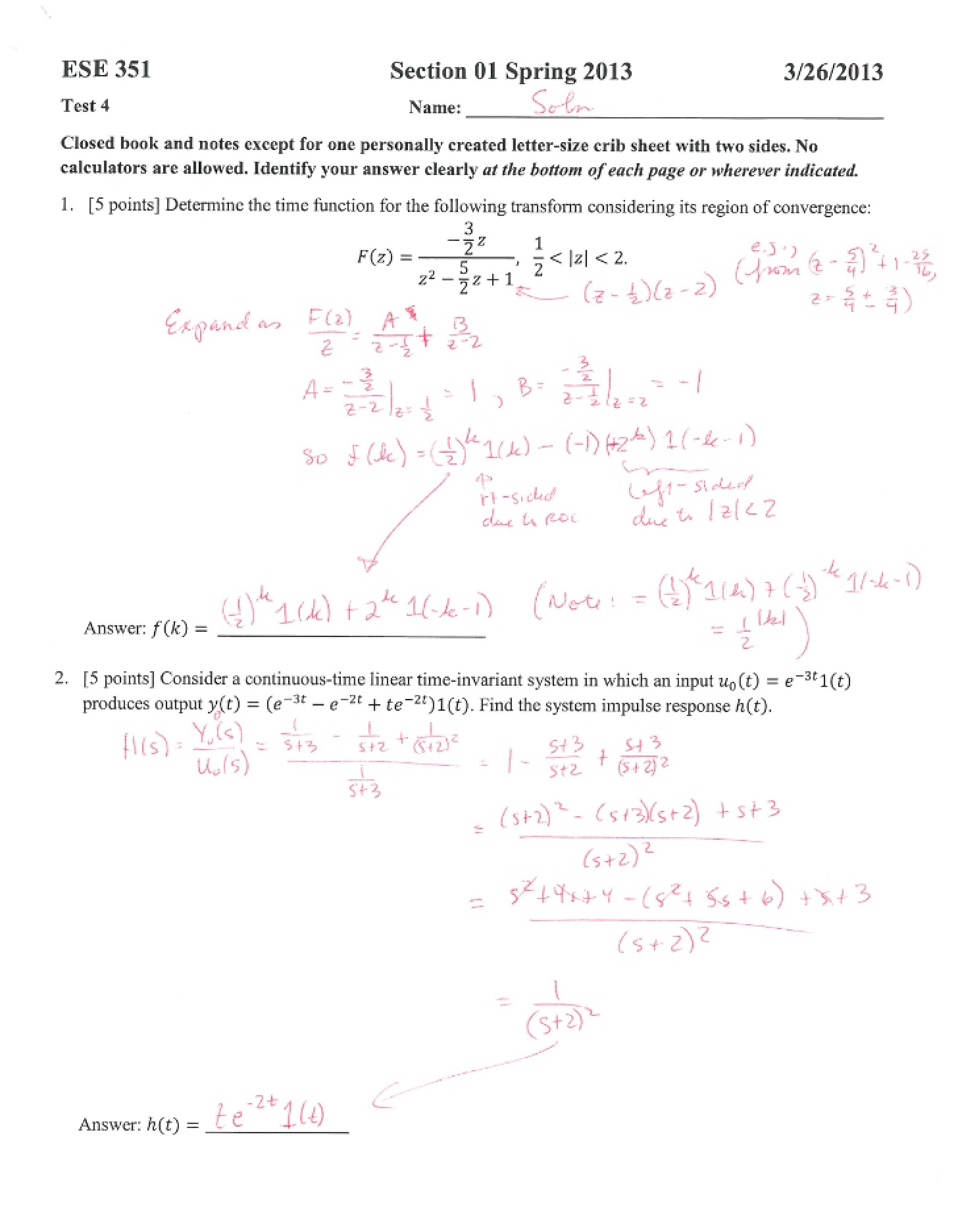
This document contains worked solutions for a second in-course examination for ESE 351, Signals and Systems, offered at Washington University in St. Louis during the Spring 2013 semester. It’s a detailed walkthrough of problems assessed on a closed-book, closed-notes test (with a permitted crib sheet), designed to reinforce understanding of core concepts. The focus is on applying theoretical knowledge to practical problem-solving within the realm of signals and systems.
Why This Document Matters
This resource is invaluable for students currently enrolled in a similar Signals and Systems course, or those reviewing the material for subsequent courses or professional exams. It’s particularly helpful for students who struggled with the original exam and want to understand the correct approach to solving specific problem types. Accessing these solutions can help identify areas where your understanding needs strengthening and improve your test-taking strategies. It’s best used *after* you’ve attempted the original exam or similar practice problems independently.
Common Limitations or Challenges
This document provides solutions to a *specific* test from a *specific* course instance. While the concepts are broadly applicable, the exact problems and their phrasing may differ in your own coursework. It does not offer comprehensive explanations of the underlying theory; it assumes you have a foundational understanding of signals and systems principles. It also doesn’t provide alternative solution methods – it presents one approach to each problem.
What This Document Provides
* Detailed solutions addressing problems involving rotational mechanical systems and their state-space representation.
* Step-by-step analysis of homogeneous difference equations and the determination of solutions based on given initial conditions.
* Derivation of input-output differential equations from provided state and output equations.
* Solutions to problems involving input-output differential equations and the determination of particular and complete solutions.
* Illustrative examples applying concepts related to differential and difference equations in a signals and systems context.