What This Document Is
This document contains fully worked solutions to a midterm examination for ESE 351, Signals and Systems, offered at Washington University in St. Louis during the Spring 2013 semester. It’s a detailed record of how problems were approached and resolved, covering core concepts within the course. The exam focuses on applying theoretical knowledge to practical problems in signal processing and system analysis.
Why This Document Matters
This resource is invaluable for students currently enrolled in or preparing for a Signals and Systems course. It’s particularly helpful for those who want to review their understanding of key topics after taking a similar exam, or for students seeking to solidify their grasp of challenging concepts. It can be used as a study aid to identify areas where further review is needed, and to understand the expected level of detail and rigor in problem-solving. Students preparing for future exams can benefit from observing the types of questions asked and the methods used to arrive at correct solutions.
Common Limitations or Challenges
This document presents solutions specifically for *one* midterm exam from a *single* semester. While the concepts covered are fundamental, the specific problems and their phrasing may differ in other assessments. Relying solely on these solutions won’t guarantee success without a thorough understanding of the underlying principles. It does not include explanations of foundational concepts, nor does it serve as a substitute for attending lectures or completing assigned homework.
What This Document Provides
* Detailed responses to a range of problems covering difference equations and system transfer functions.
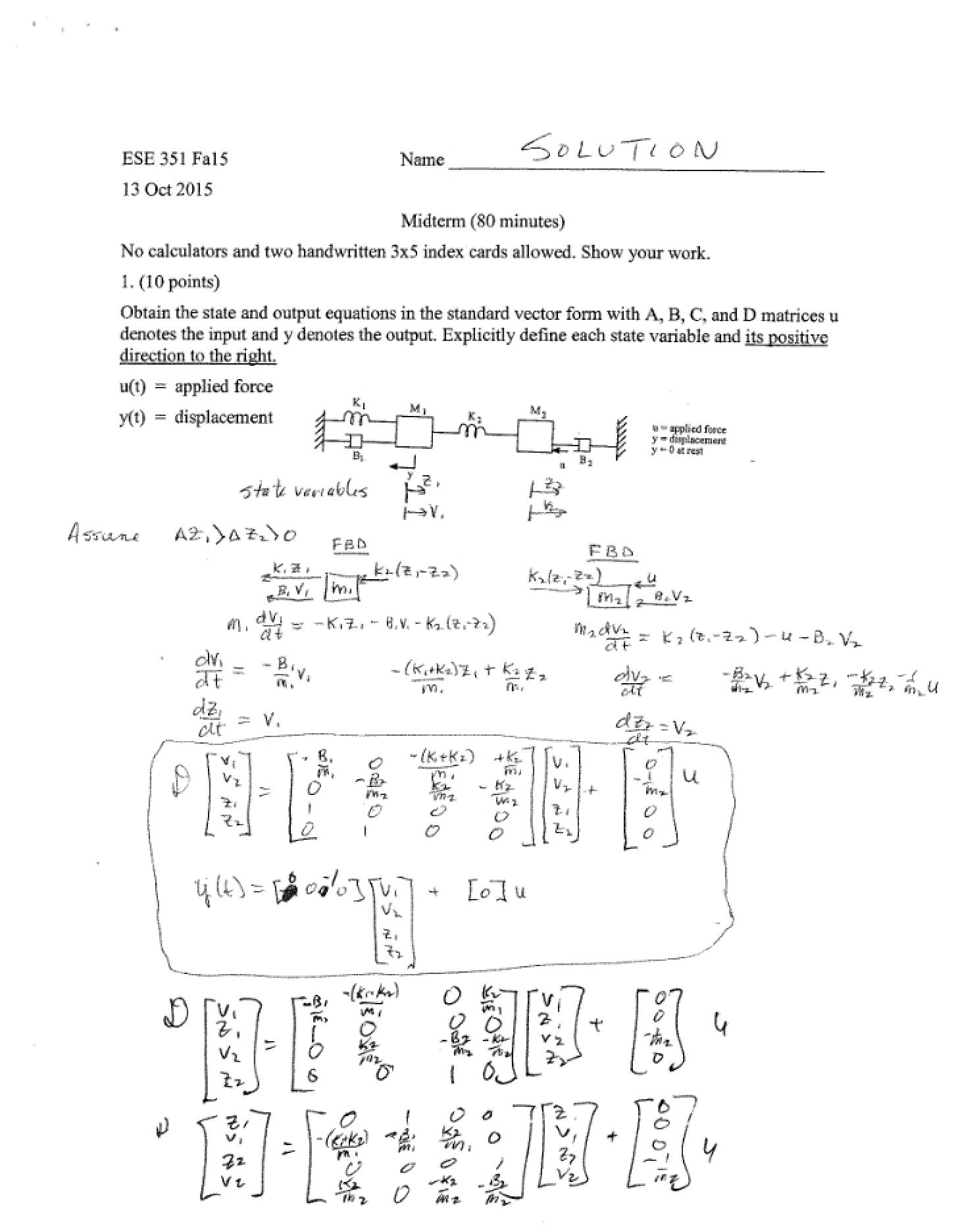
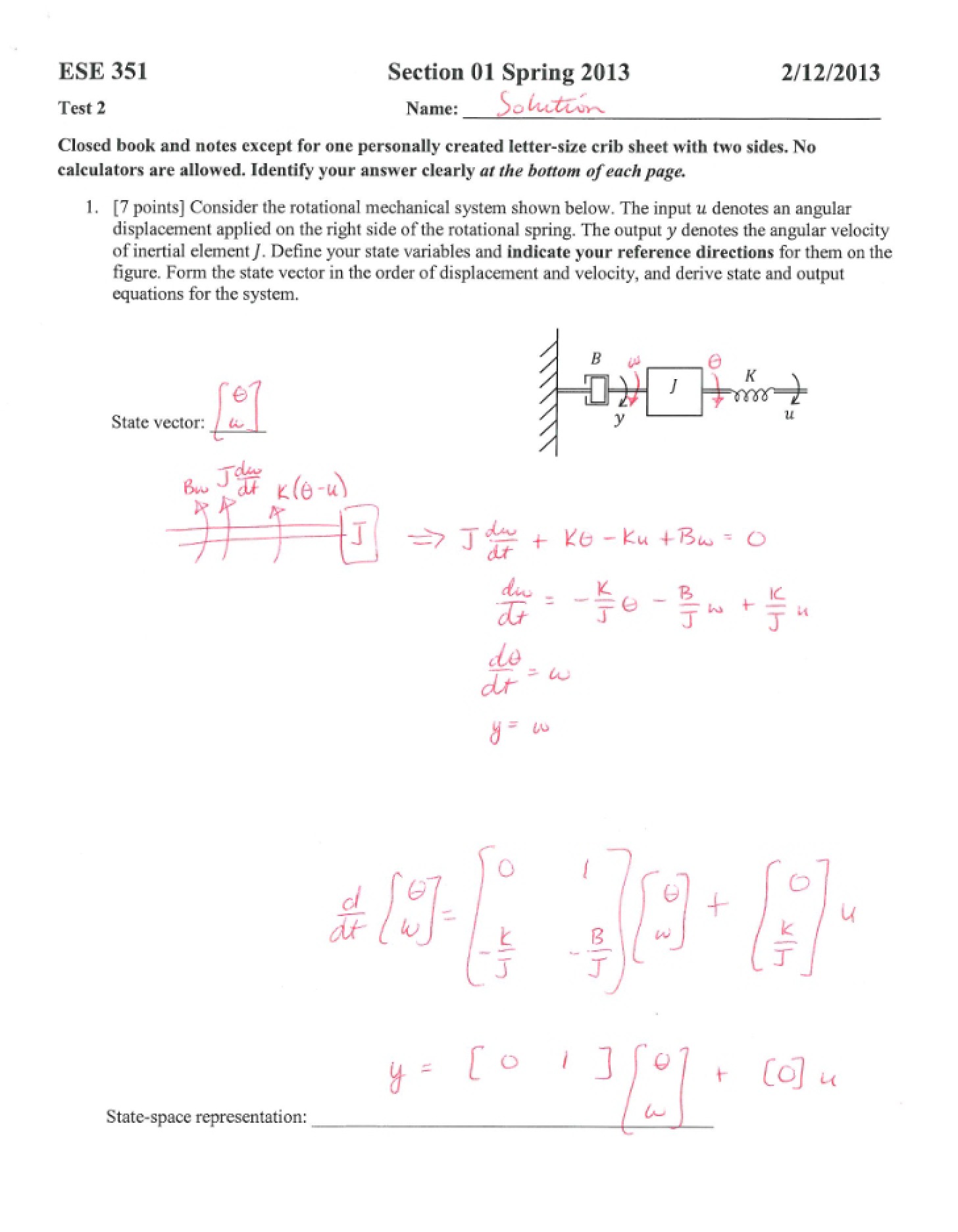
* Solutions involving state-space models, including zero-input response, transfer function derivation, and stability analysis.
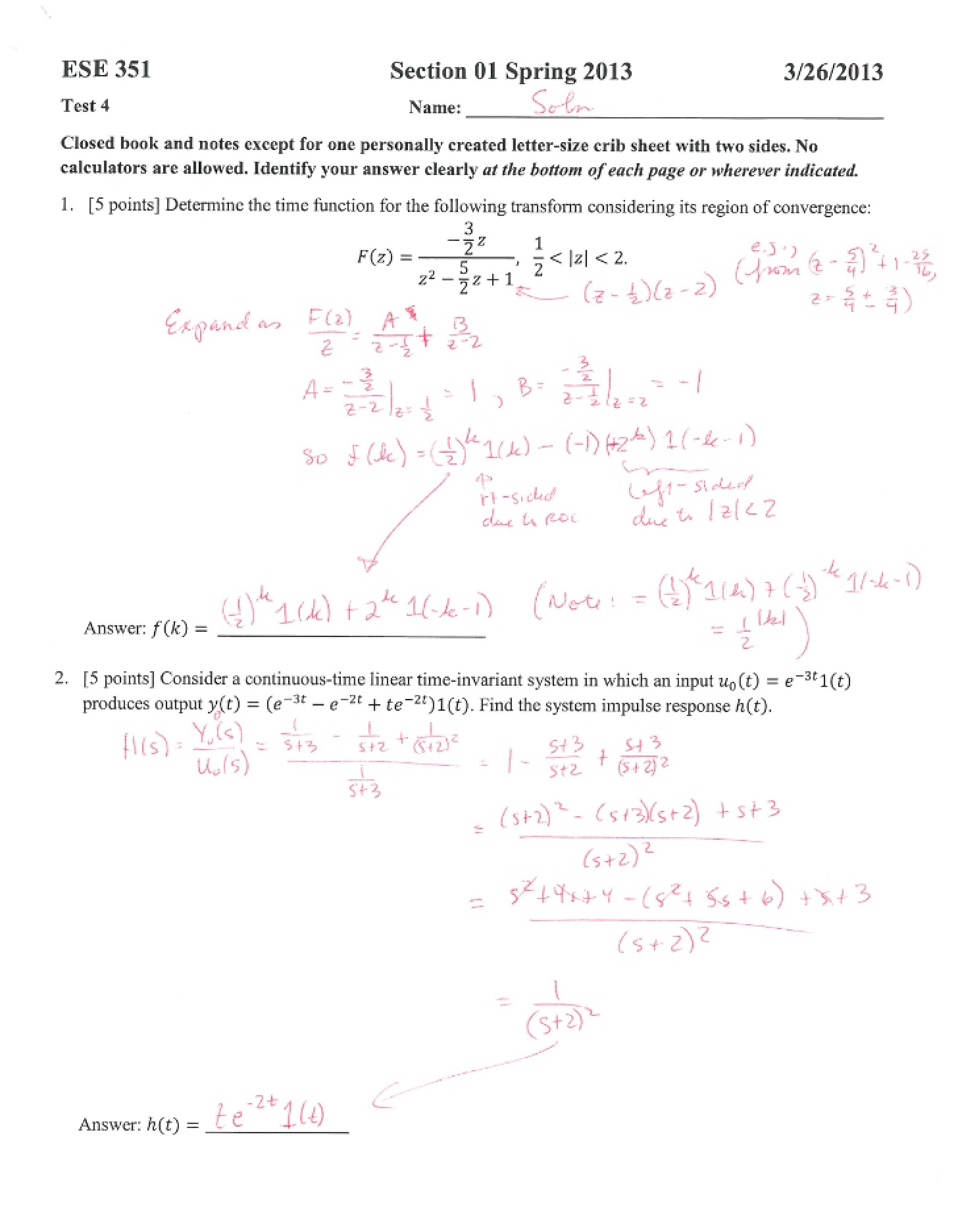
* Worked examples applying transform methods to continuous-time systems and finding system responses to various inputs.
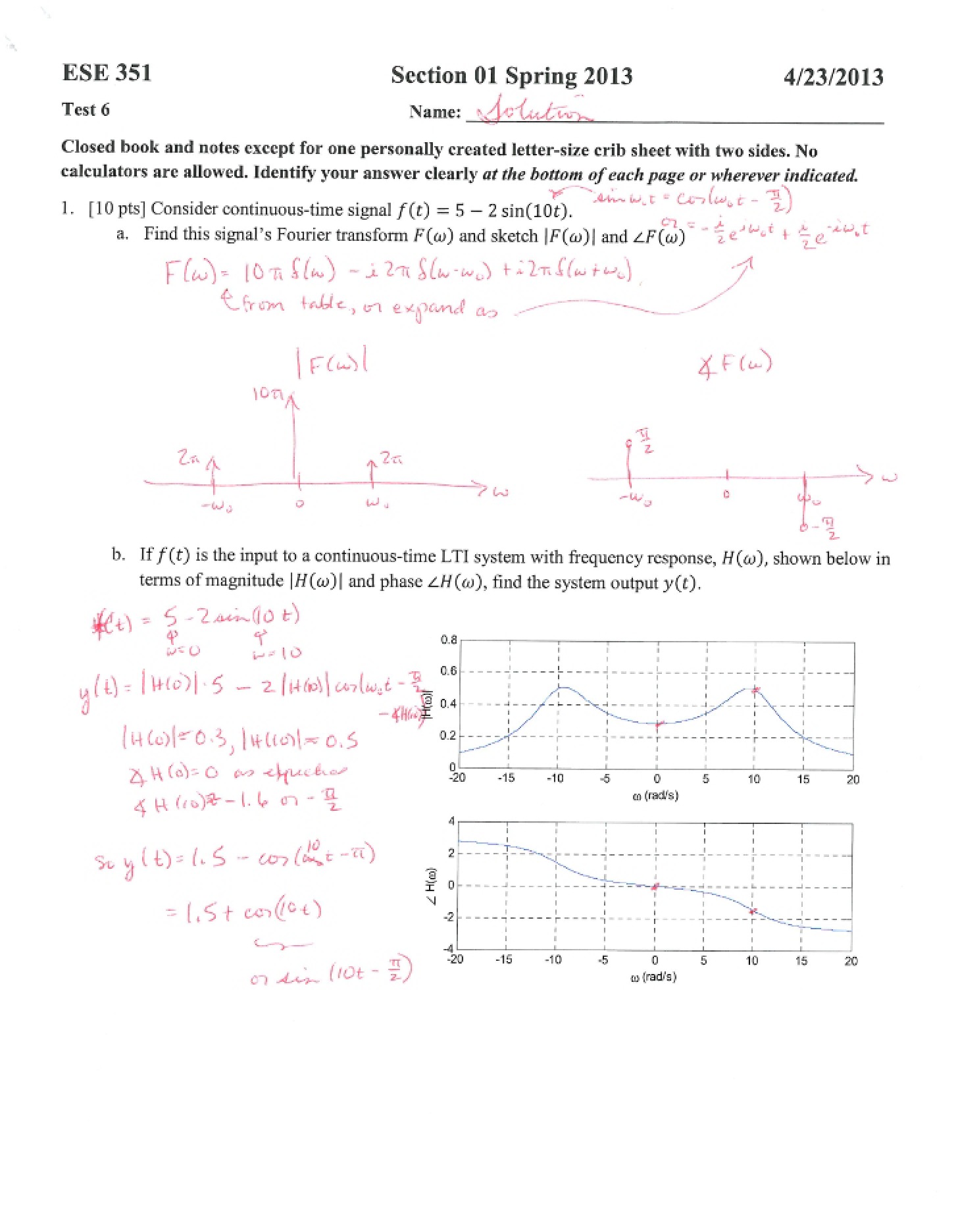
* Analysis of system impulse responses and frequency responses, including sketching of gain and phase plots.
* Solutions for problems involving periodic signals and their Fourier series representation.