What This Document Is
This document contains fully worked solutions for Test Two from ESE 351, Signals and Systems, offered at Washington University in St. Louis during the Spring 2013 semester. It’s a detailed walkthrough intended to clarify the expected approach to problem-solving within the course’s framework. The test focuses on core concepts related to system representation and analysis, specifically utilizing state-space methods. It assumes familiarity with foundational principles covered in lectures and assigned readings.
Why This Document Matters
This resource is invaluable for students seeking to solidify their understanding of signals and systems principles. It’s particularly helpful after attempting the original test independently – reviewing these solutions can pinpoint areas of weakness and reveal common pitfalls. Engineering students preparing for similar assessments, or those needing a refresher on state-space modeling, will find this a useful study aid. It’s best utilized *after* dedicated study and practice, as a means of verifying comprehension and refining problem-solving techniques.
Common Limitations or Challenges
This document presents solutions to a *specific* test from a *past* semester. While the core concepts remain consistent, the precise problems and their phrasing may differ in subsequent assessments. It does not offer step-by-step explanations of fundamental concepts; it assumes you already possess a working knowledge of the course material. It also doesn’t include graded feedback or alternative solution paths – it presents one approach to each problem. Accessing this resource won’t substitute for active learning and consistent practice.
What This Document Provides
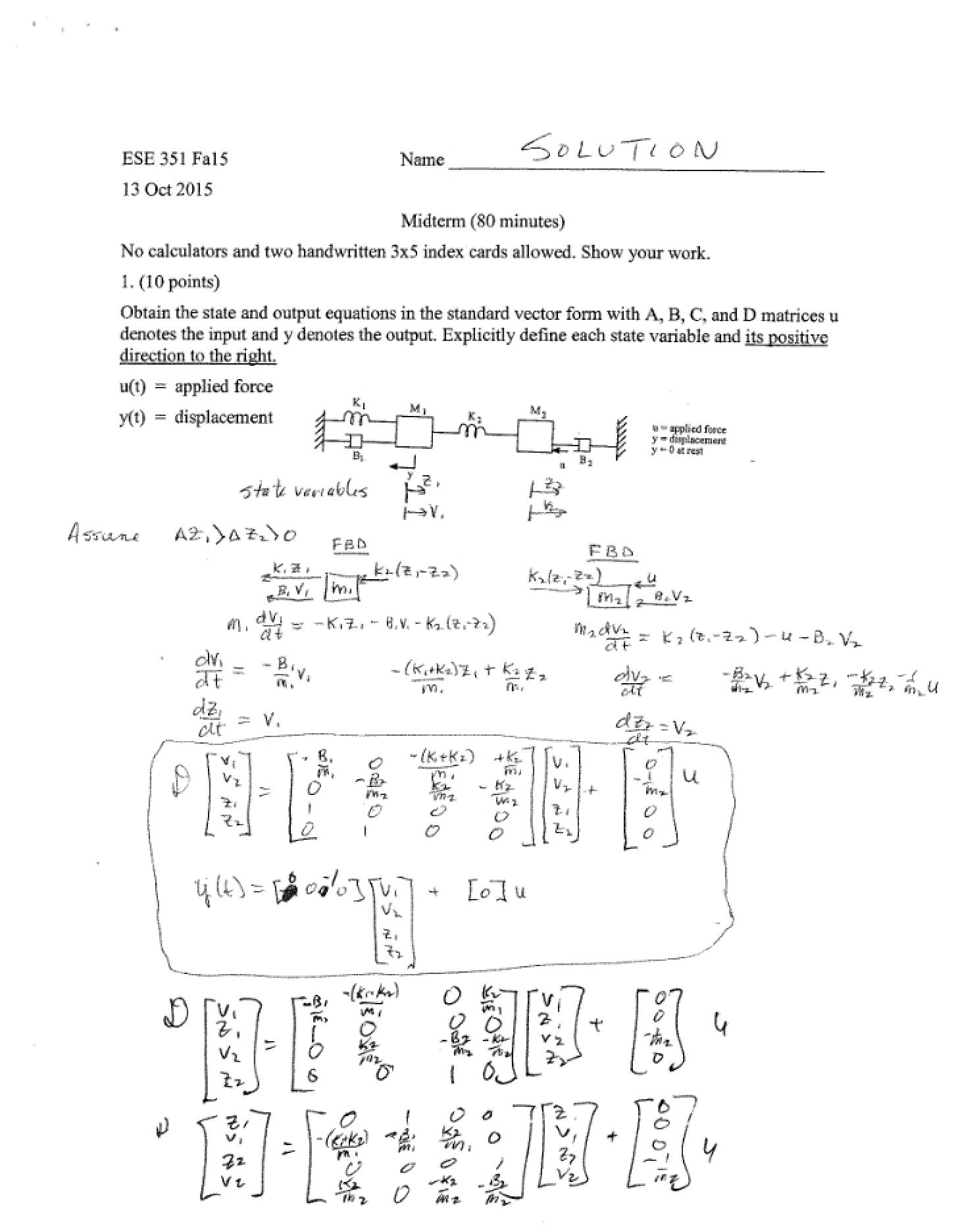
* Detailed solutions for problems involving the derivation of state-space representations from mechanical systems.
* Solutions demonstrating the application of state-space techniques to electrical circuits.
* Illustrations of how to define appropriate state variables based on system characteristics.
* Worked examples showcasing the formulation of state and output equations in standard form.
* Clear identification of input and output variables for each system analyzed.