What This Document Is
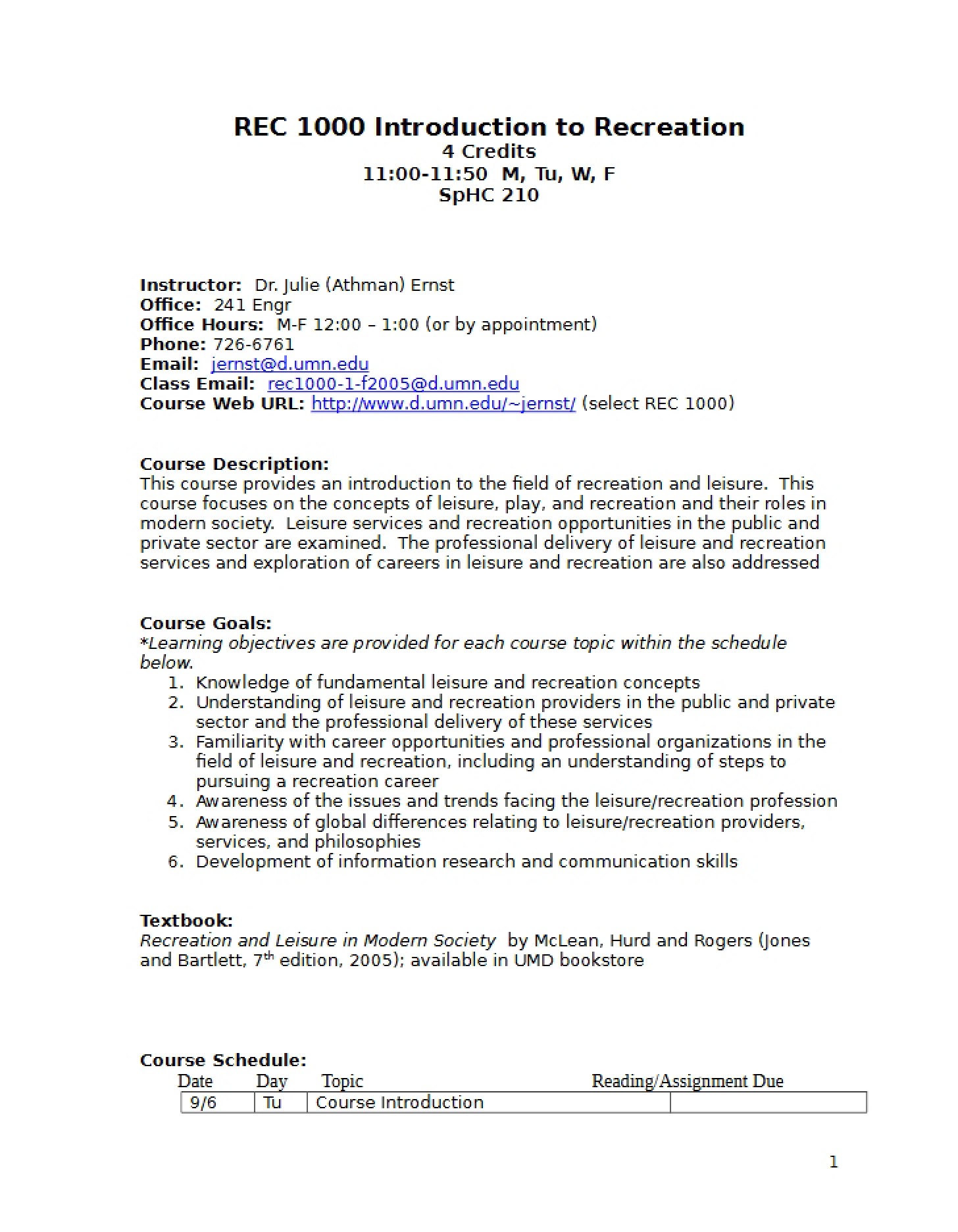
This is a syllabus for REC 1000, an introductory course to the field of Recreation offered at the University of Minnesota Twin Cities. It outlines the expectations, structure, and logistical details for students enrolled in the course. The syllabus serves as a foundational guide for understanding the scope of recreation as a discipline and potential career paths within it. It details how the course will explore the concepts of leisure, play, and recreation within a modern societal context.
Why This Document Matters
This syllabus is essential for anyone considering enrolling in REC 1000, or for students already registered who need a clear understanding of course requirements. It’s particularly valuable at the beginning of the semester for planning and organization. Prospective students can use it to assess if the course aligns with their academic interests and career goals. Current students will find it crucial for staying on track with assignments, understanding grading policies, and knowing important dates. It’s a key resource for navigating the course successfully.
Common Limitations or Challenges
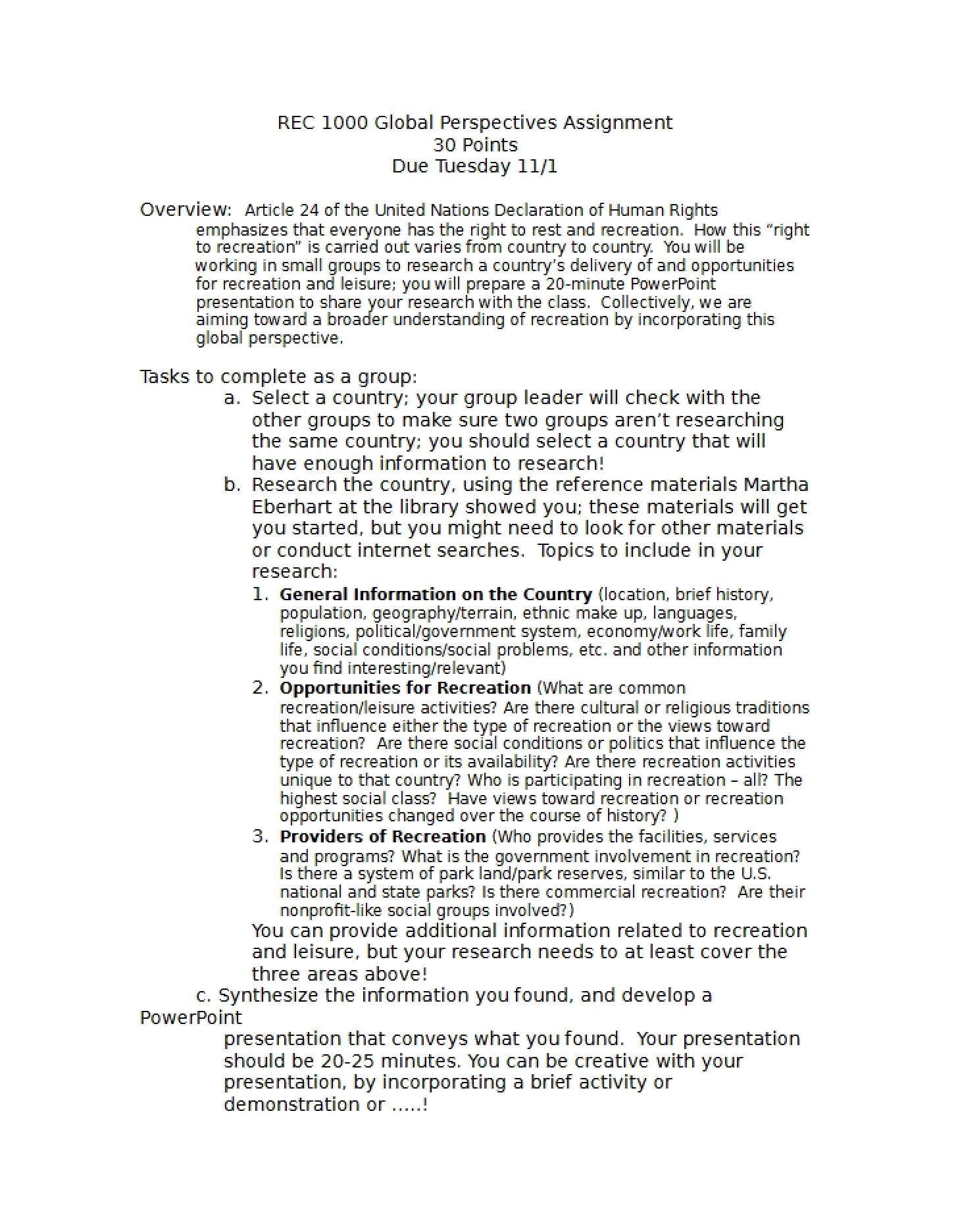
This syllabus provides an overview of the course, but it does *not* contain the actual course content, lectures, or detailed assignment instructions. It outlines topics that will be covered, but doesn’t delve into the specifics of those topics. It also doesn’t include the full readings or any supplementary materials used throughout the semester. Access to the full syllabus is required to understand the complete expectations and detailed schedule.
What This Document Provides
* Instructor contact information and office hours
* A comprehensive course description outlining the core focus of the study of recreation
* Clearly defined course goals and learning objectives
* Information regarding required textbooks and necessary software
* A semester-long schedule outlining topics to be covered and assignment due dates
* An overview of key concepts related to leisure, recreation, and play
* Details regarding required experiences outside of regular class meetings
* A description of how the course addresses historical and current trends in the recreation profession.