What This Document Is
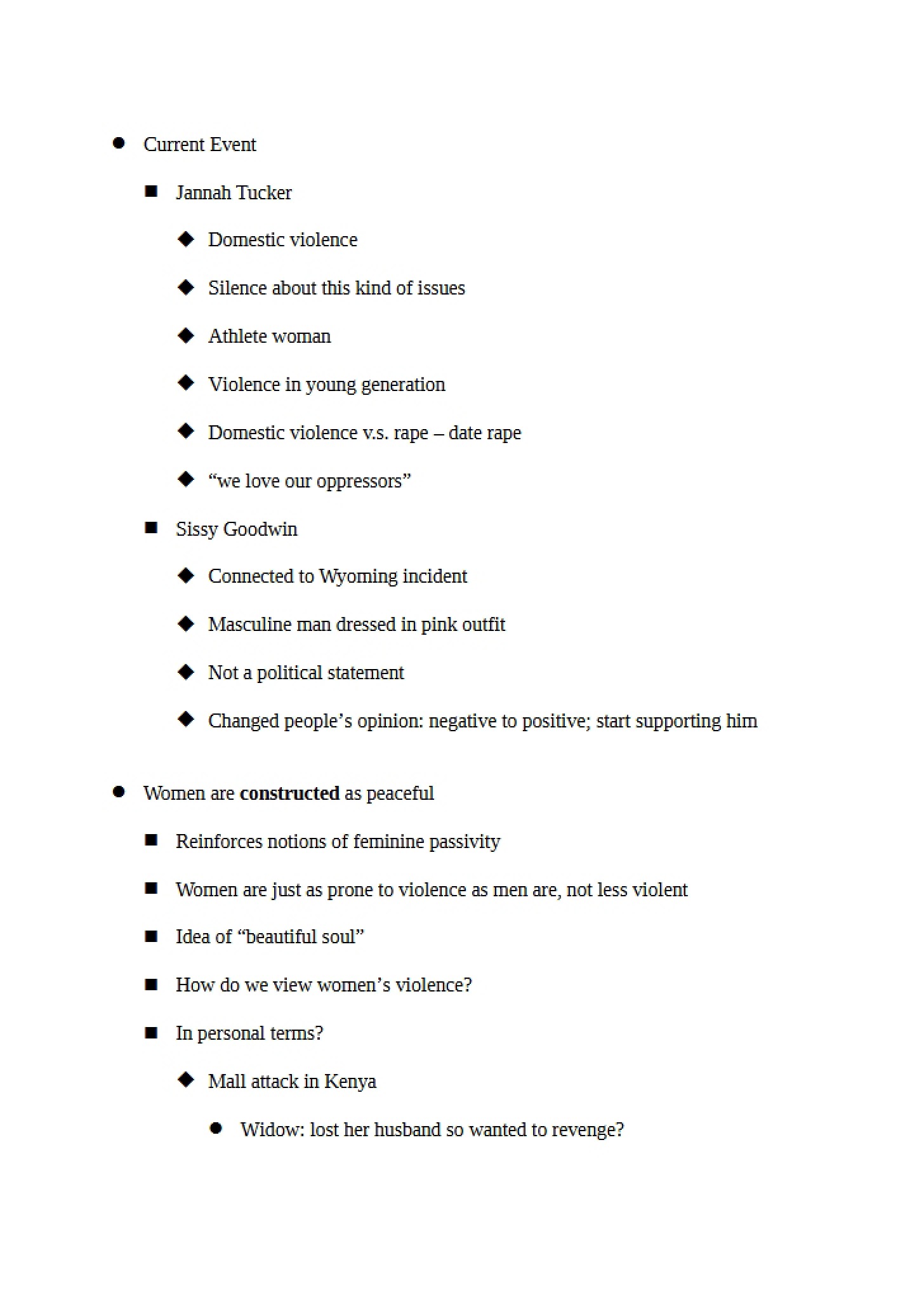
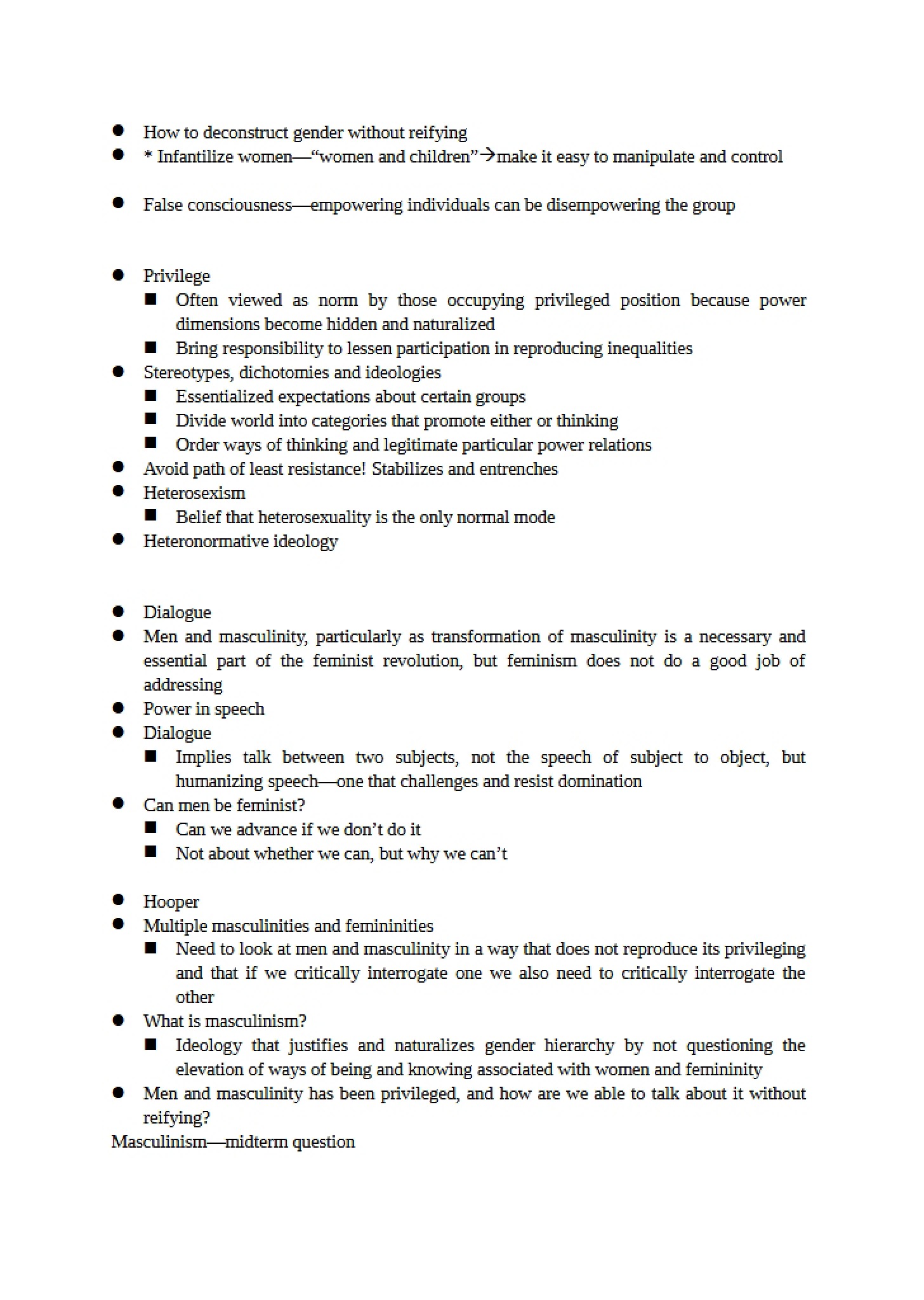
This material represents lecture notes from Week Six, Lecture One of IR 316: Gender and Global Issues at the University of Southern California. It delves into complex theoretical frameworks surrounding security studies, critically examining how traditional understandings of security are constructed and maintained. The lecture explores the intersection of gender, power, and international relations, challenging conventional approaches to global security concerns. It focuses on deconstructing established norms and questioning the underlying assumptions within the field.
Why This Document Matters
Students enrolled in IR 316 will find these notes invaluable for understanding core concepts discussed in class. They are particularly helpful for those seeking to deepen their comprehension of feminist security studies and the critiques of mainstream international relations theory. This resource is best utilized *during* and *immediately after* the corresponding lecture to reinforce learning and prepare for subsequent discussions and assignments. Individuals interested in the gendered dimensions of security, state power, and the construction of ‘threats’ will also find this a useful starting point for further exploration.
Common Limitations or Challenges
These notes are designed to *supplement* the lecture, not replace it. They offer a condensed overview of the topics covered and do not include the full scope of the professor’s explanations, in-class discussions, or nuanced interpretations. The notes also do not provide definitive answers or solutions to complex theoretical problems; rather, they present a framework for critical thinking and analysis. Access to the full lecture content is required for a complete understanding.
What This Document Provides
* Exploration of the relationship between security and citizenship.
* Discussion of the role of perceived threats in shaping state power.
* Analysis of the concepts of ‘masculine protection’ and its implications.
* Examination of the mobilization of fear within security states.
* Introduction to feminist perspectives on security studies.
* Critical engagement with traditional understandings of the ‘state of nature’.
* Consideration of the interconnectedness of violence at various levels.