What This Document Is
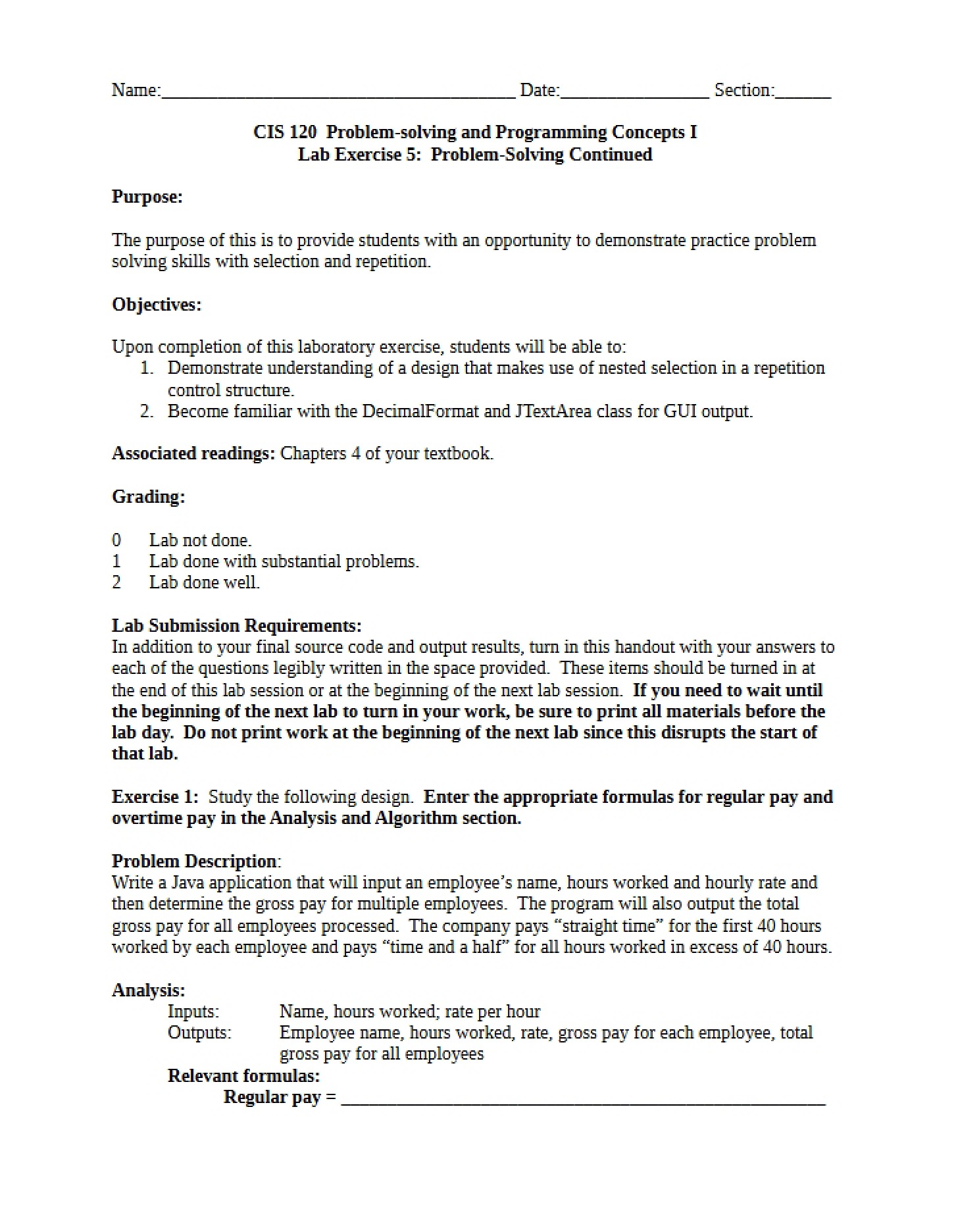
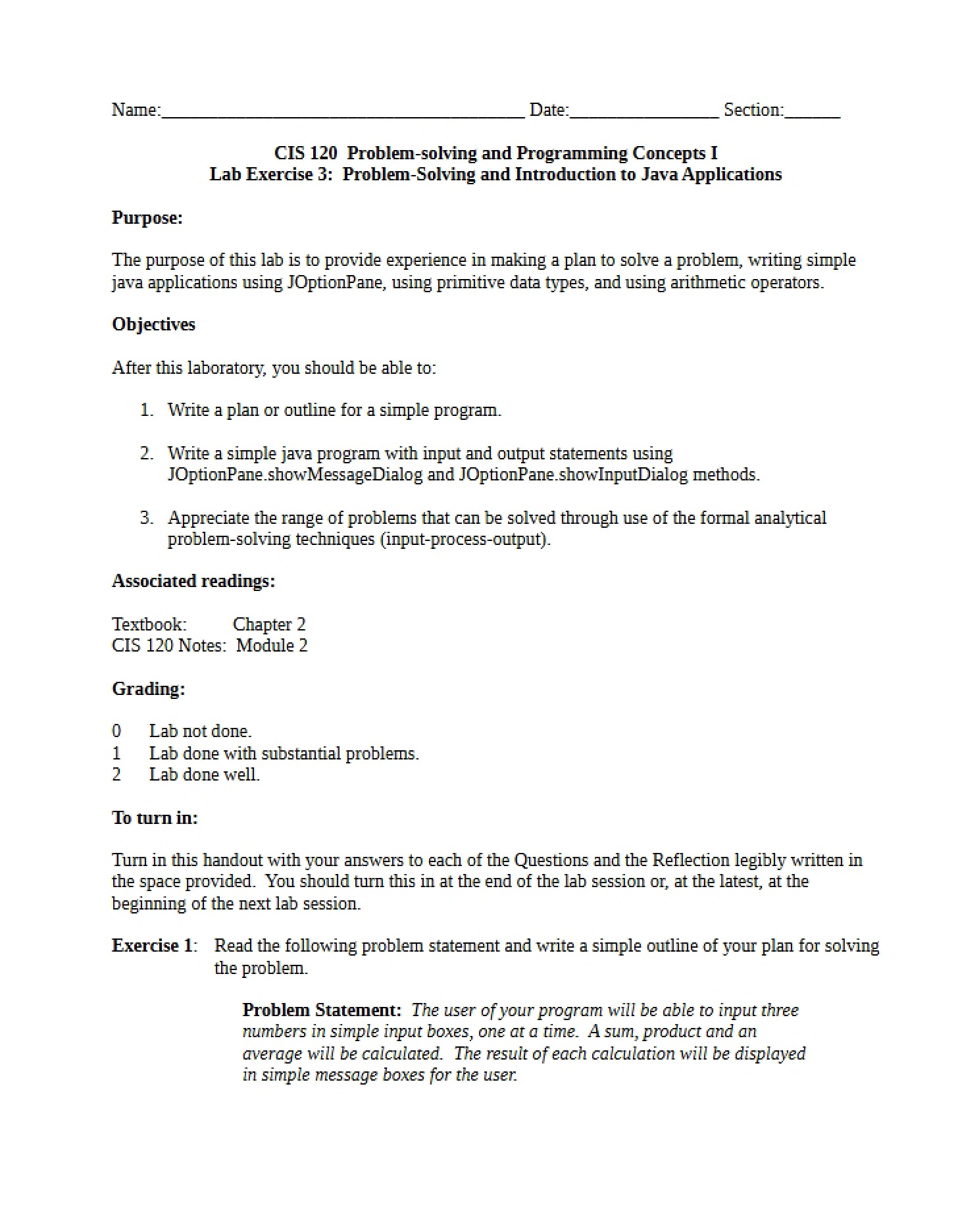
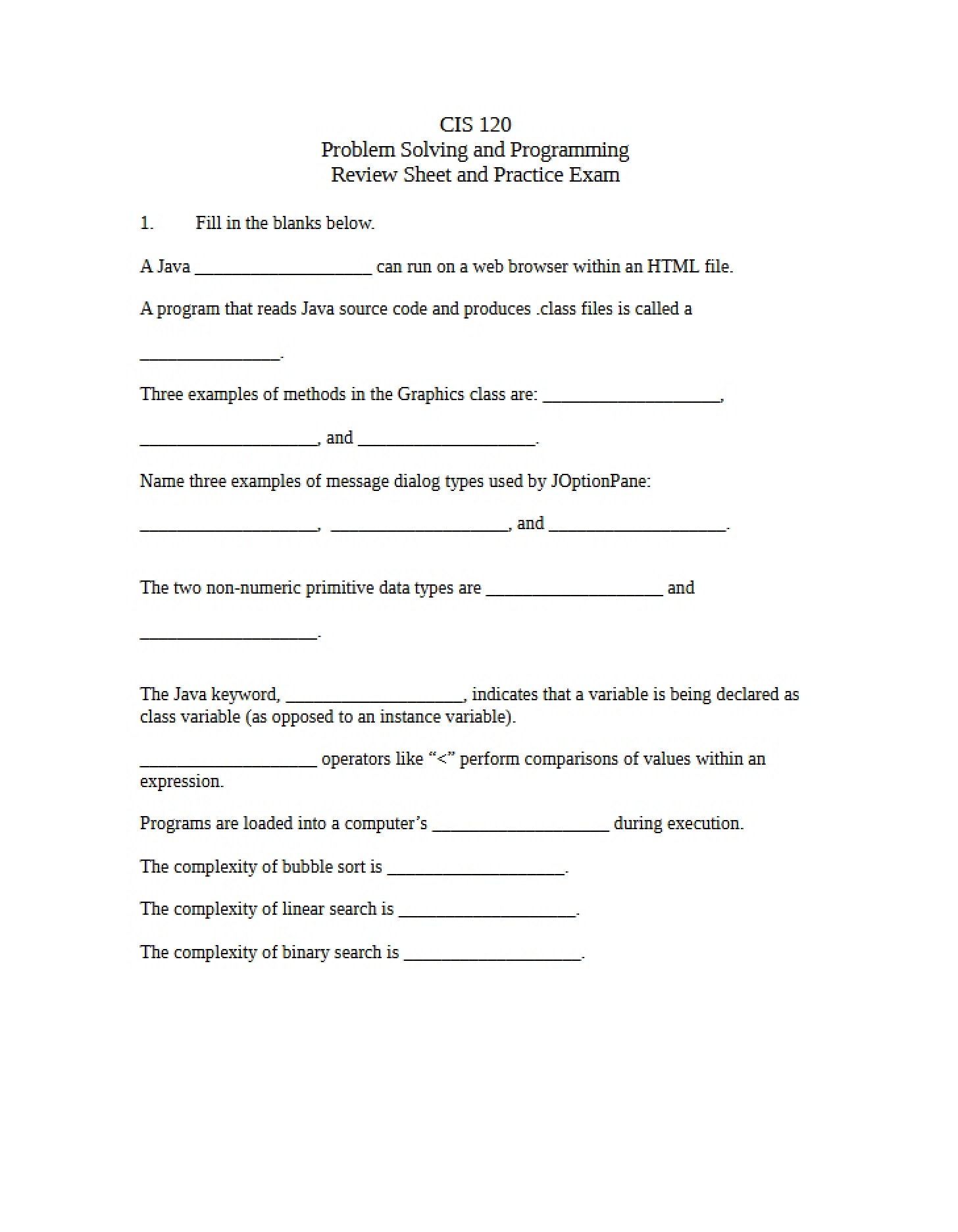
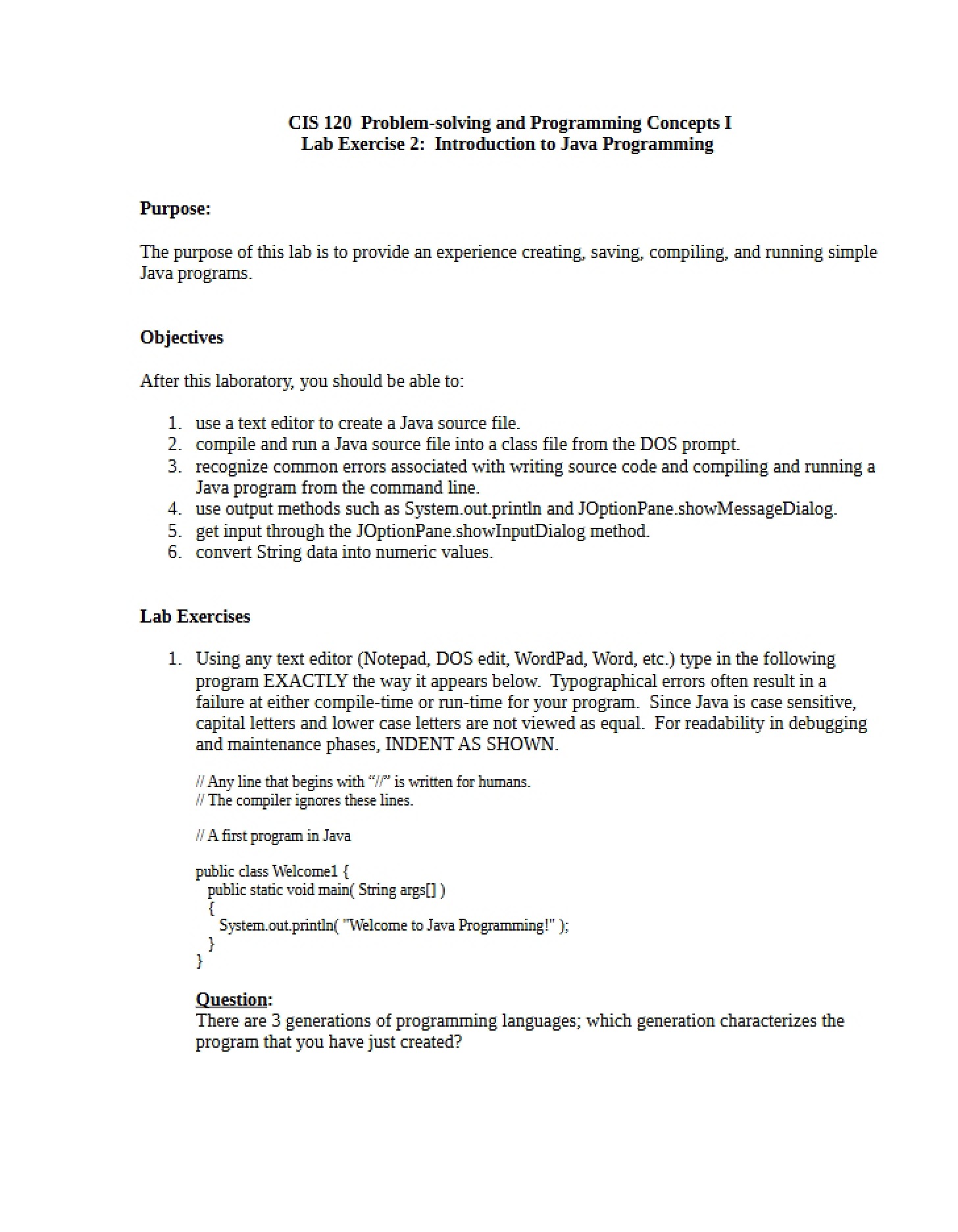
This is a comprehensive review resource designed to help students prepare for a final exam in an introductory programming course (CIS 120 – Problem-solving and Programming Concepts I) at the University of South Alabama. Specifically, it focuses on reinforcing problem-solving skills and practical coding abilities developed throughout the semester. It’s structured as a lab exercise, simulating the type of work students will encounter on the exam. The material revisits core concepts covered in the course, bridging theoretical knowledge with hands-on application.
Why This Document Matters
This resource is invaluable for students aiming to solidify their understanding before a major assessment. It’s particularly helpful for those who benefit from working through practice problems and reviewing key concepts in a focused manner. Students who are feeling unsure about their ability to translate problem descriptions into working code, or who want to test their understanding of fundamental programming principles, will find this especially useful. Utilizing this review can significantly boost confidence and improve performance on the final exam.
Common Limitations or Challenges
This review is *not* a substitute for attending lectures, completing assigned readings, or actively participating in lab exercises. It assumes a foundational understanding of the course material. While it presents a variety of problem types, it doesn’t cover *every* possible exam question. It also doesn’t provide fully worked-out solutions; instead, it challenges the user to apply their knowledge to develop those solutions independently. It’s a tool for self-assessment and practice, not a shortcut to success.
What This Document Provides
* A series of exercises designed to test problem-solving abilities.
* Problem descriptions covering common programming tasks, such as calculating taxes and compound interest.
* Opportunities to practice designing solutions using flowcharts and pseudocode.
* Exercises focused on class definition, method creation, and data structure selection.
* Practice with array manipulation, including sorting and searching.
* Review questions prompting critical thinking about coding choices and efficiency.
* A scenario involving object-oriented programming and class design (specifically, a `Movies` class).