What This Document Is
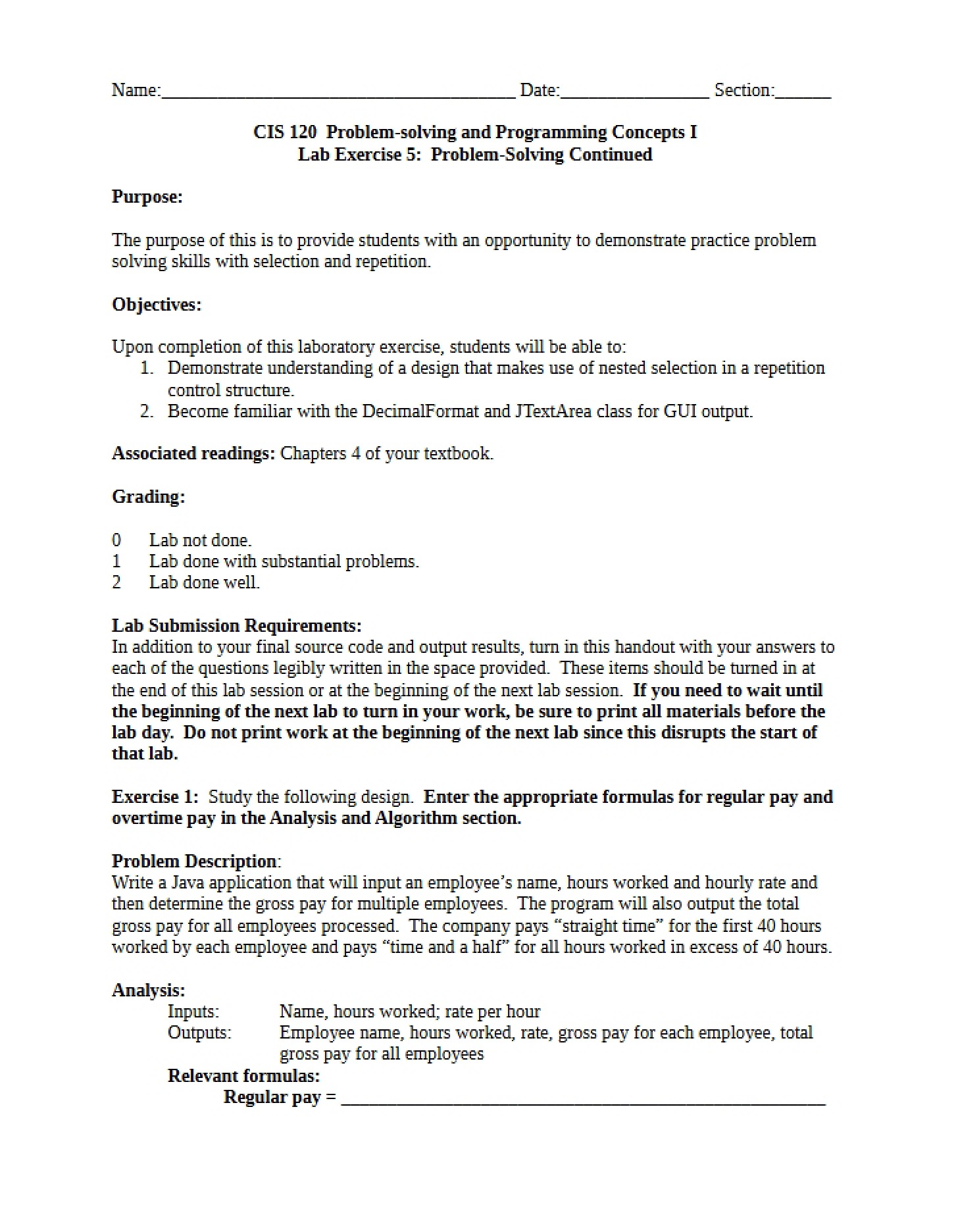
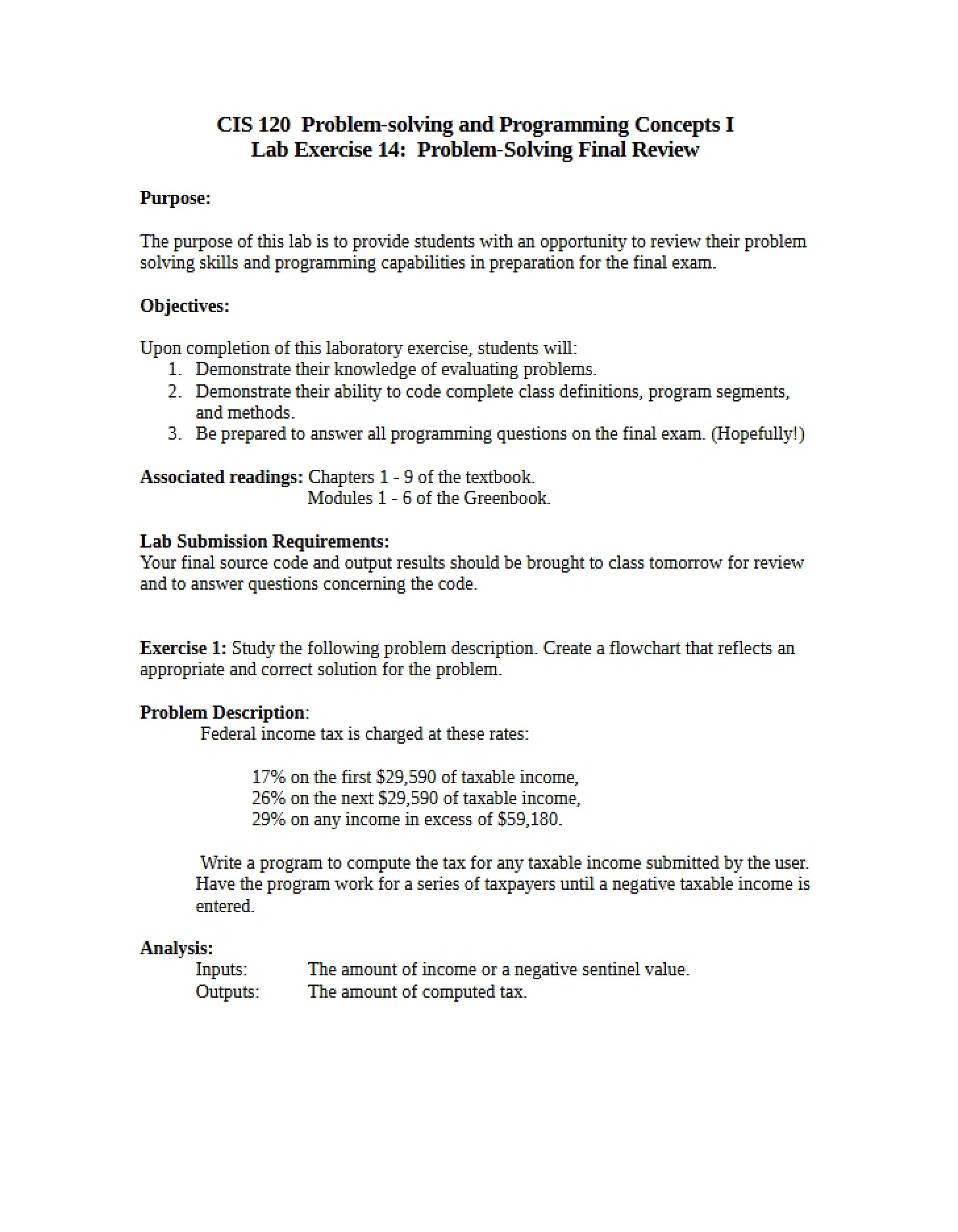
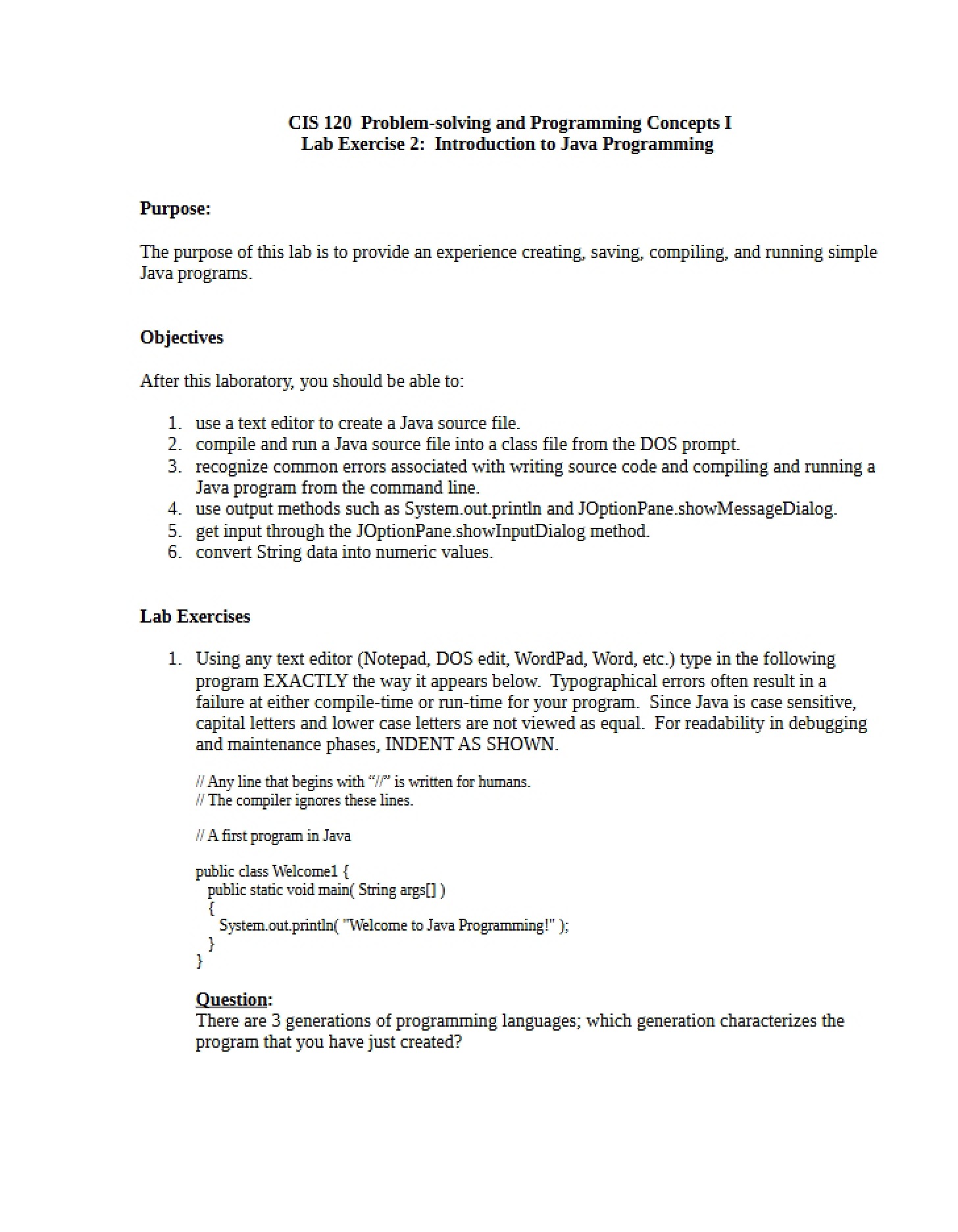
This is a lab exercise designed to introduce fundamental programming concepts using the Java language. Specifically, it focuses on developing problem-solving skills and applying them to create basic Java applications. The lab centers around building interactive programs that take user input and perform calculations, displaying the results back to the user. It’s geared towards students early in their programming journey, likely in an introductory computer science course. The core theme revolves around translating real-world problems into logical steps a computer can execute.
Why This Document Matters
This resource is invaluable for students enrolled in an introductory programming course, particularly those using Java. It’s most beneficial when you’re starting to grapple with the idea of *how* to approach a programming task – breaking down a problem into manageable parts. It’s ideal to work through during a lab session or as a guided practice exercise to reinforce concepts learned in lectures and readings. Students who struggle with the initial stages of program design and implementation will find this particularly helpful in building confidence and a structured approach.
Common Limitations or Challenges
This lab exercise provides a foundation, but it doesn’t cover advanced Java features or complex algorithms. It focuses on the very basics of input/output and arithmetic operations. It won’t teach you how to design large-scale applications or handle sophisticated data structures. Furthermore, it assumes a basic understanding of programming terminology and the Java development environment setup, which are likely covered in associated course materials. It’s a stepping stone, not a comprehensive guide.
What This Document Provides
* A structured exercise to practice planning a program's logic *before* writing code.
* Opportunities to work with fundamental Java components for user interaction.
* Practice utilizing primitive data types and arithmetic operators.
* Exercises designed to identify and resolve common errors encountered when converting user input.
* A reflective component to encourage thinking about the benefits of a planned, incremental development process.
* Problem statements that require applying an input-process-output model to solve simple computational tasks.