What This Document Is
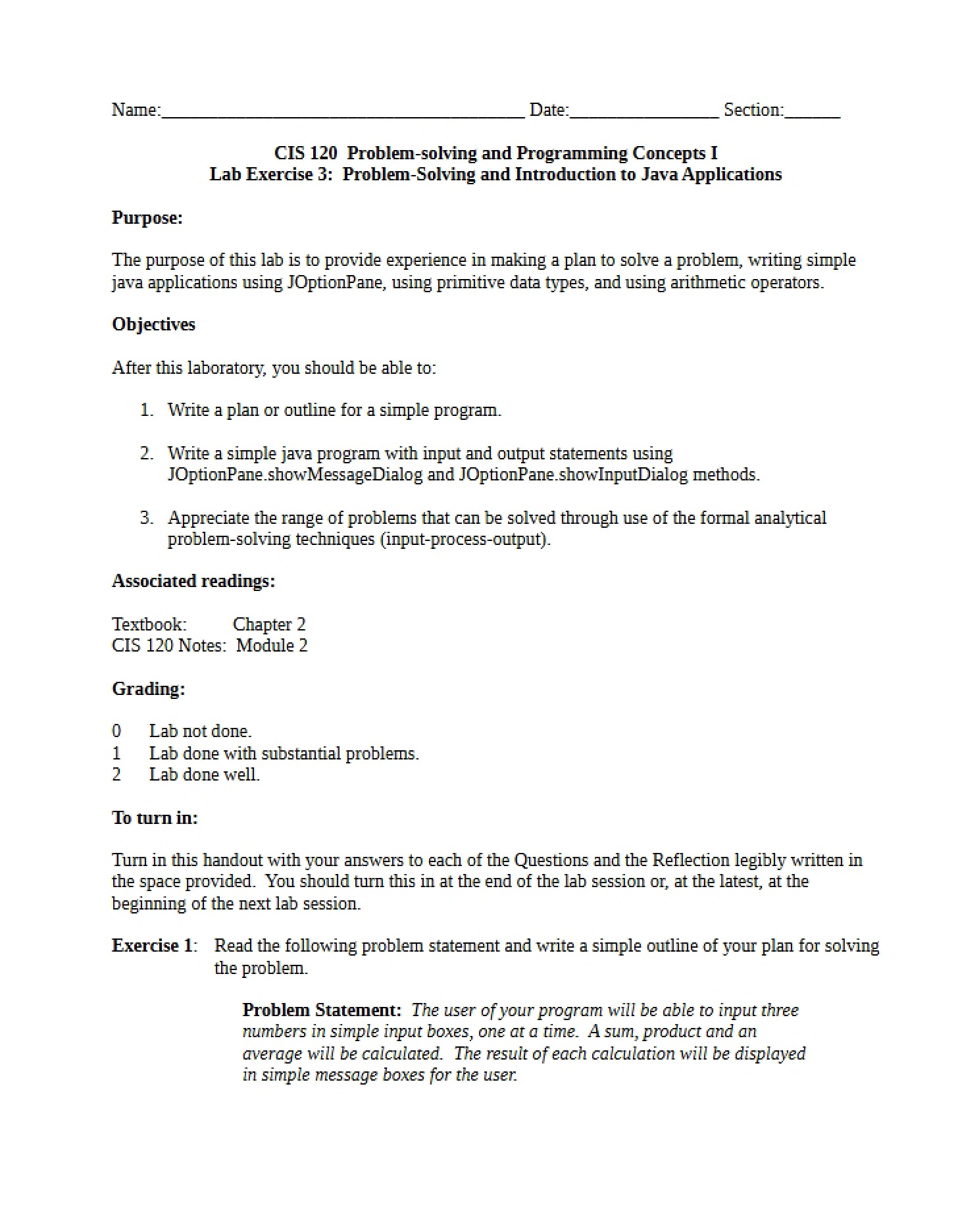
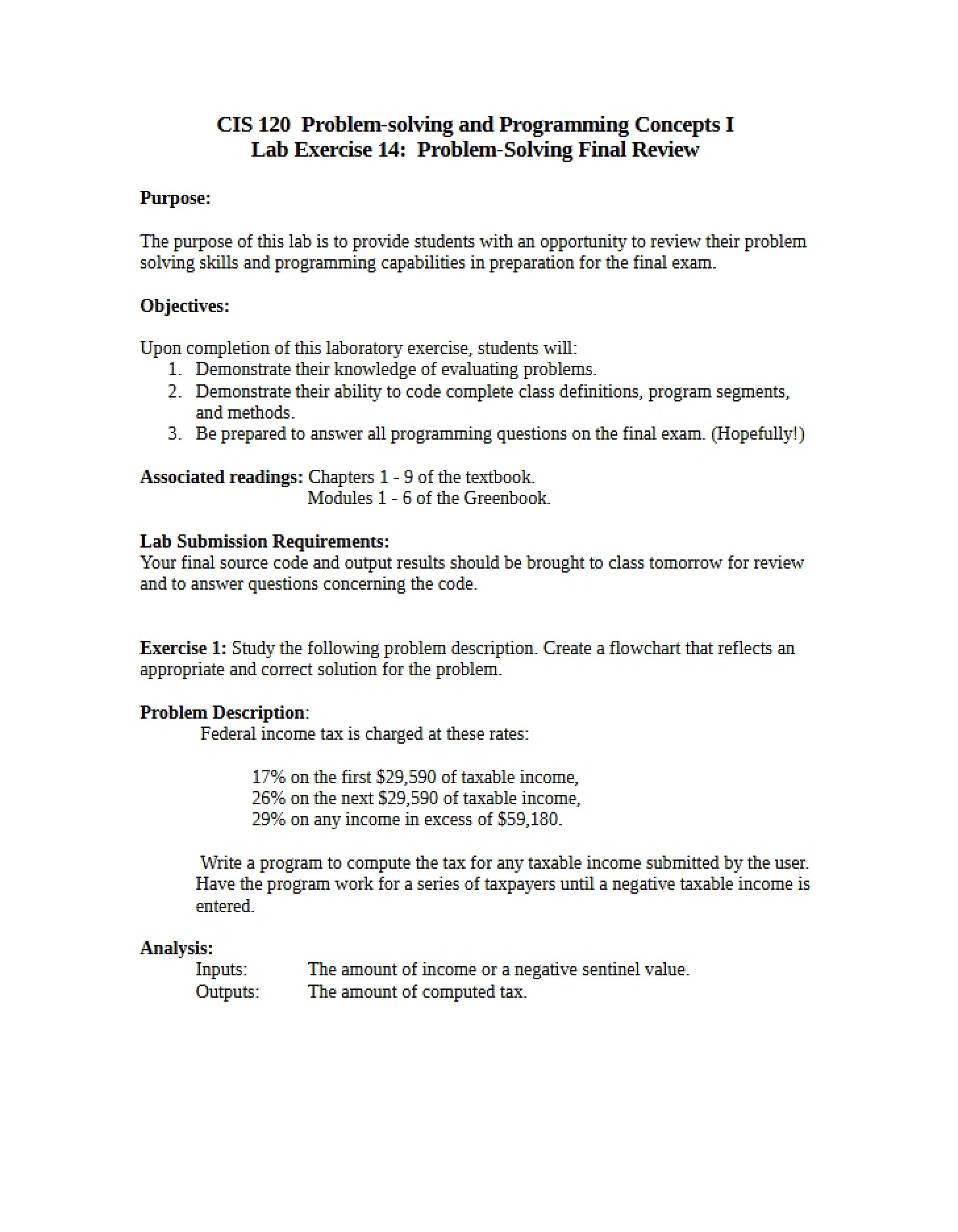
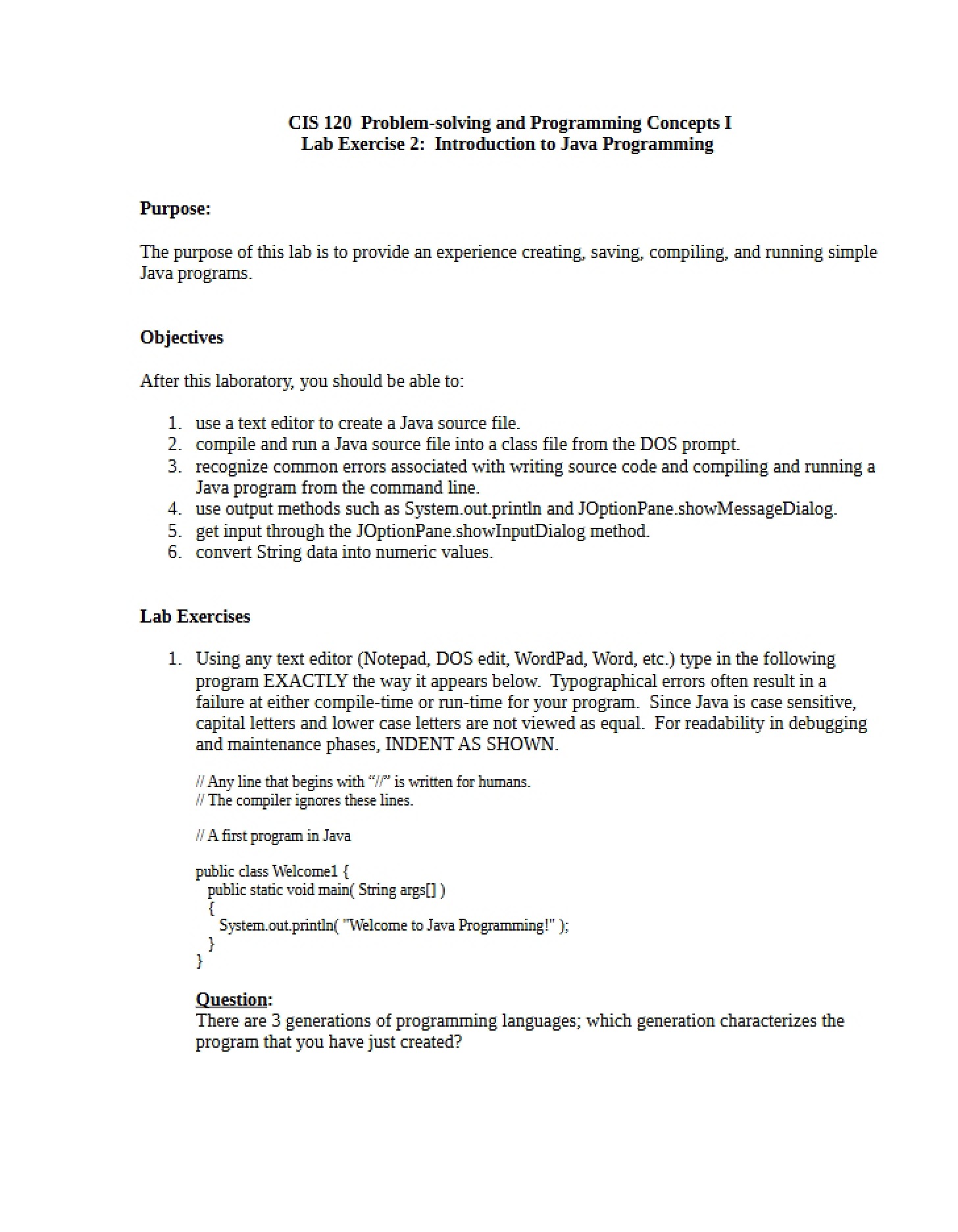
This is a lab exercise designed to reinforce fundamental programming concepts taught in an introductory Computer Science course (CIS 120) at the University of South Alabama. Specifically, it focuses on applying problem-solving techniques involving selection and repetition control structures within Java programming. The lab centers around a practical scenario – calculating employee payroll – to provide hands-on experience. It builds upon previously covered material (Chapter 4 of the textbook) and requires students to translate a problem description into a working Java application.
Why This Document Matters
This lab is crucial for students learning to program. It bridges the gap between theoretical knowledge and practical application. Successfully completing this assignment will demonstrate a student’s ability to design algorithms, implement them in code, and test for accuracy. It’s particularly valuable for those who are new to Java and need to solidify their understanding of conditional statements (if/else logic) and loops (repetition). Students preparing for more advanced programming courses will find the skills practiced here essential. This assignment is intended to be completed during a lab session, or shortly thereafter.
Common Limitations or Challenges
This document provides the framework for a programming assignment, but it does *not* contain pre-written code or step-by-step instructions on how to complete the program. It requires students to independently develop the algorithm and implement it in Java. The document assumes a basic understanding of Java syntax and programming concepts. It also does not offer debugging assistance or solutions to common errors. Students will need to rely on their understanding of the course material and potentially seek help from instructors or peers.
What This Document Provides
* A detailed problem description involving employee payroll calculation.
* Guidance on identifying necessary inputs and expected outputs for the program.
* A starting point for algorithm design, including a partially completed algorithmic outline.
* Instructions for utilizing constants and variables within a Java program.
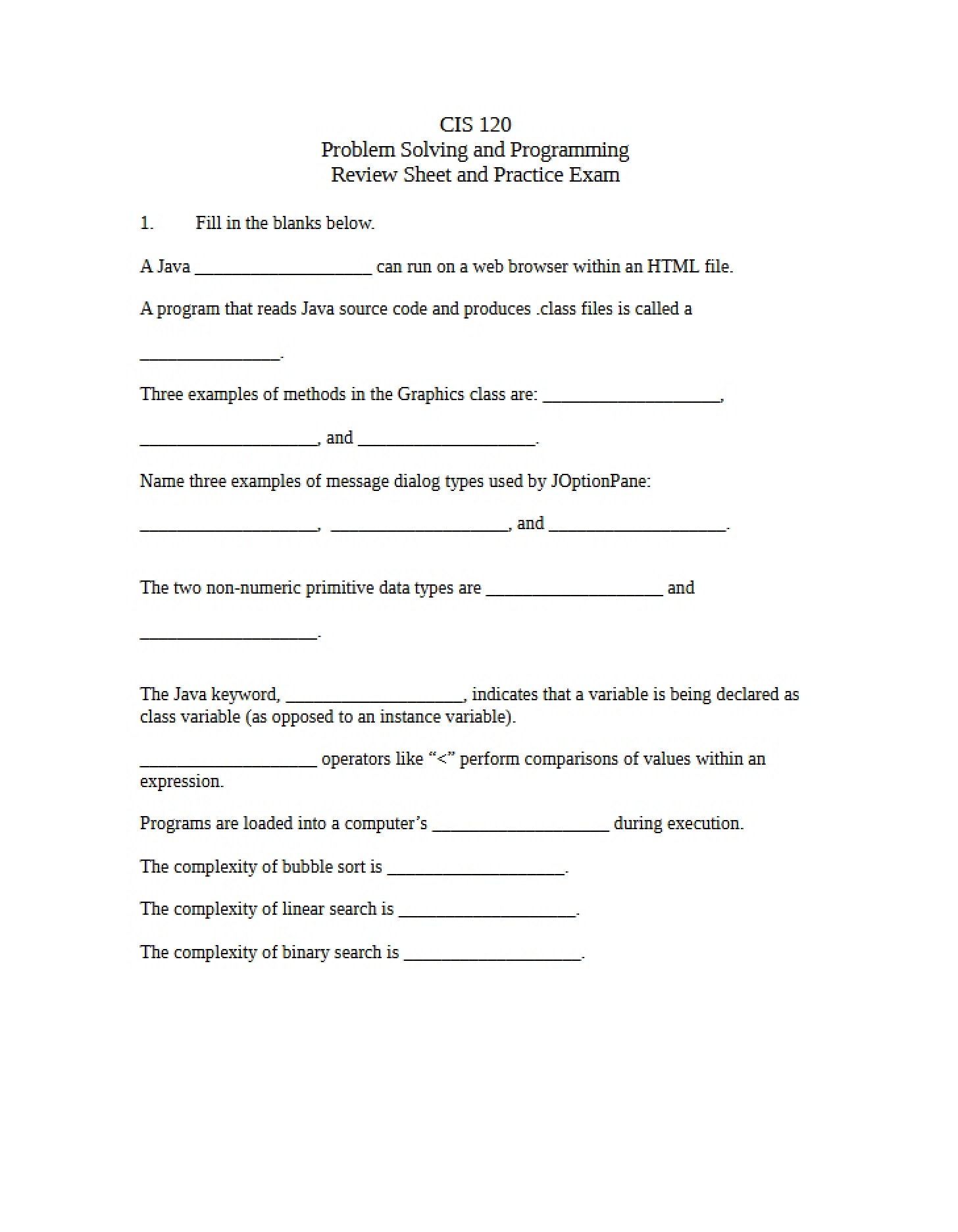
* A series of targeted questions designed to prompt critical thinking about programming concepts.
* Requirements for creating test cases to validate the program’s functionality.
* A framework for designing a flowchart to visually represent the program’s logic.
* Grading criteria to understand expectations for completion and quality.