What This Document Is
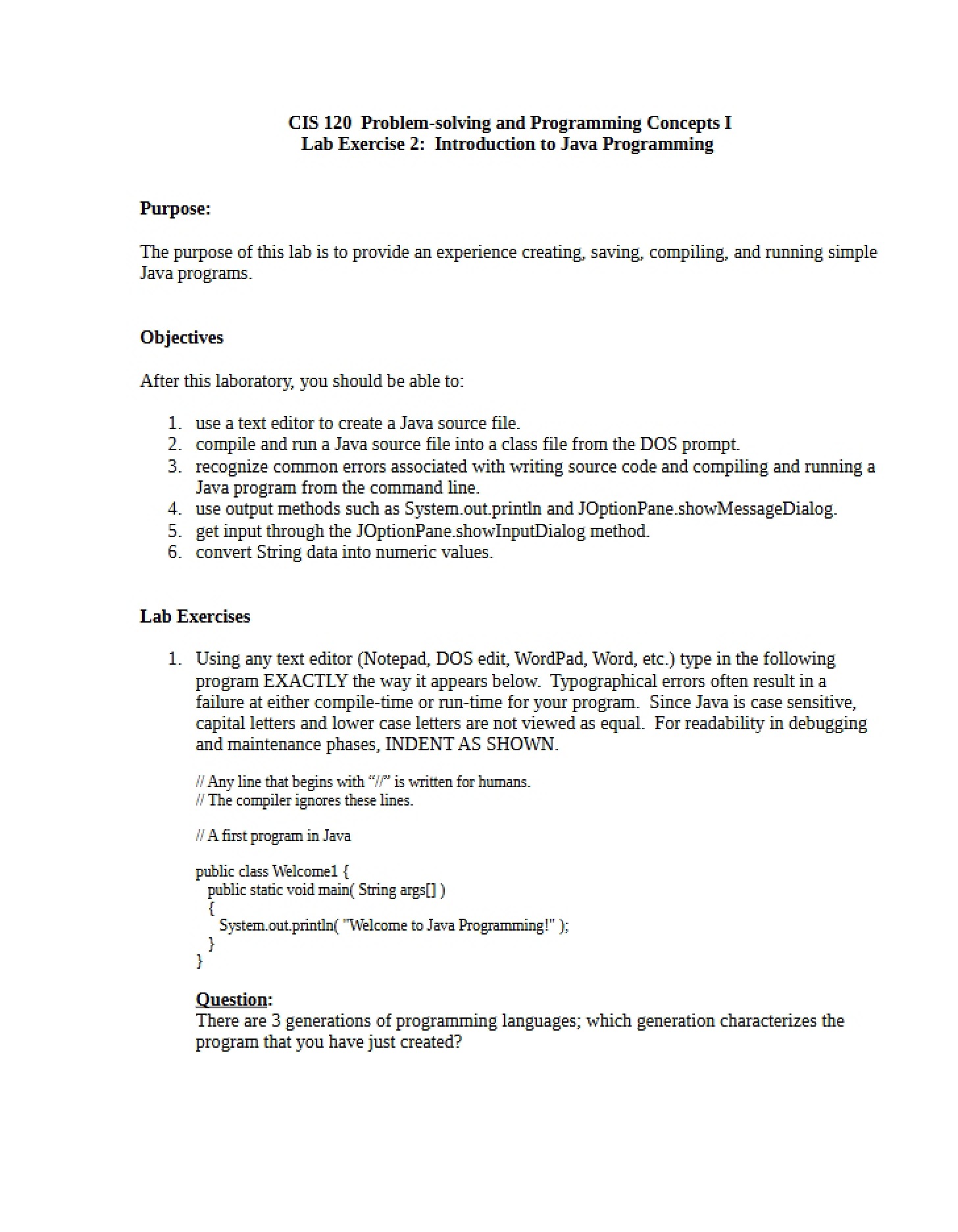
This document is a focused exploration of fundamental programming concepts, specifically centered around the use of loops in the Java programming language. It’s designed as a chapter-length resource, likely originating from a broader introductory computer science or programming textbook. The material delves into the mechanics of repetitive code execution – a cornerstone of efficient and dynamic program development. It appears to be part of a larger course covering introductory programming principles.
Why This Document Matters
This resource is invaluable for students learning to program, particularly those new to the Java environment. It’s most beneficial when you’re beginning to tackle problems that require repeated actions or processing of collections of data. Understanding loops is crucial for building more complex and functional programs. Students enrolled in introductory programming courses (like CIS 120 at the University of South Alabama) will find this particularly helpful as they build a foundation for more advanced concepts. It’s ideal for reinforcing classroom learning and preparing for assignments that require iterative solutions.
Common Limitations or Challenges
This material focuses specifically on loop structures and their application. It does *not* provide a comprehensive introduction to Java programming as a whole. It assumes some basic familiarity with programming terminology and the Java development environment. Furthermore, it won’t cover advanced loop optimization techniques or complex algorithmic applications – those are typically addressed in later coursework. It also doesn’t include pre-built code solutions or complete program examples; rather, it focuses on the underlying principles.
What This Document Provides
* Detailed explanations of different loop control structures.
* Discussions on how to effectively control the flow of execution within a program using loops.
* Exploration of the use of conditional statements in conjunction with loops.
* Insights into the potential pitfalls and best practices when working with loops.
* Conceptual understanding of how loops can be nested to achieve more complex behaviors.
* Considerations for using sentinel values to control loop termination.