What This Document Is
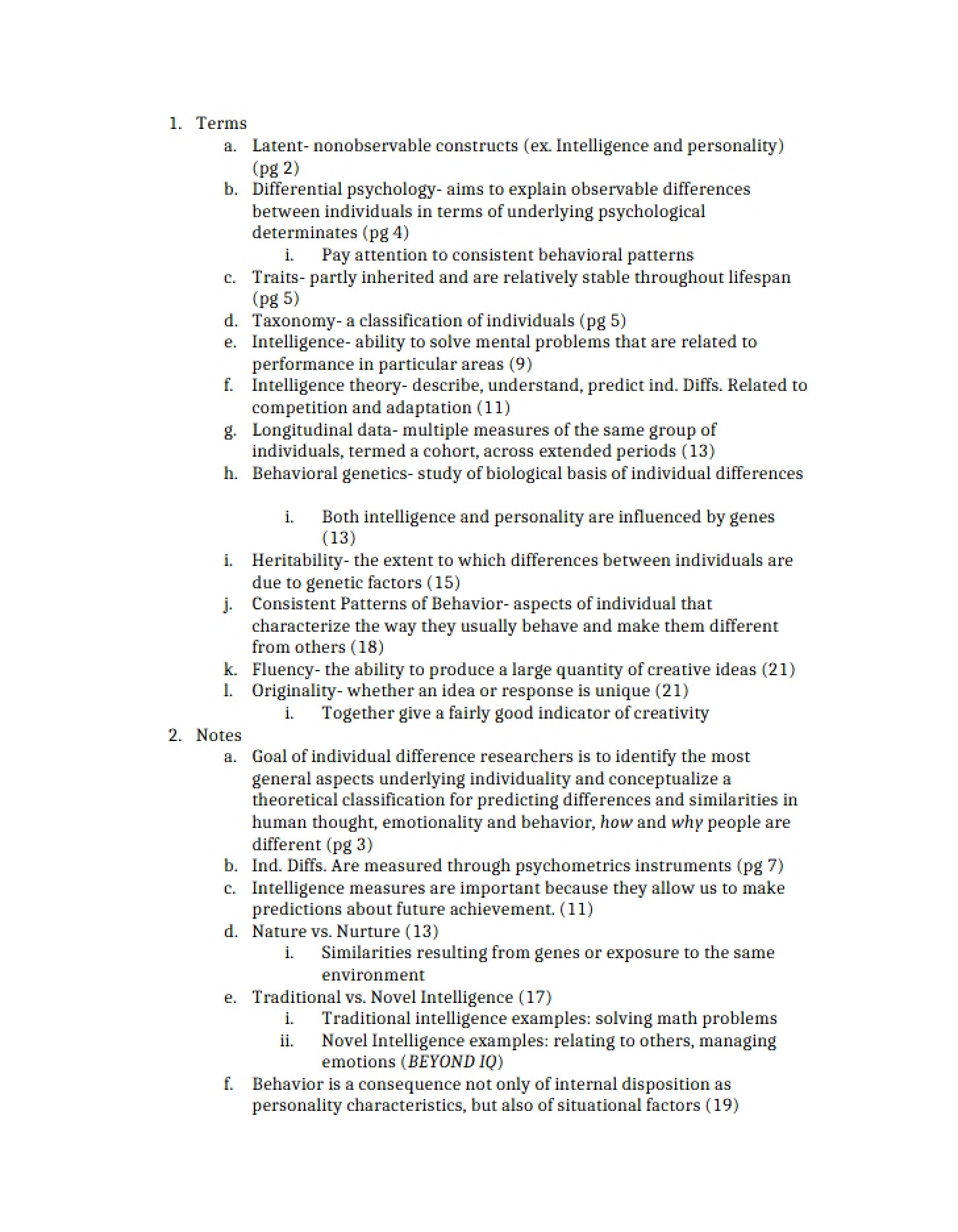
This study guide provides a focused exploration of behavioral genetics, a core topic within the field of individual differences. It delves into the interplay between inherited biological factors and environmental influences in shaping a range of human traits and behaviors. Specifically, it examines how genetic predispositions contribute to variations in intelligence and personality, and the methods used to study these complex relationships.
Why This Document Matters
This resource is ideal for students enrolled in introductory psychology courses, particularly those focusing on personality, intelligence, or biological psychology. It’s most beneficial when preparing for exams, completing research projects, or seeking a deeper understanding of the foundational principles guiding the study of individual variation. Students grappling with the nature vs. nurture debate will find this particularly insightful. It’s designed to supplement lectures and textbook readings, offering a concentrated overview of key concepts.
Common Limitations or Challenges
This guide focuses on the theoretical underpinnings and research methodologies within behavioral genetics. It does *not* offer detailed analyses of specific genetic disorders or provide clinical applications of these principles. It also doesn’t cover the ethical considerations surrounding genetic research in exhaustive detail, nor does it present a comprehensive history of the field. It’s a focused resource intended to build a strong conceptual foundation, not a complete encyclopedia of genetics and behavior.
What This Document Provides
* A clear definition of core terminology used in behavioral genetics, including phenotype, genotype, heritability, and genome.
* An overview of the methodologies employed to investigate the genetic basis of traits, with a particular emphasis on twin studies.
* Discussion of the role of genetic factors in intellectual ability and personality development.
* Exploration of concepts like assortative mating and multivariate genetic analysis.
* Examination of the relative contributions of shared and non-shared environments in shaping individual differences.
* Insights into the genetic underpinnings of certain behavioral tendencies.