What This Document Is
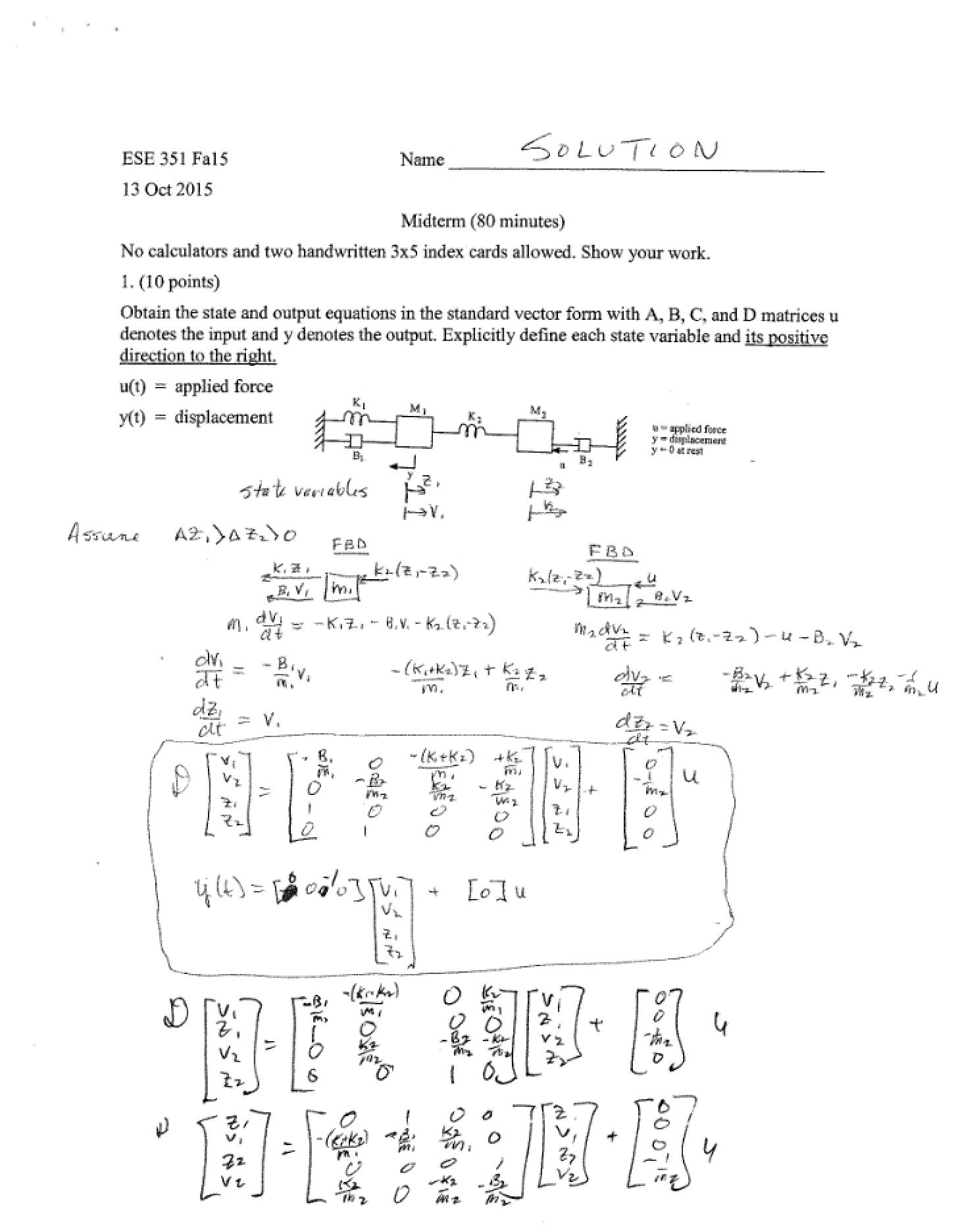
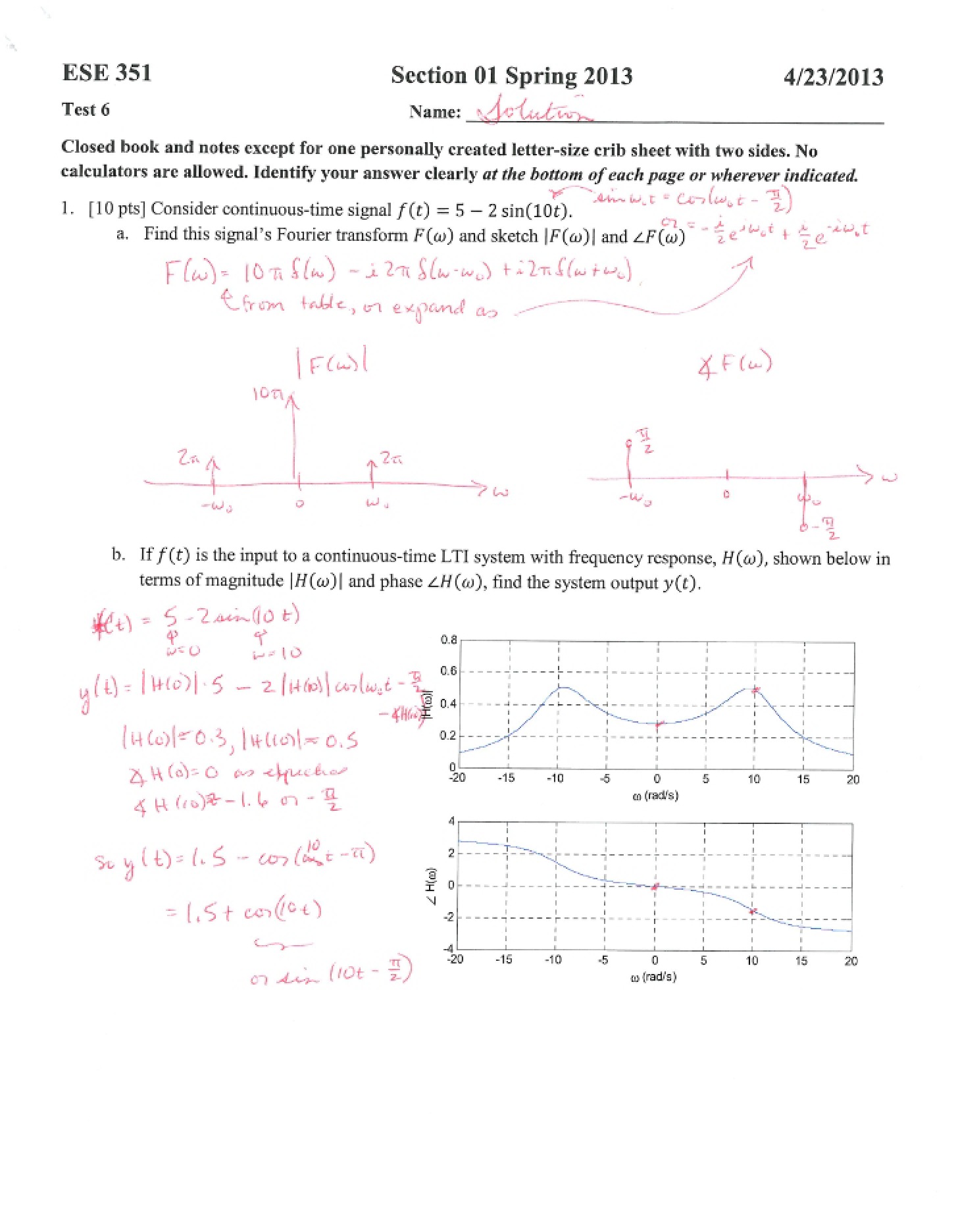
This document represents a fully worked-out solution set for a past test in ESE 351 Signals and Systems, offered at Washington University in St. Louis. Specifically, it details the solutions to Test 2.1 administered in Fall 2015. It’s a record of how core concepts were applied to solve problems during an in-class assessment environment. The test focuses on translating physical systems into mathematical representations and analyzing their behavior using signals and systems techniques.
Why This Document Matters
This resource is invaluable for students currently enrolled in or preparing for Signals and Systems courses. It’s particularly helpful for understanding the expected problem-solving approach and level of detail required by instructors at Washington University in St. Louis. Studying completed tests allows you to identify areas where your understanding might be weak and refine your test-taking strategies. It’s best used *after* attempting similar problems on your own, to compare your approach and identify potential errors in your methodology. It’s a strong tool for reinforcing learning and building confidence before future assessments.
Common Limitations or Challenges
This solution set does *not* provide step-by-step explanations of fundamental concepts. It assumes a foundational understanding of signals and systems principles. It also doesn’t offer alternative solution methods – it presents *a* solution, not necessarily *the only* solution. Furthermore, it focuses solely on the specific problems presented on this particular test; it won’t cover the entire scope of the course material. Accessing this document won’t replace the need for consistent study, lecture attendance, and practice problem solving.
What This Document Provides
* Detailed solutions for problems involving mechanical systems modeled with springs, dampers, and masses.
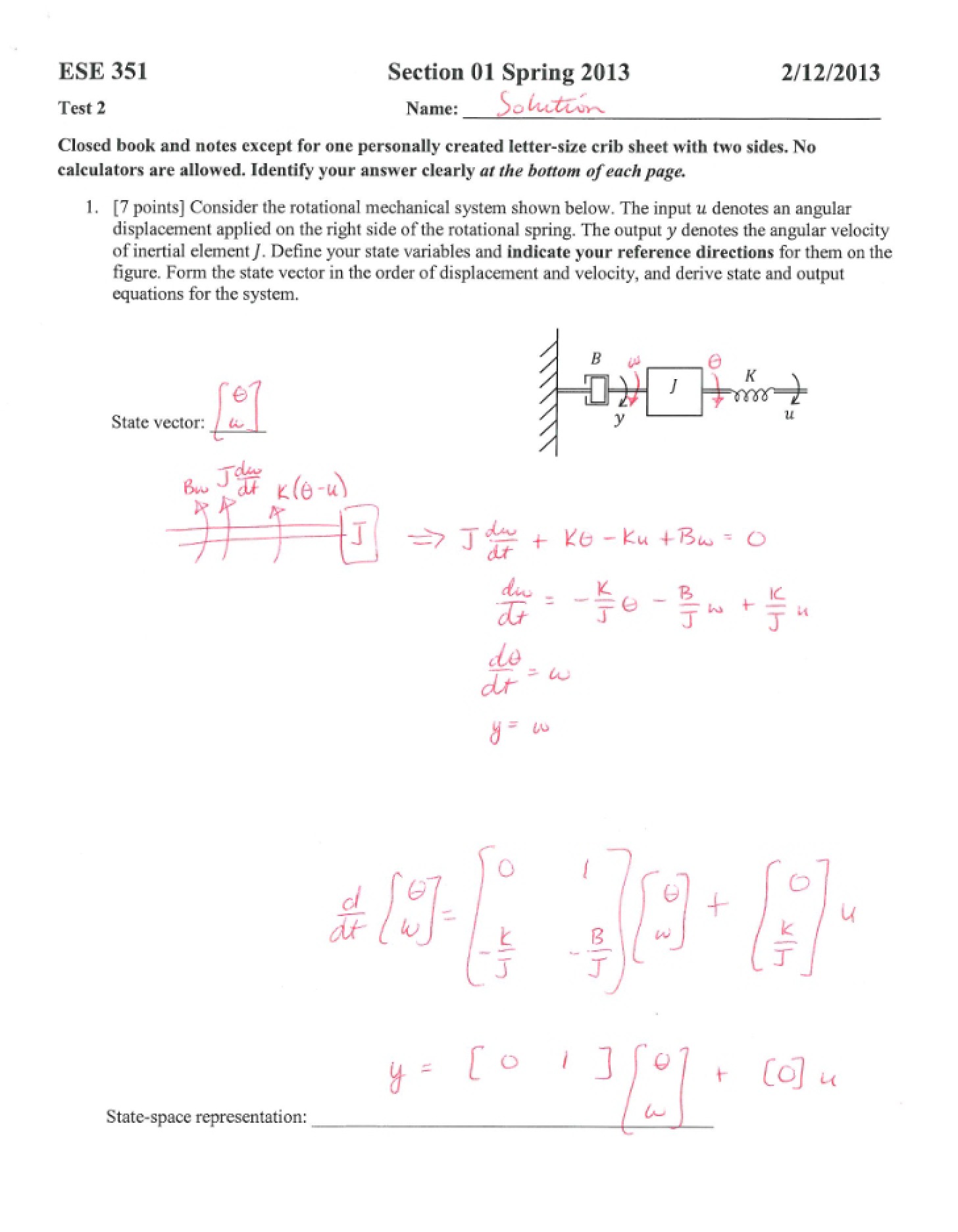
* Application of state-space representation to analyze system dynamics.
* Derivation of input-output differential equations from state-variable models.
* Solutions for circuit analysis problems, specifically focusing on voltage and capacitor relationships.
* Illustrative examples of applying theoretical concepts to practical engineering scenarios.
* A clear record of the expected format and presentation of solutions for assessments in this course.