What This Document Is
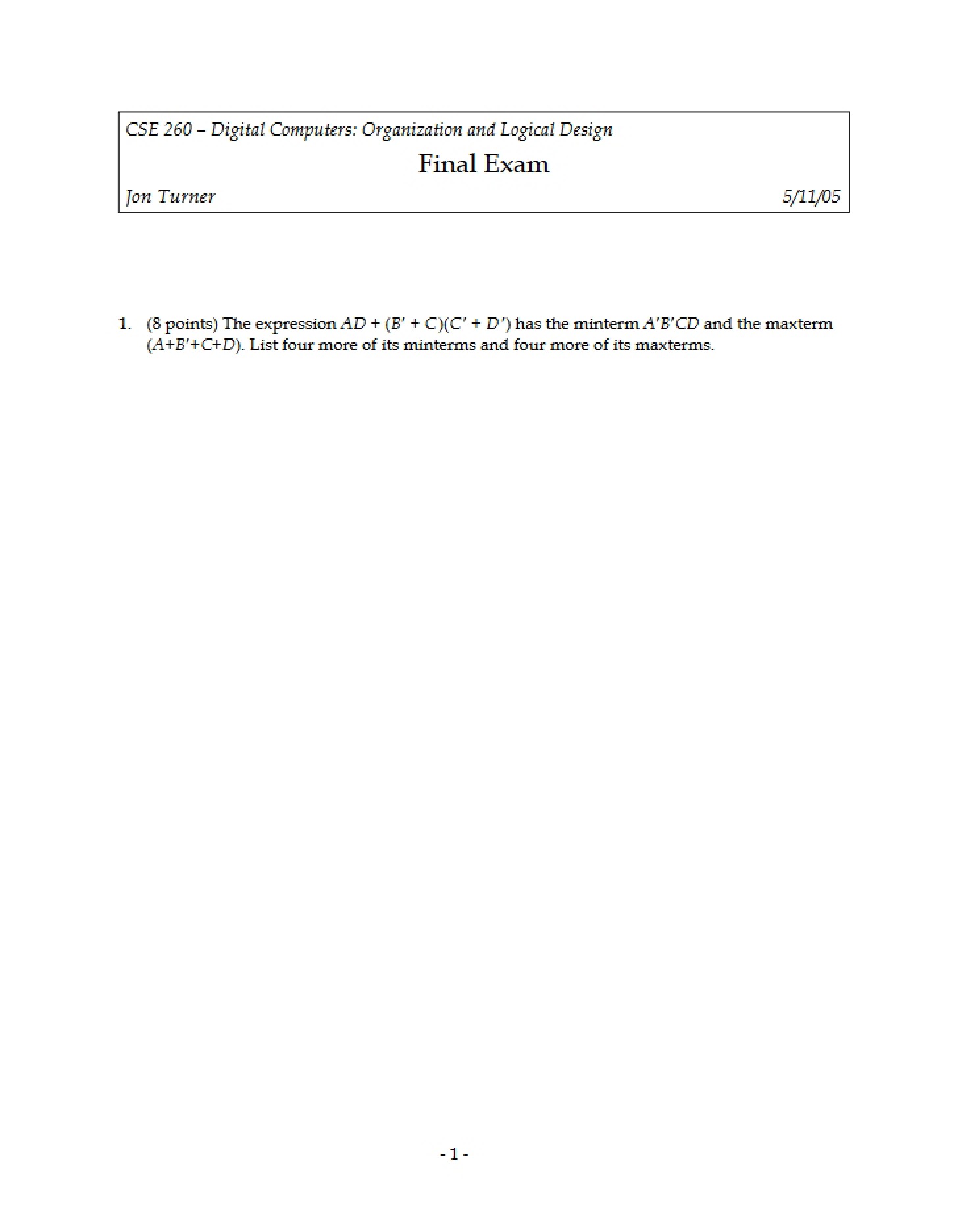
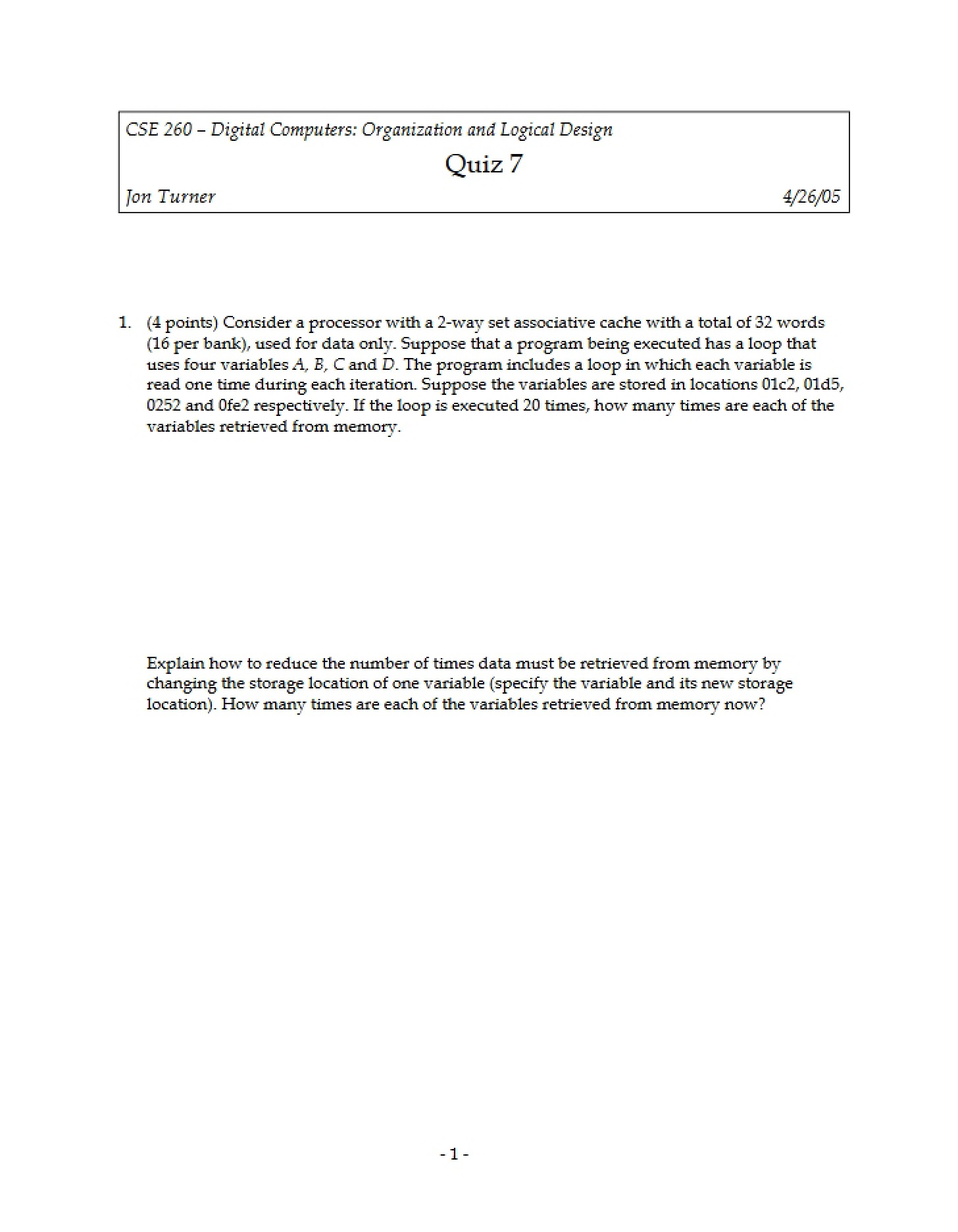
This is an assessment designed to evaluate your understanding of core principles in digital logic and computer design. Specifically, it focuses on sequential circuits, state machine analysis, and foundational concepts within Very High Speed Integrated Circuit (VHDL) hardware description language. The exam covers topics typically addressed in an introductory course on the subject, testing both theoretical knowledge and practical application skills. It’s formatted as a closed-book examination, requiring recall and problem-solving abilities.
Why This Document Matters
This resource is invaluable for students currently enrolled in a digital logic and computer design course, particularly those preparing for a mid-term examination. It’s ideal for self-assessment, allowing you to identify areas where your understanding is strong and pinpoint concepts needing further review. Working through practice problems similar to those found within will build confidence and improve your performance on graded assessments. It’s most beneficial *after* you’ve engaged with course lectures, readings, and assignments.
Common Limitations or Challenges
This exam represents a specific assessment from a particular course and institution. While the concepts are broadly applicable, the precise focus and difficulty level may vary compared to other courses. It does not include detailed explanations of solutions or step-by-step guidance; it’s designed to *test* your knowledge, not teach it. Accessing the full document is required to see the specific problems and demonstrate your understanding.
What This Document Provides
* Problems relating to state diagram creation from circuit descriptions.
* Analysis questions concerning timing constraints – setup and hold times – within sequential circuits.
* Exercises requiring the development of schematics from given state diagrams.
* Tasks involving the interpretation of VHDL code and the creation of corresponding state tables.
* Challenges focused on completing VHDL specifications based on provided simulation outputs.
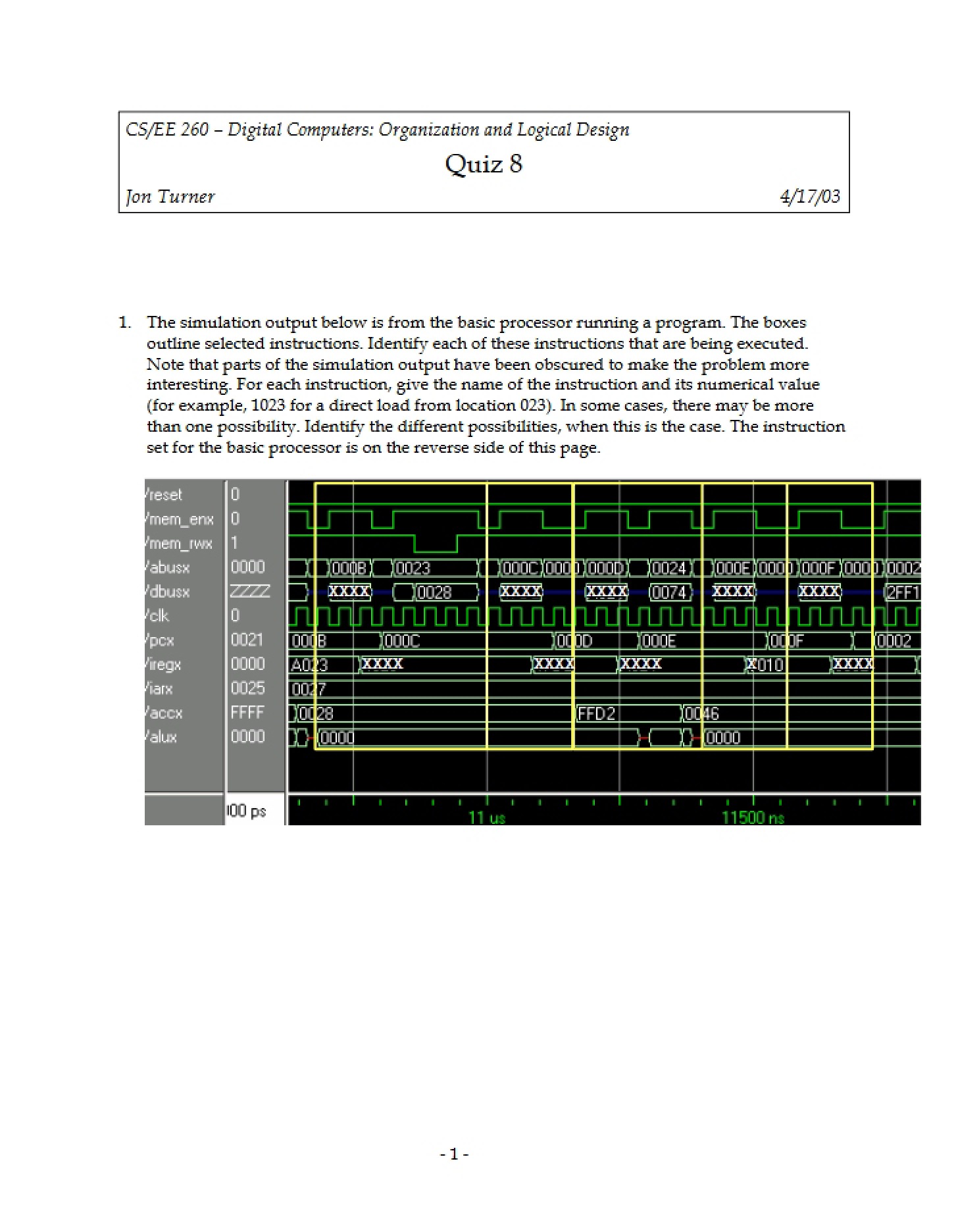
* Questions centered around identifying instructions executed by a basic processor based on control signal timing diagrams.
* Problems involving the analysis of interconnected sequential circuits and clock skew considerations.