What This Document Is
This is a quiz designed to assess your understanding of foundational concepts in digital logic and computer design, specifically as taught within the CSE 260 course at Washington University in St. Louis. It focuses on applying theoretical knowledge to practical scenarios involving circuit timing and processor behavior. The quiz tests your ability to interpret and analyze digital systems at a low level. It’s structured to evaluate your comprehension of how instructions are executed and data flows within a simplified computer architecture.
Why This Document Matters
This quiz is an invaluable resource for students currently enrolled in CSE 260. It’s particularly helpful for self-assessment *after* studying the course materials on basic logic gates, timing diagrams, and the introductory processor model. Working through problems similar to those presented here will help solidify your understanding and identify areas where you may need further review. It’s best used as a practice tool to prepare for larger exams and to gauge your overall grasp of the core principles covered in the early stages of the course.
Common Limitations or Challenges
This quiz represents a snapshot of specific topics covered within the CSE 260 curriculum. It does *not* encompass the entirety of the course content, and therefore shouldn’t be considered a comprehensive review for the final exam. It also assumes a solid foundation in the prerequisite knowledge expected for the course. The quiz focuses on problem-solving and application, and won’t provide detailed explanations of underlying concepts – those are covered in the course notes and lectures.
What This Document Provides
* Problems requiring completion of timing diagrams for digital circuits.
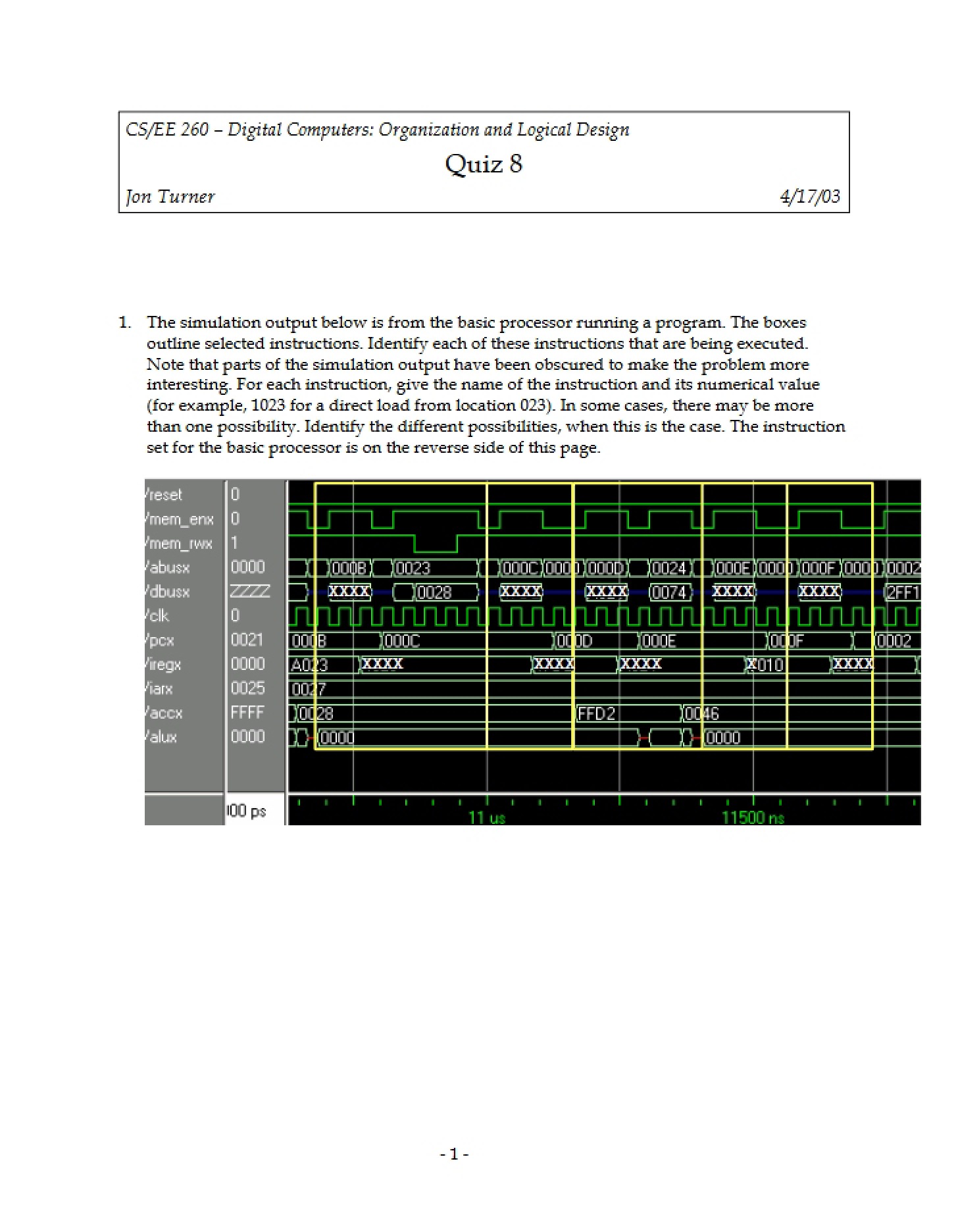
* Exercises involving the interpretation of simulation output from a basic processor model.
* A series of questions designed to test your understanding of instruction set architecture (ISA).
* A reference list of instruction mnemonics and their corresponding functions.
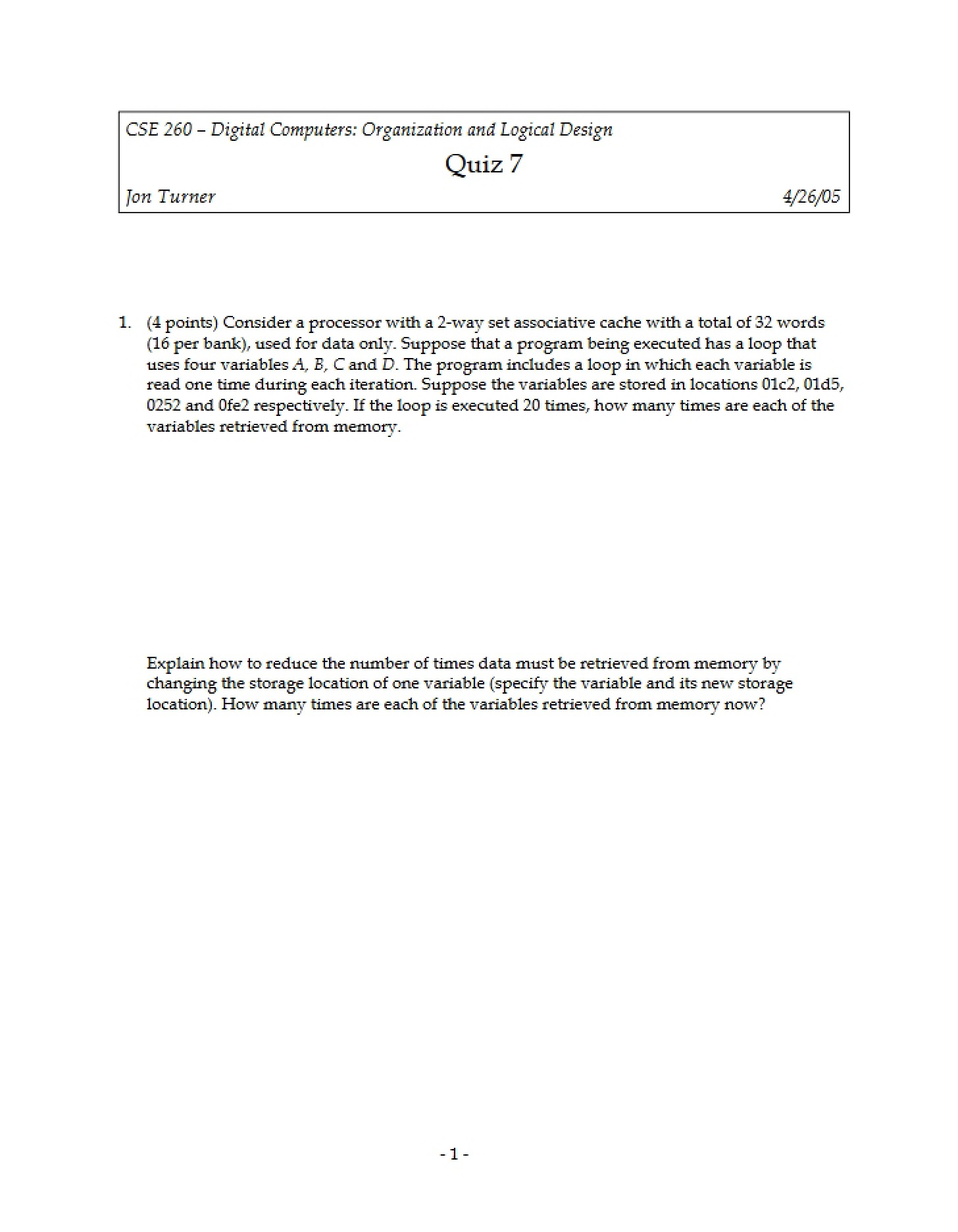
* Opportunities to practice applying concepts related to memory addressing and program control flow.