What This Document Is
This is a quiz designed to assess your understanding of core concepts in digital logic and computer design, specifically focusing on cache memory behavior and processor instruction execution. It’s part of the CSE 260 course at Washington University in St. Louis, covering the organization and logical design of digital computers. The quiz tests your ability to apply theoretical knowledge to practical scenarios involving data retrieval and program flow. Expect questions that require you to analyze system performance and interpret processor state.
Why This Document Matters
This quiz is invaluable for students currently enrolled in or recently completed an introductory digital logic and computer design course. It’s particularly helpful for solidifying your understanding of cache organization, set associativity, and how processor instructions impact program execution. Working through these types of problems will prepare you for more complex topics and future exams. It’s best utilized *after* you’ve thoroughly reviewed the course materials on memory hierarchies and basic processor architecture. If you're aiming for a strong grasp of how hardware impacts software performance, this will be a useful check of your knowledge.
Common Limitations or Challenges
This quiz focuses on specific problem-solving skills and doesn’t provide a comprehensive review of all course topics. It assumes you have a foundational understanding of binary representation, logic gates, and basic computer architecture. It will not re-teach concepts; rather, it expects you to *apply* what you’ve already learned. The quiz also doesn’t offer detailed explanations of the correct answers – it’s designed to be a self-assessment tool, and detailed solutions are not included within the quiz itself.
What This Document Provides
* Problems relating to cache performance and data retrieval efficiency.
* Scenarios involving processor instruction execution and state analysis.
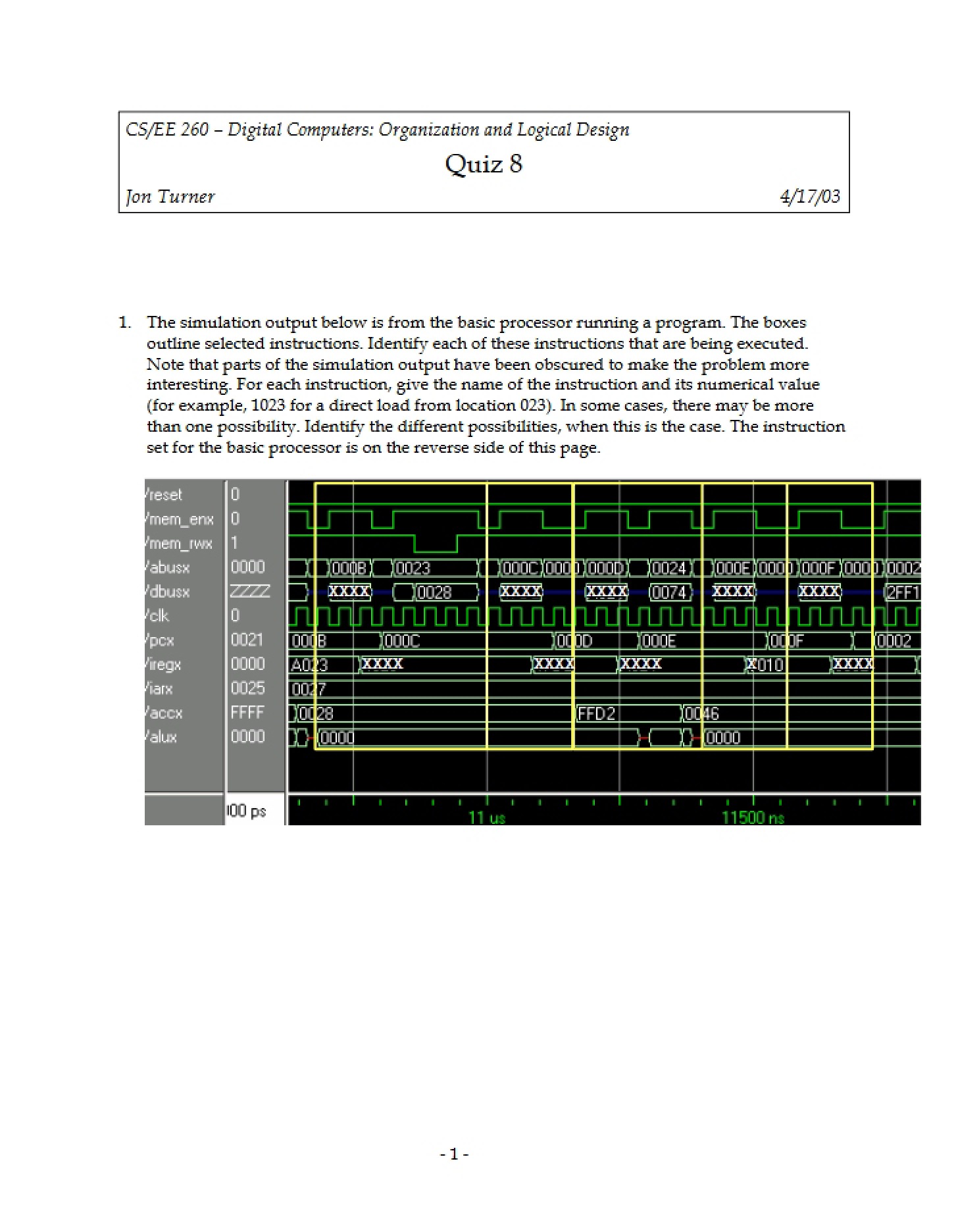
* Questions requiring interpretation of processor simulation output.
* Exercises focused on understanding the impact of memory organization on program behavior.
* A format mirroring potential exam questions for CSE 260.