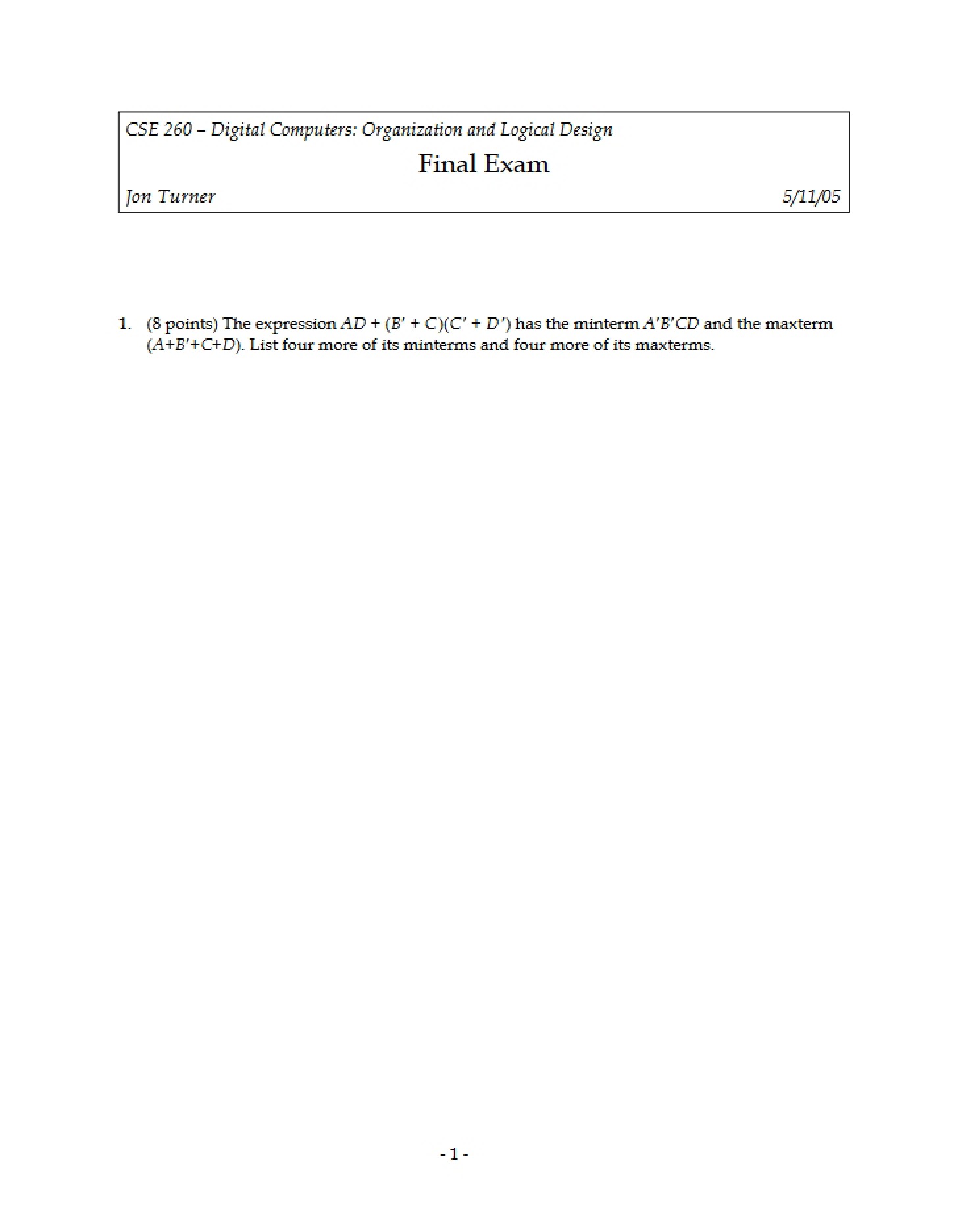
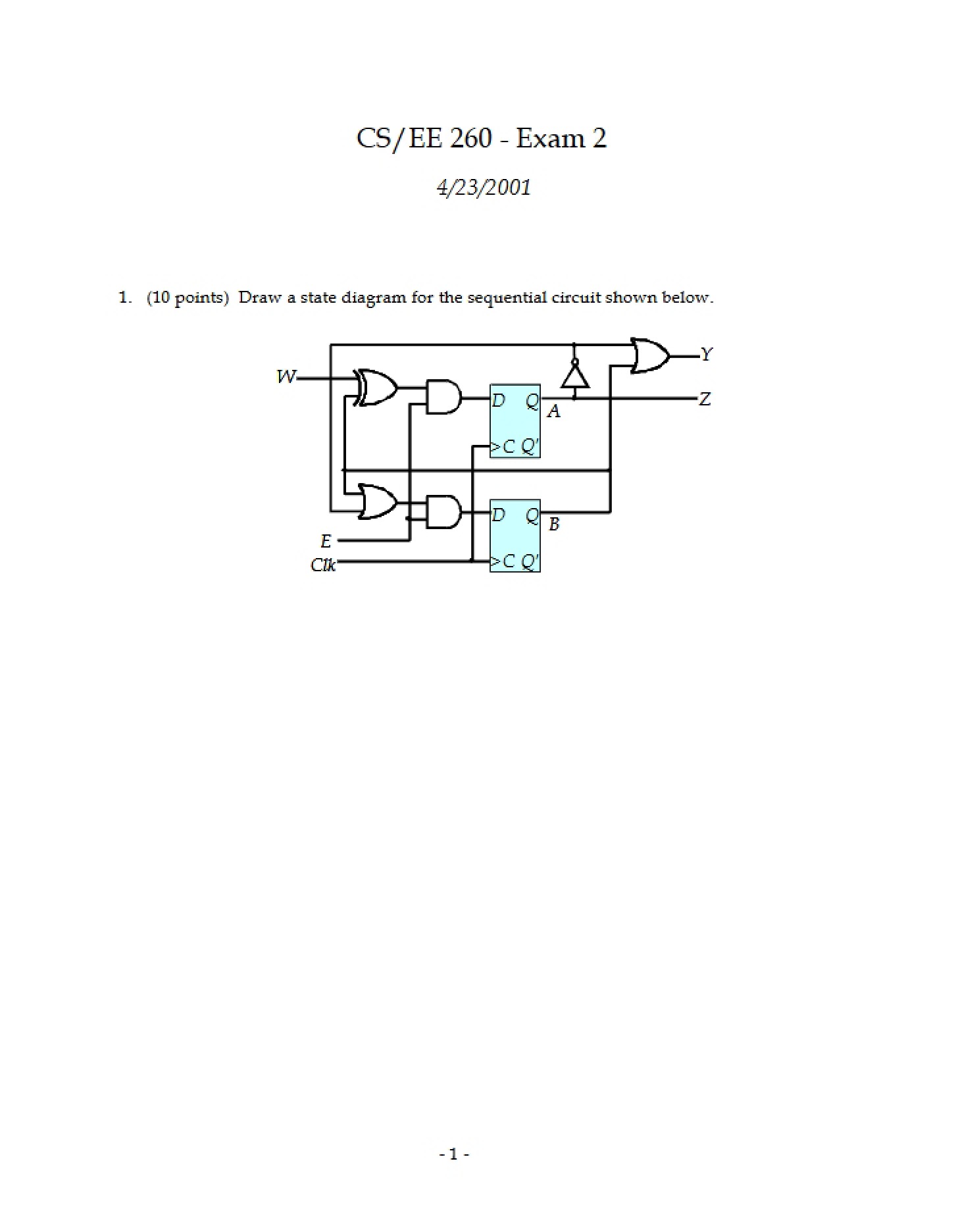
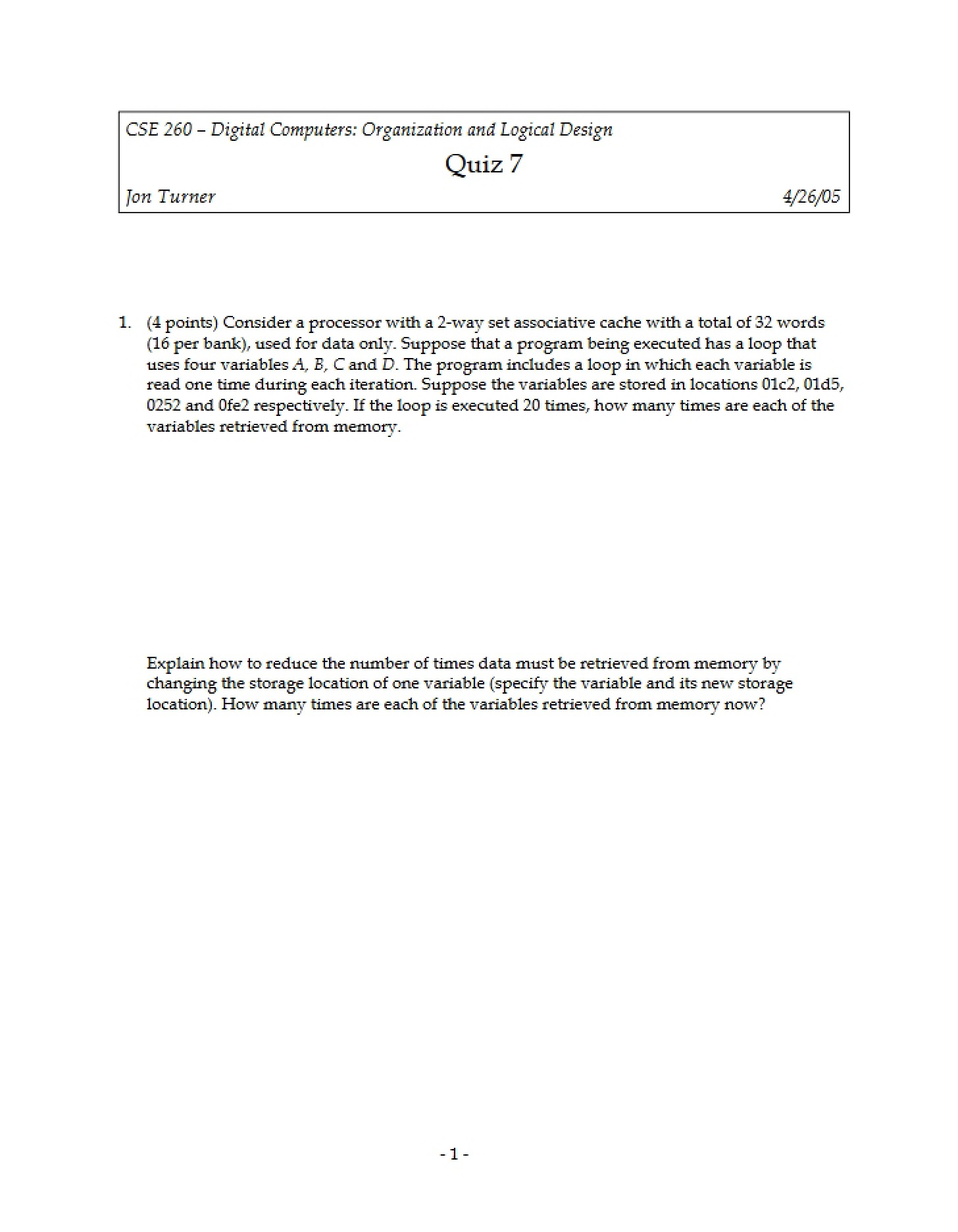
What This Document Is
This is a quiz designed to assess your understanding of the fundamental operations and instruction set of a basic processor, as taught in an introductory digital logic and computer design course (CSE 260 at Washington University in St. Louis). It focuses on interpreting processor behavior based on simulation output, requiring you to decode instructions and understand their impact on program execution. The quiz tests your ability to connect theoretical knowledge of computer architecture with practical application.
Why This Document Matters
This quiz is an invaluable resource for students actively learning about computer organization and logical design. It’s particularly helpful when preparing for larger exams or seeking to solidify your grasp of how instructions translate into machine-level actions. Working through problems like these – even attempting to solve them before having access to the solutions – will significantly improve your ability to analyze processor behavior and debug simple programs. It’s best used *after* you’ve studied the core concepts of instruction sets and processor simulation.
Common Limitations or Challenges
This quiz focuses specifically on interpreting simulation output for a *basic* processor. It does not cover advanced topics like pipelining, caching, or complex addressing modes. The problems presented require a solid understanding of the provided instruction set; simply memorizing codes won’t be sufficient. The quiz assumes you have a foundational understanding of binary and hexadecimal representation of numbers, as well as the general principles of computer architecture. It will not *teach* you the instruction set, but rather *test* your knowledge of it.
What This Document Provides
* Problems based on processor simulation output.
* Opportunities to identify executed instructions from partial simulation data.
* A reference to the instruction set used in the basic processor (provided within the quiz itself).
* A focus on translating observed processor behavior into corresponding instruction names and values.
* Practice in deciphering the effects of instructions on program flow and data manipulation.