What This Document Is
This is a comprehensive final exam for an upper-level undergraduate course in Digital Logic and Computer Design (CSE 260) offered at Washington University in St. Louis. The exam assesses a student’s understanding of core principles in the organization and logical design of digital computers. It covers a broad range of topics, from foundational Boolean algebra and combinational logic to sequential circuits, VHDL, and processor architecture. The questions are designed to test both theoretical knowledge and practical problem-solving skills.
Why This Document Matters
This exam is an invaluable resource for students currently enrolled in, or preparing to take, a similar digital logic design course. It’s particularly useful for students seeking to gauge their preparedness for a high-stakes final assessment. Working through practice problems similar in scope and difficulty to those presented here can significantly improve understanding and boost confidence. It’s also helpful for instructors looking for example assessment questions. Access to this exam allows for targeted review of weak areas and a realistic simulation of exam conditions.
Common Limitations or Challenges
This document presents the *questions* from a final exam, but does not include solutions or detailed explanations. It is intended as a practice and self-assessment tool, not a substitute for thorough study of course materials. Successfully working through these problems requires a solid foundation in digital logic concepts and the ability to apply them independently. The exam assumes familiarity with standard simplification techniques, circuit analysis methods, and hardware description languages.
What This Document Provides
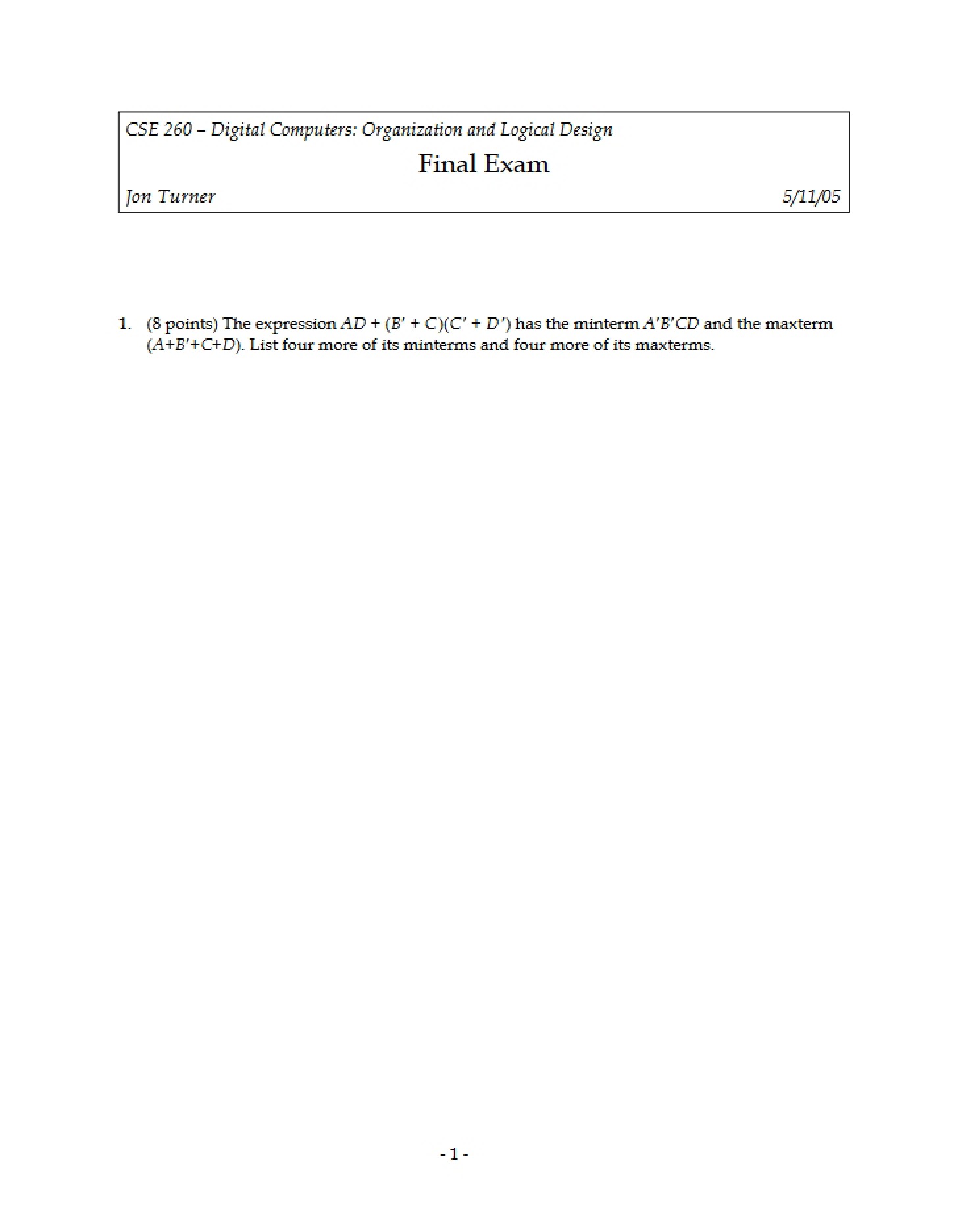
* Problems focused on Boolean algebra simplification.
* Exercises requiring the derivation of both Sum-of-Products and Product-of-Sums expressions.
* Questions involving the optimization of combinational logic circuits.
* Challenges related to propagation delay analysis in digital circuits.
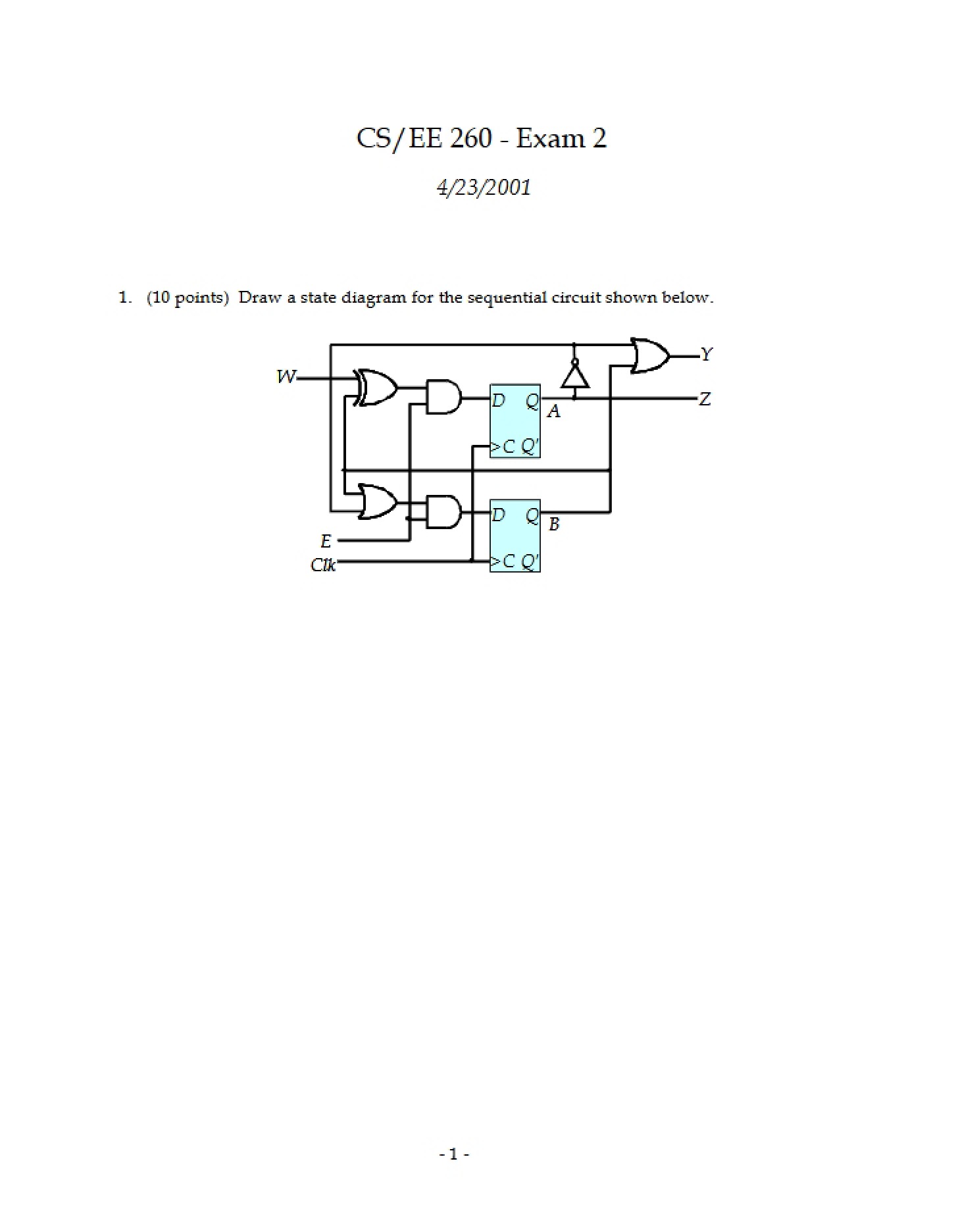
* Tasks centered around VHDL code interpretation and state diagram creation.
* Problems concerning sequential circuit analysis, including hold time and setup time considerations.
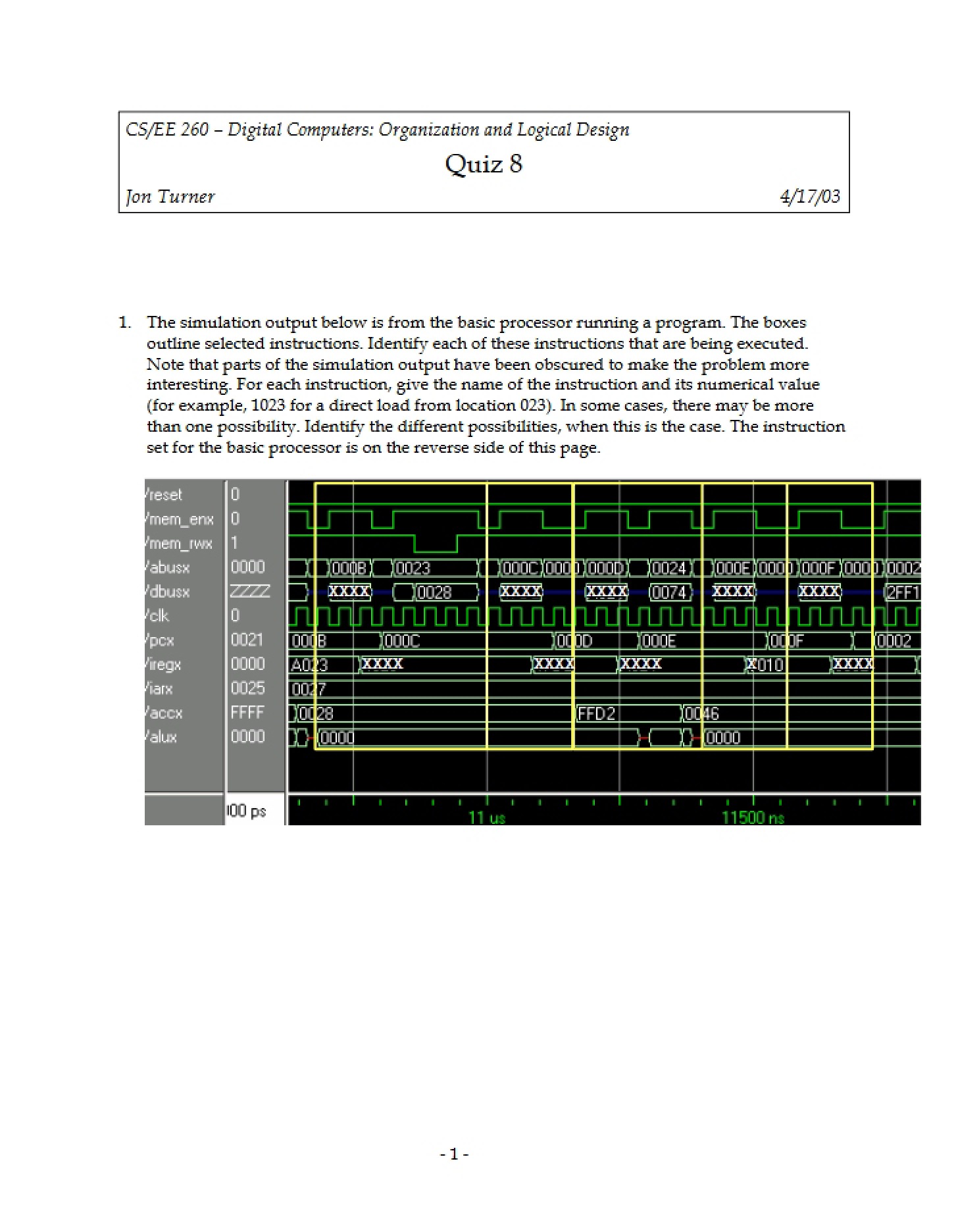
* Questions related to processor control signal interpretation.
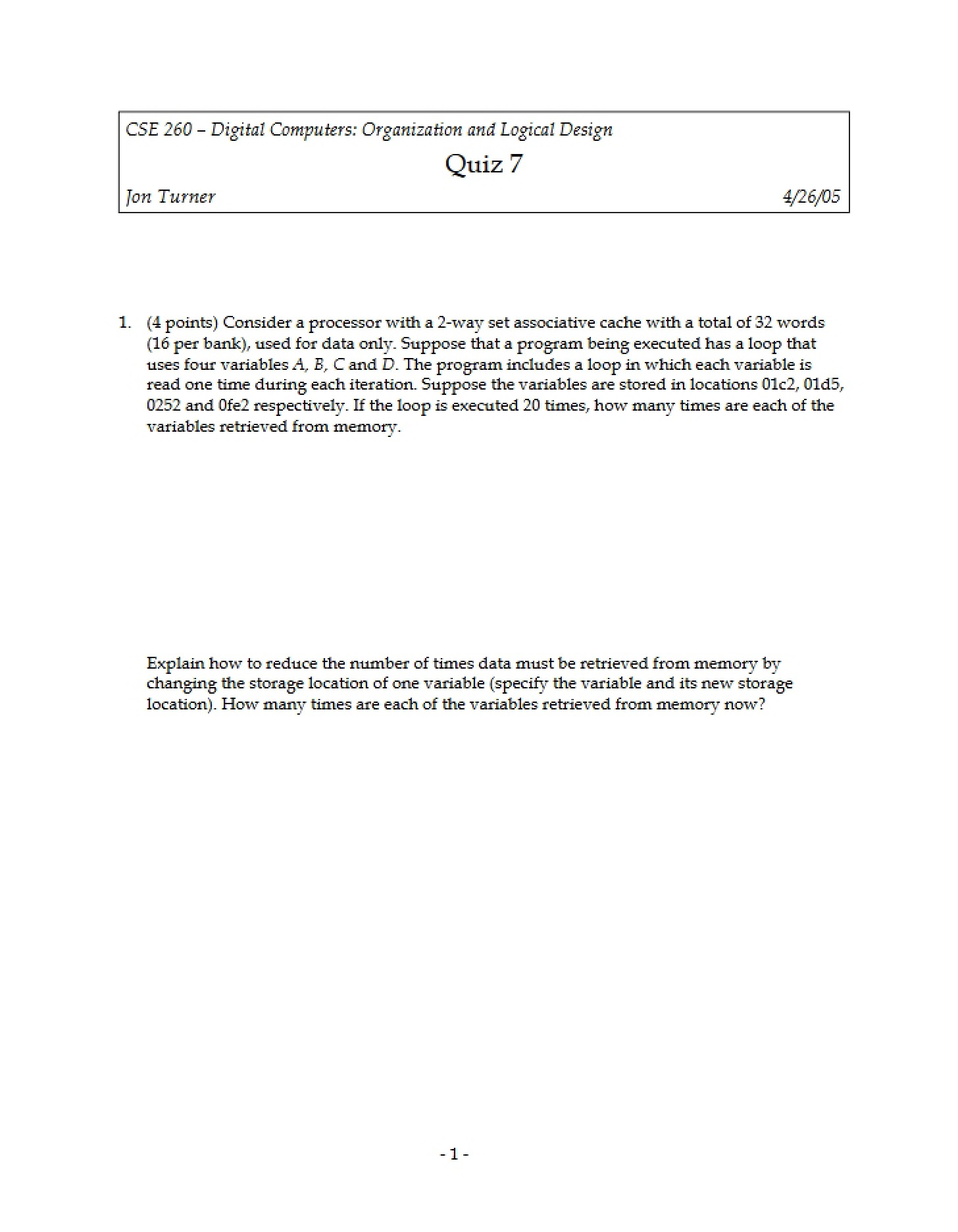
* Exercises involving cache memory organization and operation.