What This Document Is
This is a midterm examination for CSE 260, Introduction to Digital Logic and Computer Design, offered at Washington University in St. Louis. It assesses understanding of foundational concepts in digital systems, bridging the gap between theoretical knowledge and practical application. The exam focuses on core principles related to Boolean algebra, logic gate implementation, hardware description languages, and basic processor architecture. It’s designed to evaluate a student’s ability to analyze, synthesize, and apply these concepts to solve problems.
Why This Document Matters
This resource is invaluable for students currently enrolled in or preparing for a similar introductory digital logic course. It’s particularly helpful for self-assessment, identifying knowledge gaps, and understanding the *types* of questions and problems emphasized by the instructor. Reviewing a sample exam allows students to gauge the scope of the material covered and practice applying their understanding in a timed, exam-like setting. It’s best utilized *after* completing coursework and engaging with assigned readings and labs, as a final check before a high-stakes evaluation.
Common Limitations or Challenges
This document represents *one* specific assessment from *one* course. While the core concepts are broadly applicable, the precise emphasis and problem styles may vary between instructors and institutions. It does not include detailed explanations or solutions; it is a test of existing knowledge, not a teaching tool. Furthermore, it only covers the material assessed on this particular midterm – a complete understanding of the course requires reviewing all course materials.
What This Document Provides
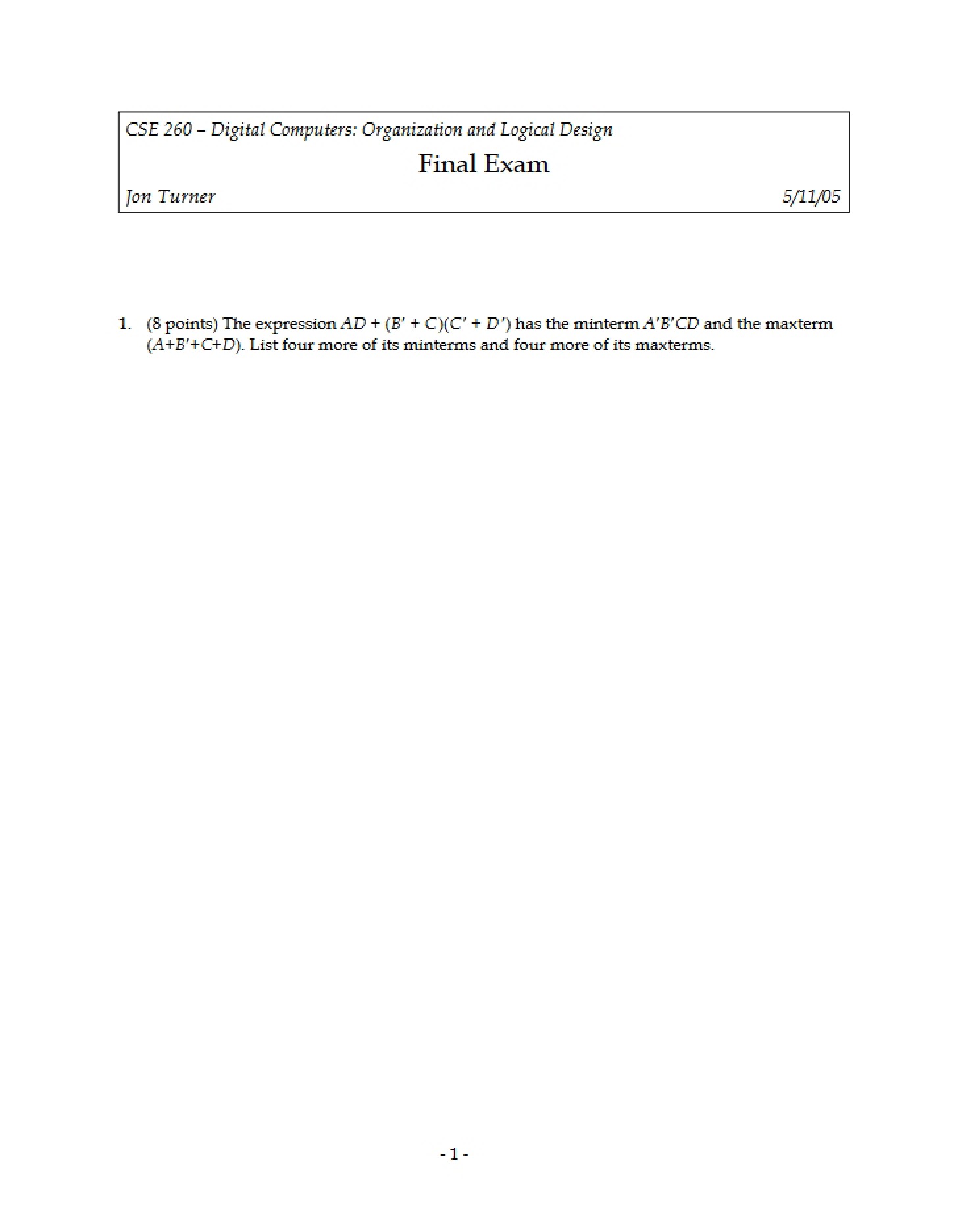
* Problems requiring simplification of Boolean expressions using algebraic manipulation.
* Exercises translating between hardware description language (VHDL) code and equivalent logic signal assignments.
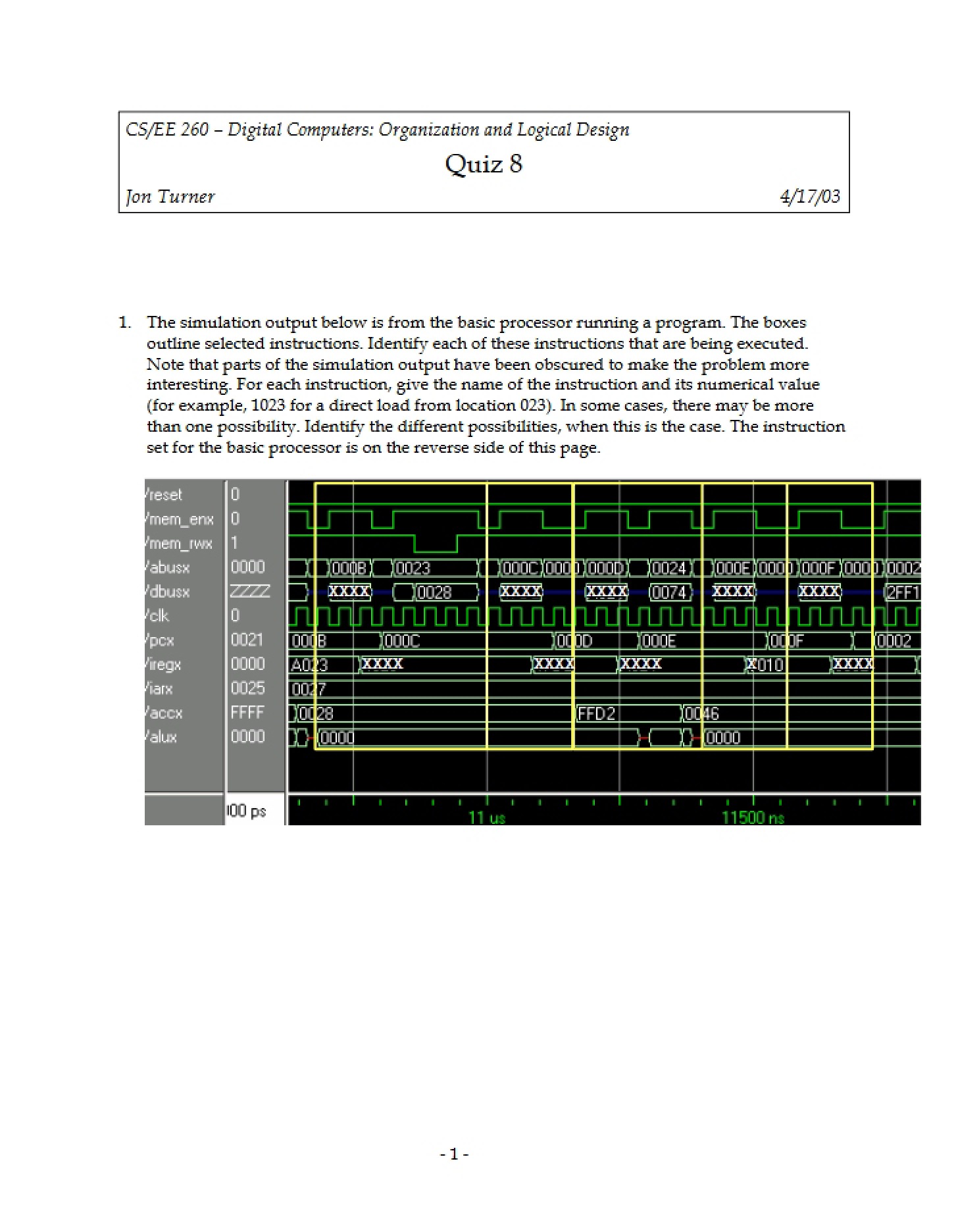
* Analysis of processor simulation output to determine instruction execution and state changes.
* Circuit design and delay calculation challenges involving CMOS logic gates.
* Karnaugh map exercises for logic function minimization.
* A VHDL module completion task related to an excess-3 adder circuit.
* Design problems involving the implementation of combinational logic circuits.
* Definitions and explanations of key timing parameters for sequential logic circuits (flip-flops).