What This Document Is
This is a quiz designed to assess your understanding of foundational concepts in digital logic and computer design. Specifically, it focuses on core principles covered in an introductory course like CSE 260 at Washington University in St. Louis. The quiz tests your ability to apply theoretical knowledge to practical problems involving binary number representation and basic circuit design, as well as understanding of a simplified processor’s instruction set. It’s structured to evaluate your comprehension of how digital systems function at a low level.
Why This Document Matters
This quiz is an invaluable resource for students currently enrolled in, or preparing for, an introductory digital logic course. It’s particularly helpful for self-assessment – identifying areas where your understanding is strong and pinpointing concepts that require further review. Working through problems similar to those presented here will build confidence and improve your performance on graded assessments. It’s best utilized *after* you’ve engaged with course lectures and readings, as a way to solidify your learning and prepare for more complex topics.
Common Limitations or Challenges
This quiz represents a snapshot of key concepts, but it doesn’t encompass the entirety of the course material. It won’t provide detailed explanations of the underlying principles, nor will it offer step-by-step solutions to the problems presented. It’s designed to *test* your knowledge, not to teach it. Furthermore, the quiz focuses on a specific set of topics and may not cover all areas emphasized in your particular course syllabus.
What This Document Provides
* Problems relating to two’s complement binary representation and conversion to hexadecimal.
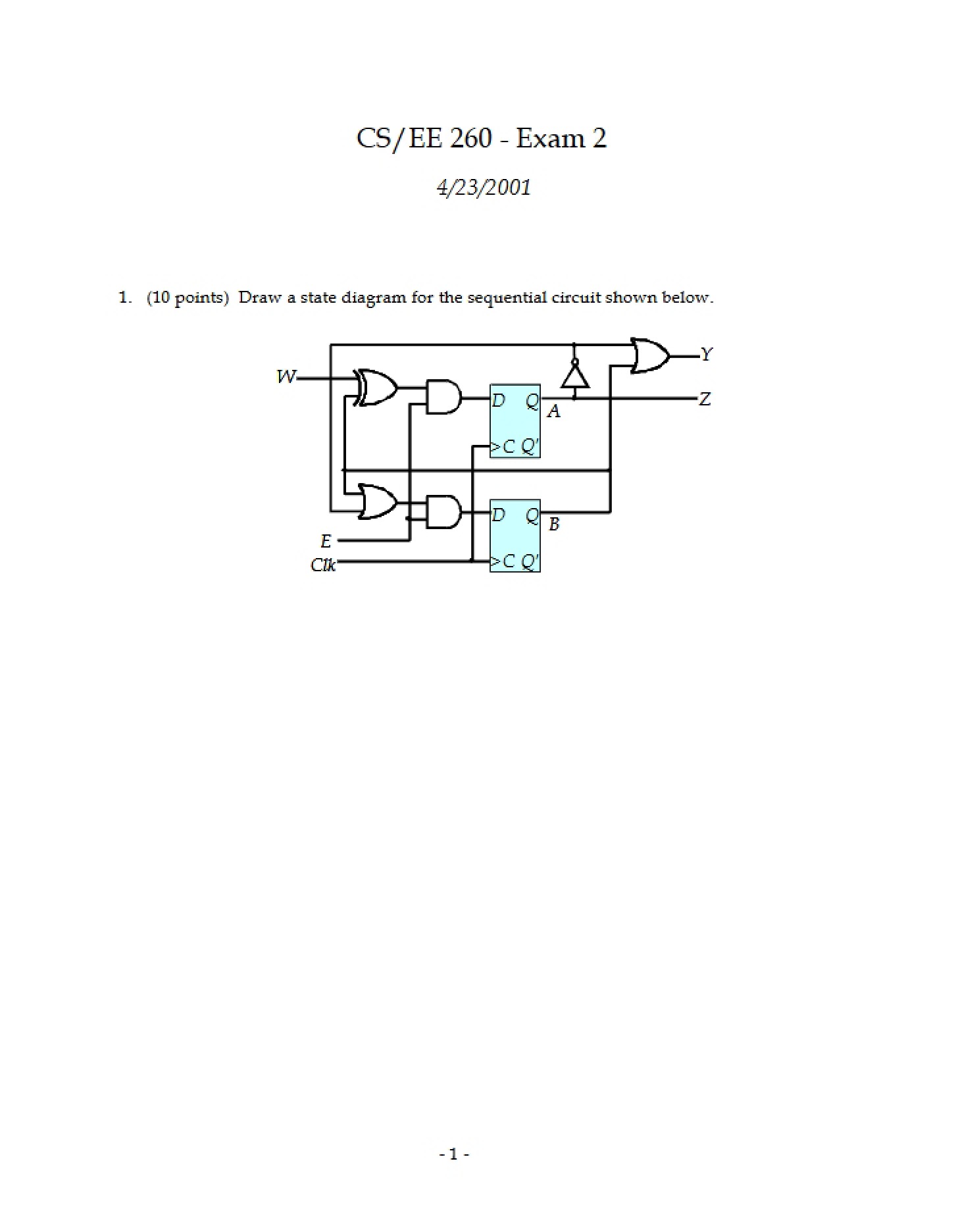
* Circuit design challenges utilizing fundamental logic gates (AND, OR, NOT).
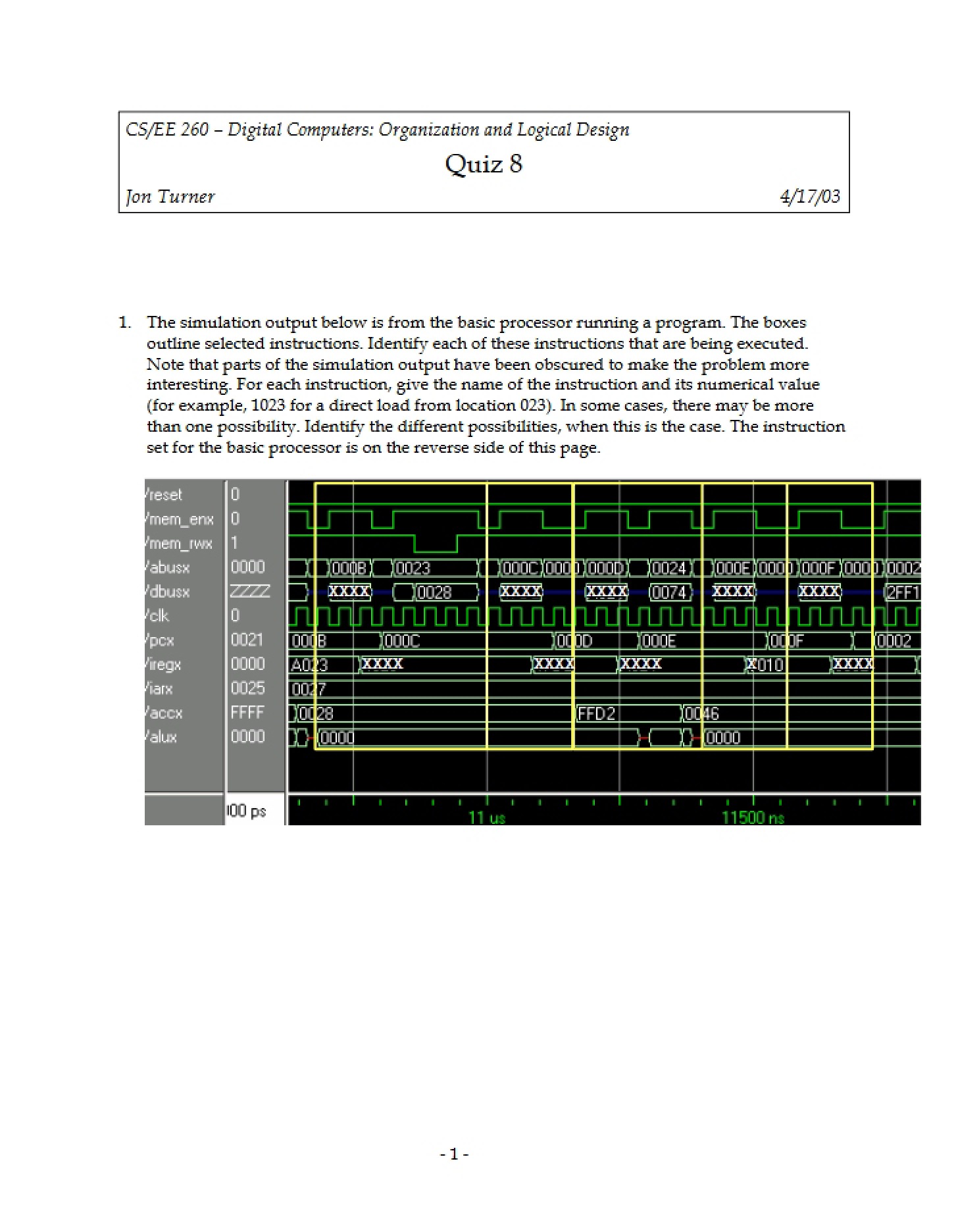
* Exercises involving a simplified processor model and its instruction set.
* Questions requiring analysis of program execution flow and accumulator/program counter values.
* A list of instructions for a basic processor architecture, including operations like loading, storing, adding, and conditional branching.