What This Document Is
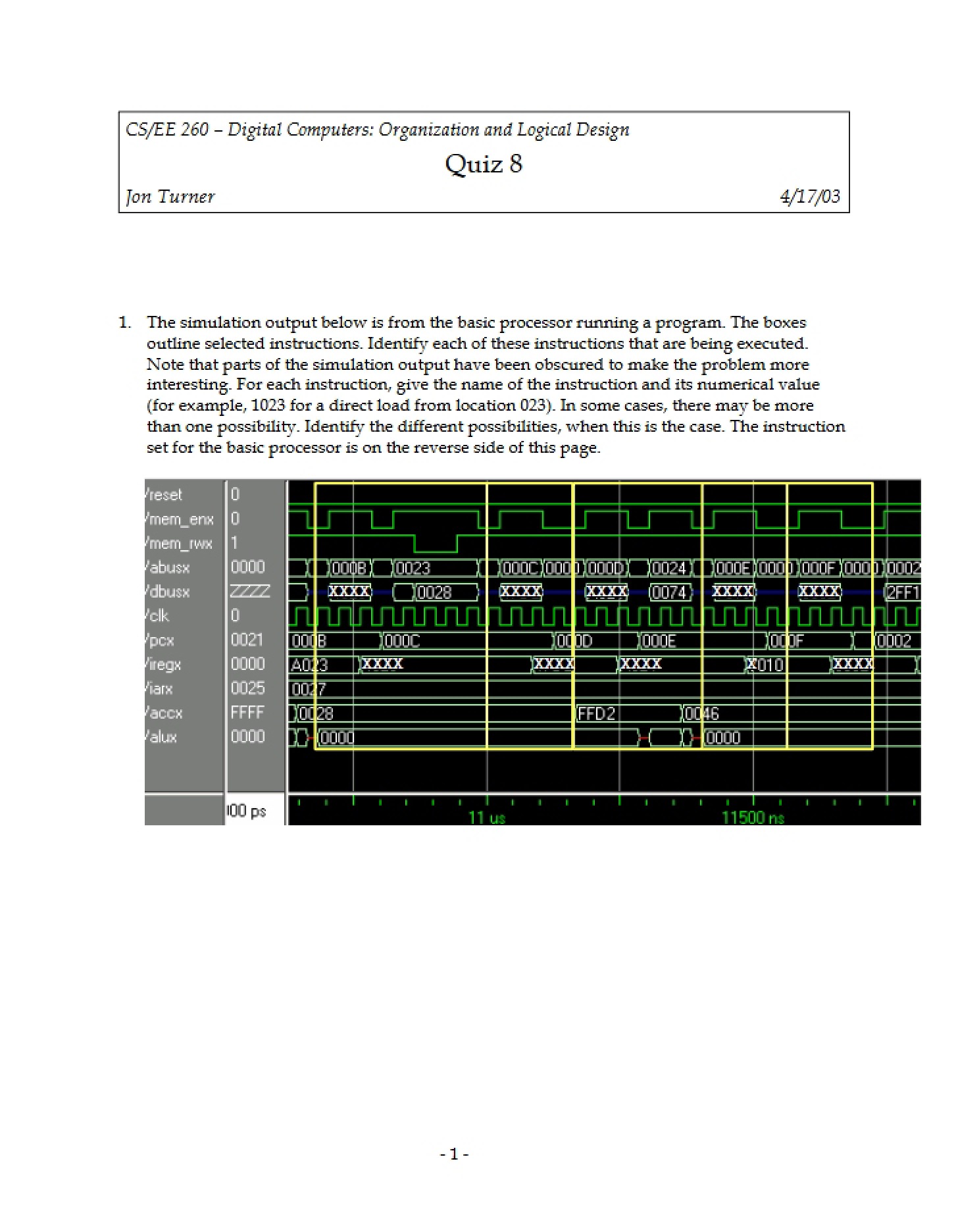
This is a quiz focused on the core principles of digital logic and computer design, specifically relating to processor control signals and instruction execution. It’s designed to assess your understanding of how a basic processor operates at a low level, interpreting the sequence of control signals generated during program execution. The quiz centers around identifying instructions based on observed processor behavior. It’s part of a larger course covering computer organization and logical design.
Why This Document Matters
This quiz is invaluable for students enrolled in an introductory digital logic and computer design course, like CSE 260 at Washington University in St. Louis. It’s best utilized *after* you’ve studied the material on processor control, instruction sets, and the fetch-decode-execute cycle. Working through practice problems – and understanding why certain control signal patterns correspond to specific operations – is crucial for success on exams and in grasping the fundamental concepts of computer architecture. If you're struggling to connect theoretical knowledge to practical processor behavior, this quiz will help pinpoint areas needing further review.
Common Limitations or Challenges
This quiz focuses on *interpreting* processor activity, not on designing or building circuits. It doesn’t provide a comprehensive review of all digital logic concepts, nor does it cover advanced topics like pipelining or memory hierarchies. It assumes you already have a foundational understanding of instruction set architecture and the roles of key processor components like the Program Counter and Accumulator. Access to the full quiz will reveal the specific instructions and expected analysis, which are not included here.
What This Document Provides
* A set of processor simulation outputs displaying control signal sequences.
* A list of potential instructions that could be executed.
* A framework for analyzing the relationship between control signals and instruction types.
* An opportunity to practice identifying instructions based on their observed execution patterns.
* A focused assessment of understanding core processor operation concepts.